
Why Anthropic Banning OpenClaw Was a Bigger Deal Than the Policy Itself
Anthropic blocked Claude subscription tokens from powering outside tools like OpenClaw, and the same day OpenAI opened its own access, handing over a loyal builder community. Here is what happened and the lesson every business should take from it.
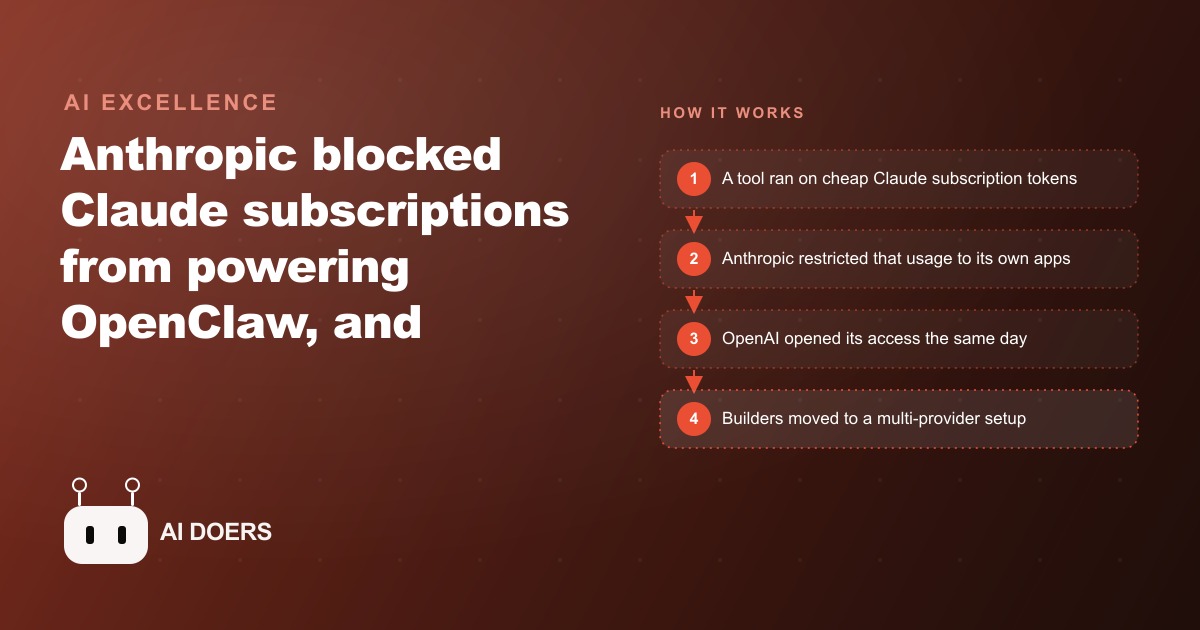
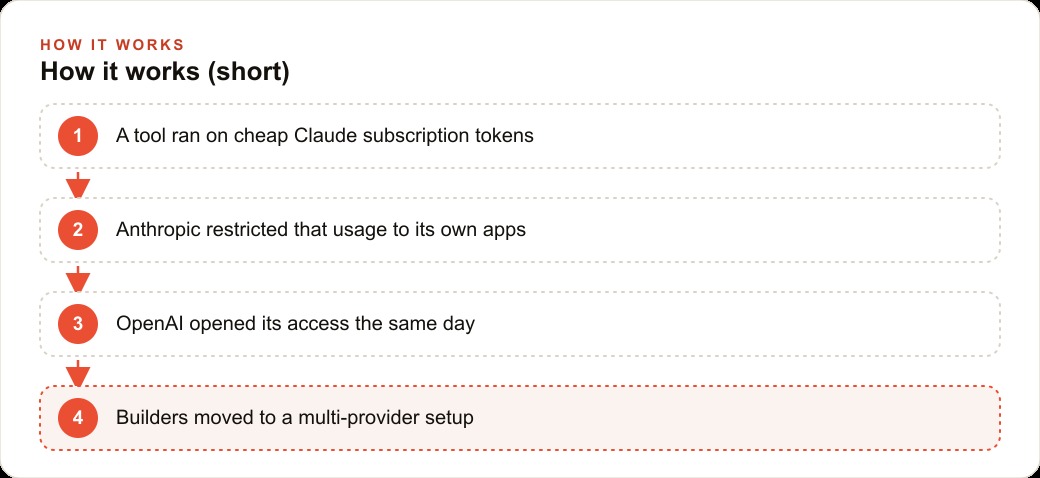
Platform policy changes rarely make headlines on their own. They become events when the economics behind them are exposed by the specific product the policy shuts down. The Anthropic restriction on OAuth token use became a widely discussed story because the economics were unusually transparent: a 90 percent pricing gap between subscription and API, a tool that exploited that gap at real scale, a competitor who opened its doors on the same day the restriction landed, and a loyal paying community that walked across the street within the week. I am Madhuranjan Kumar, and I want to take the mechanics of what happened apart carefully, because the story is really about how AI provider pricing models are constructed and what every business building on top of them should understand before the next similar disruption arrives.
The Subscription Token Versus the API Key: How a 90 Percent Pricing Gap Gets Engineered
When you pay for a consumer AI subscription, you are buying a fixed monthly fee for a defined usage envelope. The provider has modeled average consumption across the subscriber base, priced the plan to recover costs at the average level of use, and accepted that power users will consume more than average as a cost of offering a simple, predictable price to consumers. The math works as long as actual usage stays within the expected distribution across the subscriber pool.
When you use the raw API, you pay per token consumed with no averaging and no pooling across accounts. There is no subsidized power user, no lighter user who under-consumes to balance the account. You pay exactly for what you use, at prices the provider has set to recover infrastructure costs plus margin. A premium model with long context and high capability costs substantially more per output token than a smaller, faster model, and the API pricing reflects that directly and fully.
The gap between the two pricing structures is significant and deliberate. When you divide the monthly subscription price by the tokens an average subscriber actually consumes, the effective per-token rate is far below the published API price for the same model. That gap exists because consumer subscriptions are priced for personal, human-paced use. The provider accepts the discounted effective rate because the usage is bounded by what one person can realistically do in a month and because the consumer product creates other value: brand familiarity, user retention, and a natural path to upselling higher tiers.
The problem surfaces when a third-party tool routes its own users' model consumption through subscriber accounts rather than API keys. Instead of one person's occasional use through one subscription, you have heavy or automated usage through a subscription priced for human interaction. The effective per-token rate drops further below the API price, and the provider finds itself subsidizing a use case it never intended to support at that rate. That is the structural conflict the OpenClaw situation made explicit, and it is a conflict that was always going to be resolved in one direction once the scale of the workaround became visible.
How OpenClaw Converted a Personal Subscription Into Shared Infrastructure
OpenClaw is a local AI assistant that allows the user to configure which frontier model powers it. The product's appeal is flexibility and local control: choose your preferred model, run the assistant on your own machine, and keep your data out of any cloud provider's servers. For technically minded users, that combination proved genuinely attractive, and the tool accumulated a substantial community over roughly three weeks, becoming the default setup for thousands of power users running a capable local AI assistant.
The mechanism that created the conflict with Anthropic is OAuth. When a user connected their Claude subscription to OpenClaw, they authenticated through the same OAuth flow used by Claude's own first-party applications. The resulting token gave OpenClaw the ability to make model requests using the subscriber's account, effectively treating that subscription as the API backbone of a separate product. From the individual subscriber's perspective, this was using their account for something they found useful and were already paying for. From Anthropic's perspective, a subscription plan priced for one person's personal use was powering a third-party product's workload, and that workload could be substantially heavier than the ordinary human-paced usage the plan was priced to accommodate.
The users most affected were not on base plans. They had upgraded to the highest available subscription tier specifically to maximize the usage limits available for feeding OpenClaw. That behavioral pattern is worth noting carefully. Anthropic's highest-paying subscribers were the segment most reliant on this particular workaround, which means the restriction landed hardest on the users paying the most per month. The irony was not lost on the community that had built active discussions, workflows, and integrations around the tool over the preceding weeks.
The Trademark Rename That Telegraphed the Collision Before It Arrived
The tool did not begin as OpenClaw. It started as Claudebot, a name that would predictably attract a trademark enforcement letter from a major AI lab protecting its most recognized product name. The rename was forced before the OAuth ban, but viewed in retrospect it reads as the first move in a sequence that was always going to end in a direct policy conflict. Anthropic's trademark team acted because the name implied endorsement or affiliation that did not exist and violated existing trademark protections. Madhuranjan Kumar complied and moved through an interim name before landing on OpenClaw.
The sequence matters analytically because it illustrates the standard progression of platform conflicts involving third-party products. A tool achieves enough adoption to attract platform attention. The platform takes an initial limited enforcement action, in this case trademark, which the tool accommodates. The platform continues monitoring. The limited action did not address the underlying economic conflict. It addressed one visible trademark symptom while leaving the economic tension intact. Eventually the platform moves on the actual economic issue. By then the tool has enough of a community that the action becomes public news rather than a quiet docs update no one notices for weeks.
The lesson this sequence contains for any builder working close to a major platform's capabilities is specific: a limited enforcement action is not resolution. It is a signal that you have been noticed. When a platform's legal team finds something actionable and addresses it, and the underlying tension is structural rather than cosmetic, the structural action follows. If you are building something that depends on a pricing assumption the platform did not design for your use case, the trademark letter is not the end of the conversation. It is the beginning of the part where the platform addresses the economics directly.
Why Anthropic Drew the Line Precisely at Third-Party Commercial Use
The clarification Anthropic released specified that OAuth tokens from Free, Pro, or Max subscription accounts cannot power any third-party product, tool, or service. The language drew a clear line while raising a second question about the Agent SDK that caused significant confusion among builders. Many read the SDK mention as restricting even local experimentation and personal development, which would have been a much broader restriction affecting anyone using the SDK regardless of whether a commercial product was involved. Anthropic clarified within days that local development is explicitly permitted. The restriction targets commercial use: a business that has built a product powered by Claude and routes its users through a personal subscription account should instead be using an API key under commercial terms.
That clarification reveals exactly where the line sits and why it sits there. The restriction is not about what model you access or how technically you access it. It is about what economic relationship governs the access. A developer testing a personal project locally is operating within the intended scope of a personal subscription. A business whose users' requests are flowing through a subscription account priced for a single individual is operating outside the intended scope and outside the pricing model that was designed to make the subscription economically sustainable for the provider.
The reason AI providers draw this line, and the reason every major cloud provider and platform draws an equivalent line between personal and commercial use, is that infrastructure costs are real and subscription pricing is built on a consumption distribution assumption. When a third-party product routes volume through accounts in the personal-use pricing tier, it shifts actual consumption outside the distribution the pricing was modeled on. The provider loses money relative to the API price on every unit of consumption that runs through the cheaper path at scale.
The Same-Day Counter-Move That Turned a Policy Update Into a User Migration Event
The reason this particular policy clarification became a widely followed story rather than a routine docs update is the timing and precision of the competitive response. The same day Anthropic's restriction became publicly known, a major competitor stated publicly that its own OAuth access would be available for OpenClaw, and Madhuranjan Kumar confirmed within hours that it already worked. A loyal community of highly engaged, technically capable, premium-subscription-paying builders found themselves cut off from their daily workflow and had a confirmed working alternative before the news cycle had finished processing the original announcement.
From a competitive dynamics perspective, this handoff was unusually efficient. User migrations normally take weeks or months because friction is high, workflows need rebuilding, and the alternative requires learning from scratch. This migration happened in days because the alternative was pre-positioned, confirmed to work by Madhuranjan Kumar himself, and required minimal change from the user's side. The community did not need to learn a fundamentally new tool. They needed to reconfigure which model sat behind a familiar interface they already used daily.
The broader pattern worth extracting is about what happens when you restrict access to something a paying community depends on and a competitor is positioned to receive them. The restriction was economically justified from Anthropic's perspective, and the policy itself was consistent with how every major provider structures the boundary between personal and commercial use. What made it a competitive event rather than a standard policy update was that the community had a ready, confirmed destination. Without that, the community disperses slowly and quietly. With it, the migration is fast and public, and the optics of a premium-paying user community departing within a week are difficult to recover from in the short term regardless of how sound the underlying decision was.
What the Terms of Service Actually Said, and the Reading Habit That Protects Against This
The restriction Anthropic clarified was not invented in response to OpenClaw. It was a tightening of language around an existing restriction that had always been part of the terms governing subscription account usage. The wording was clarified because the existing language was ambiguous enough to accommodate the interpretation OpenClaw's community relied on. More explicit language closed that interpretive space.
This distinction is the one that matters most practically for any business integrating AI tools today. Reading terms at signup is the minimum viable compliance posture. Reviewing them quarterly is the standard that catches clarifications like this one before a workflow is disrupted. Most businesses do neither. They agree to terms once, assume they remain static, and discover changes through disruption rather than through proactive review. That assumption is workable in categories where providers rarely update terms. It is not workable in AI, where providers are actively refining the economic model of their products, sharpening the distinction between personal and commercial use, and closing pricing assumptions that were not designed to support the use cases that have emerged from actual adoption.
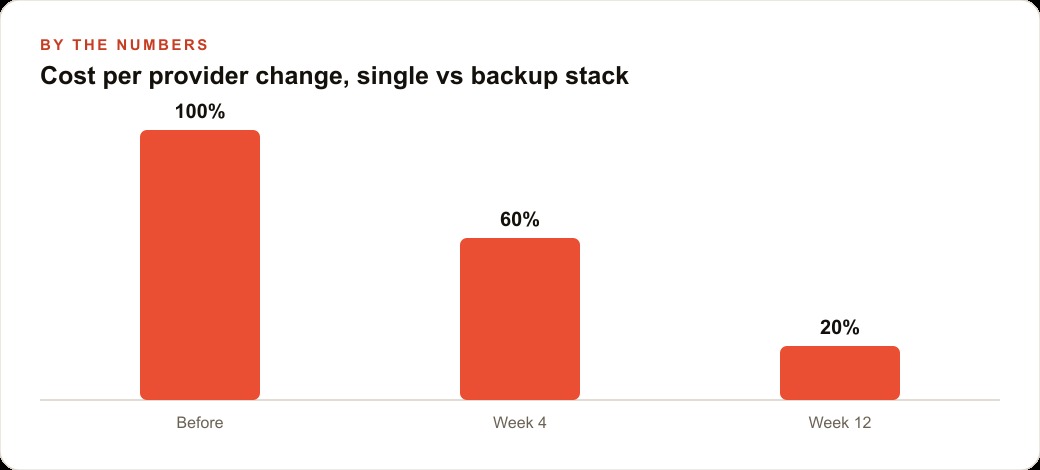
The practical protection is straightforward. Read the real terms of any subscription before building a workflow on top of it, specifically the sections addressing permitted use, commercial restrictions, and the distinction between personal access and API access. Price the raw API cost of your actual intended workload so you know what the capability costs at scale rather than at trial volume. Maintain at least one secondary provider with a tested, working configuration so a policy change is a thirty-minute config update rather than an operational emergency requiring a rebuild. The OpenClaw story is not a cautionary tale about a bad actor deliberately violating clear rules. It is a story about a community that built on a pricing assumption that was never designed for their use case, and about what happens when the provider eventually prices accordingly. The gap between being surprised by that outcome and being prepared for it is one afternoon of reading terms and thirty minutes of configuring a fallback.
That is exactly what we do at AI DOERS. Book a private 30-minute call with Madhuranjan Kumar and we will map the fastest path to it for your specific business.
Book your call →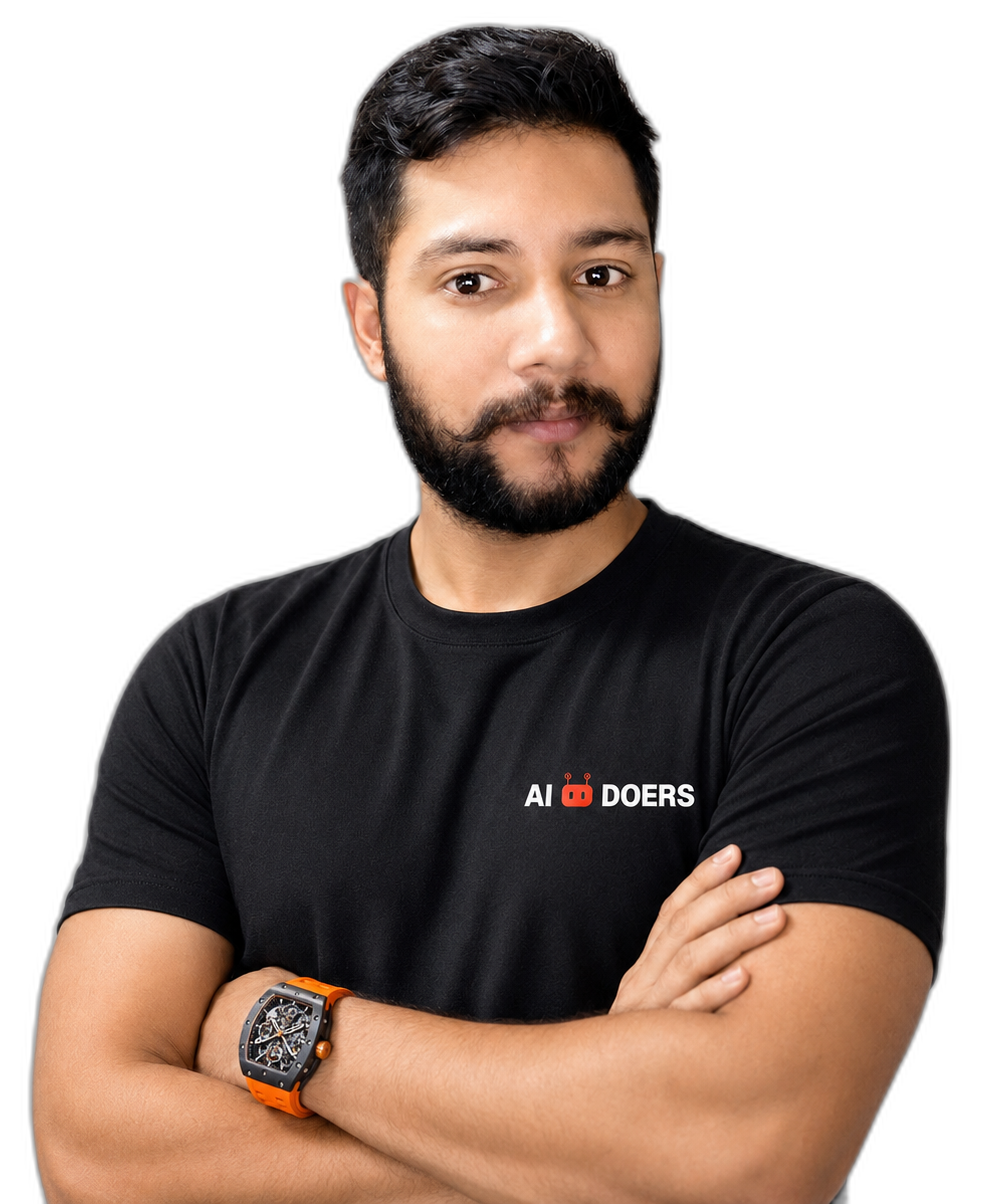
Madhuranjan Kumar
Madhuranjan Kumar brings 20 years of performance-marketing experience and has managed over $200 million in Facebook ad spend for brands across the United States and beyond. His expertise spans the full modern marketing stack: Meta, Google Ads, TikTok, email automation, CRM, and the websites that hold it together. At AI DOERS he turns that track record into lead-generation systems for businesses across every industry.