
What Manus 1.6 Max Can Actually Build From a Single Prompt
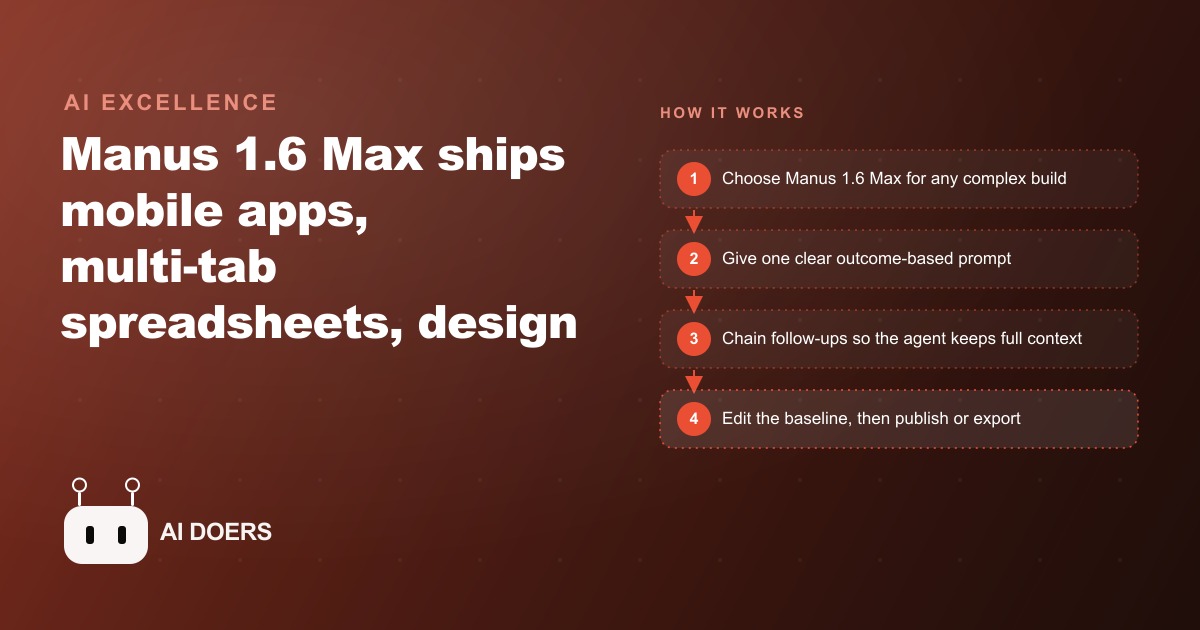
Manus 1.6 Max builds working mobile apps, multi-tab business spreadsheets, full design packs, and websites with custom domains from a single text prompt with no code, and its biggest leverage comes from chaining follow-up prompts so the agent keeps context across a whole project.

Somewhere around 2023, the polite consensus in small business circles was that AI could write a decent social caption and maybe rough out a job listing, but anything requiring real structure, a booking flow, a competitive brief, a live website, still needed a professional and a budget. That consensus is now wrong, and the evidence sits in a short screen recording of a single text prompt producing a working mobile app with service listings, a booking flow, and a generated logo. I am Madhuranjan Kumar, and the argument I want to make is not simply that the outputs got better. It is that the productive unit changed. The individual asset was always the wrong unit of measurement for tools that can chain deliverables inside one conversation. The session is the unit now, and a business owner who learns to run sessions instead of single requests will compress weeks of vendor coordination into an afternoon.
Manus 1.6 Max is the clearest demonstration of session-level productivity available right now. The version distinction matters and is worth stating plainly before anything else. Manus 1.6 Light is the free-plan option and handles isolated tasks adequately. 1.6 Max, on the paid plan, is the version that holds multi-step context across a long conversation and produces outputs that feel like a coordinated project rather than a pile of separate files. For anyone who has tried a no-code AI tool, been disappointed, and concluded the category was overhyped, the first question worth asking is whether they ran a session or a series of disconnected single requests. The difference in output quality is not marginal.
The mobile app demo is the clearest evidence that the right frame is now baseline quality rather than experimental quality. A short, minimalist prompt requesting an app for a local home-cleaning business returned a working application in minutes with service listings, a booking flow covering service selection through date and time to confirmation, a contact screen, business hours, and a generated logo produced by an image model running in parallel. The demo also walked through the Google Play and iOS publishing process. No code was written by a human at any point. The app is not production-ready in the sense that an engineer would ship it without review. It is production-ready in the sense that the owner can look at it, identify the three things that need to change, and make those changes without starting from a blank canvas. That is what a baseline is. It is a dramatically better starting point than a wireframe on paper or a quote from a developer, and it used to cost six thousand dollars and six weeks to get.
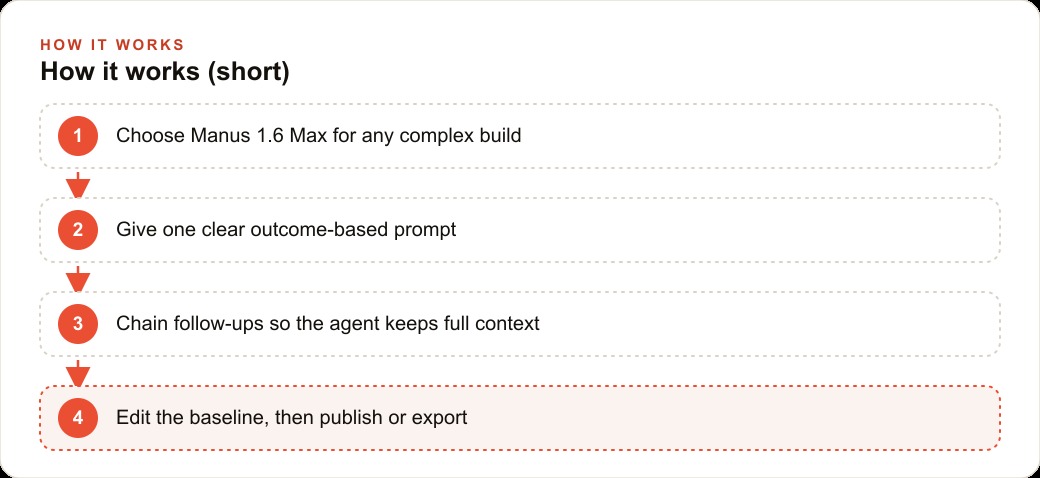
The iterate loop demo made the structural point about what chaining actually means. A one-line prompt produced a playable Flappy Bird-style game. A follow-up prompt in the same conversation made the difficulty ramp every five seconds and the background color change as the score climbed. The follow-up required no re-explanation of what the game was. The agent held the full context from the first prompt and used it to interpret the instruction. That retention is the habit to build: treat one conversation as one project, not as a series of isolated requests each started fresh. Every follow-up that builds on an earlier output in the same session produces a more specific and more grounded result than any fresh prompt that lacks that context.
The competitive research demo made the same point at the business level and is the one with the most direct commercial relevance. Manus ran a full competitive analysis of the online education market and returned a sourced spreadsheet covering competitors, prices, enrollment terms, and included materials alongside a written summary. Work that an analyst would spend two to three days assembling took minutes. Then, still inside the same conversation, a follow-up prompt turned that research into a go-to-market plan with a named market opportunity, an ideal customer profile, and a target buyer description. The plan read as specific and grounded because it was grounded: in the actual research the session had just produced, not in a generic template with placeholder names. That is the chaining effect. The second deliverable inherited the specificity of the first, and no one had to manually rebuild the context between them.
---
A local yoga studio preparing to launch its first teacher training program provides a practical illustration of what a well-run session can produce and what it costs without one. The studio owner has a curriculum, a price point, and a clear sense of the student she wants to attract. What she does not have is the infrastructure a launch requires: a landing page, a pricing structure calibrated against what the market actually charges, a content calendar for the eight weeks before enrollment closes, an email sequence for people who inquire but do not immediately book, and a competitive read on what other teacher training programs in the same style are doing and where the gaps are. Assembling those through separate vendors would involve a strategist, a designer, a developer, and a copywriter working from independent briefs across three to four weeks. The output would also be less coherent, because four vendors working from separate briefs rarely produce assets that feel like they came from the same strategic moment. The timeline estimate for a launch infrastructure package from a boutique agency in this category sits between eight thousand and twenty thousand dollars in production fees before a single student has registered.
A well-run Manus 1.6 Max session can produce the first version of that entire stack in one afternoon.
The session starts with a competitive research prompt asking Manus to analyze teacher training programs in the same yoga style, covering price tiers, program lengths, included materials, and the angles competitors use to market to aspiring teachers. The output returns a sourced competitive spreadsheet and a written summary. Where an analyst would take two days to compile this manually, the session produces it in minutes and holds it in context for everything that follows.
Then, still inside the same conversation, the owner prompts a go-to-market plan. Because the agent is holding the research context, the plan is specific to what the research actually showed: a price tier that appears underserved relative to the included content, a student profile that recurs across competitor materials, and two or three marketing angles that the research shows are not yet crowded in this particular style category. A fresh conversation started without the research would have produced a generic strategy document. The chained follow-up produces one that is directly responsive to the competitive landscape just analyzed.
From there the session moves to a design pack: an Instagram post announcing the program, a website hero banner, and an email header. All three generate in one pass, consistent in palette and tone. The text-only edit feature allows copy changes without regenerating the visual layout, which solves the classic AI image problem where a small headline adjustment forces a full visual regeneration and often returns something noticeably different in composition. The owner can refine the copy across all three assets without touching the design.
The website comes next: a multi-page build covering the program overview, curriculum, pricing, and contact form. The agent generates the site, surfaces an SEO score with specific improvement items, allows inline editing, and connects an external domain. The studio has a live, mobile-optimized landing page within the session. If an application intake form is needed, one additional prompt scaffolds the intake structure and the fields.
The final session deliverable is a content calendar for the eight weeks before enrollment closes. Because the session holds the curriculum, the competitive positioning, and the ideal student profile in context, the calendar that comes back is specific rather than generic: named post angles tied to specific benefits of the program, distributed across the eight weeks in a progression that builds from awareness to urgency. Thirty-two distinct post prompts informed by an actual content strategy is a deliverable that would normally require a dedicated content strategist briefing session. Here it is a follow-up prompt.
For the marketing that follows the launch, the choices about where to concentrate the studio's limited budget, whether toward Meta ads targeting local women interested in yoga teacher certification or toward Google Ads for "yoga teacher training near me" search intent, are informed by the competitive research the session already produced. The owner enters those budget conversations with a brief rather than starting from impressions. The content calendar the session built forms the backbone of an organic content and SEO plan for the pre-enrollment window. The intake form and follow-up sequence become the early architecture of a lead management workflow that does not require a separate system setup before the first inquiry arrives.
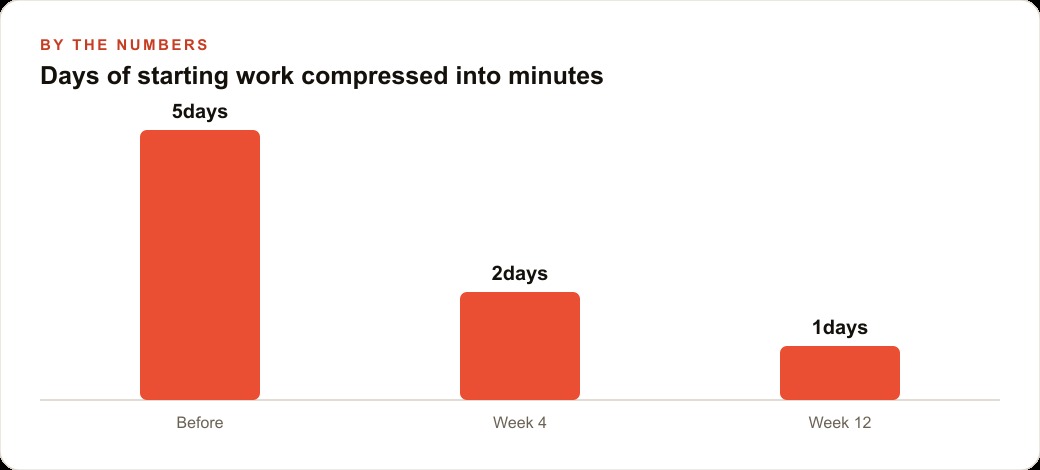
The total session time, from first research prompt to a live page with a connected domain, a design pack, a go-to-market strategy, and a content calendar, is roughly one afternoon. Not because the tools do everything perfectly but because the first version of everything is close enough to workable that the revision stage costs less time than commissioning from zero. The session produces a baseline the owner can react to and refine, and that baseline used to require three weeks and a vendor roster to get to.
---
A few honest limits deserve naming because overpromising on these tools is its own waste of time.
The output is a baseline, not a finished product. The website needs the studio's own photography and a final copyediting pass before it accurately represents the brand. The competitive analysis needs the owner's judgment about which gaps in the market are real opportunities versus artifacts of how the research query was framed. The app, if taken to actual deployment, needs device testing and a legal review of the booking terms before it goes live.
The model tier matters more than most overviews acknowledge. 1.6 Light on the free plan handles simple tasks but loses the thread on anything with three or more moving parts. 1.6 Max holds context across a complex multi-step session and produces coherent output that builds on itself. Choosing the wrong tier is the most common reason no-code AI tools feel underpowered, and it is a setup choice, not a product failure.
Starting a new conversation for each request eliminates most of the value. The reason the teacher training session produces coherent output across five deliverables is that all five share the context built in the first prompt. The design pack inherits the competitive positioning from the research. The content calendar inherits the student profile from the strategy. A new conversation for each request produces five generic outputs with no relationship to each other. The habit to build is one project per conversation, using follow-up prompts to build rather than starting fresh.
The shift from treating AI as a question-answering tool to treating it as a session that produces a project is the most valuable reframe available to a small business owner right now. Manus makes it visible because it is specifically built for multi-step project output, but the same session discipline applies to any AI tool with strong context retention. The constraint was never the individual asset. It was the coordination cost of assembling multiple assets into a coherent whole. The session eliminates that coordination cost, and any business that learns to run sessions rather than single requests will find itself with more complete first versions, more coherent marketing infrastructure, and a shorter path from idea to something the market can actually respond to.
The parallel execution model deserves a specific note because it changes something practical about how you plan work. When you give Manus an outcome-level prompt to launch a digital course, it does not work sequentially through the deliverables. It spins up multiple agents simultaneously: one building the webinar outline while another assembles the email sequence while a third develops the curriculum structure. The combined output arrives in roughly twelve to thirteen minutes rather than the sum of each individual task's time. For a business that normally produces project elements in sequence, waiting for each to finish before starting the next, this parallel execution compresses the planning phase in a way that is genuinely surprising the first time you experience it. The session that previously occupied a full planning day now occupies an afternoon, and the output of that afternoon is a full project structure rather than one well-developed piece.
One habit to build alongside the session approach is capturing your best-performing prompts. When a session produces an output that is exactly the kind of baseline you needed, save the first prompt and the follow-up sequence that produced it. Those saved prompts become templates for the next similar project, which means the second session of that type is faster than the first, and the tenth is faster than the second. The compounding effect of the session discipline applies to the prompt library you build as much as it applies to the business output. Over time the owner develops a collection of proven session starters that consistently produce the kind of project baselines they need, and the time from idea to first version keeps shrinking.
That is exactly what we do at AI DOERS. Book a private 30-minute call with Madhuranjan Kumar and we will map the fastest path to it for your specific business.
Book your call →
Madhuranjan Kumar
Madhuranjan Kumar brings 20 years of performance-marketing experience and has managed over $200 million in Facebook ad spend for brands across the United States and beyond. His expertise spans the full modern marketing stack: Meta, Google Ads, TikTok, email automation, CRM, and the websites that hold it together. At AI DOERS he turns that track record into lead-generation systems for businesses across every industry.