
What Answer Engine Optimization Is and Why It Matters Now
AEO shapes how your brand shows up inside ChatGPT, Perplexity, and Gemini, not just Google. Here is how I would set it up for a client and a med spa example.

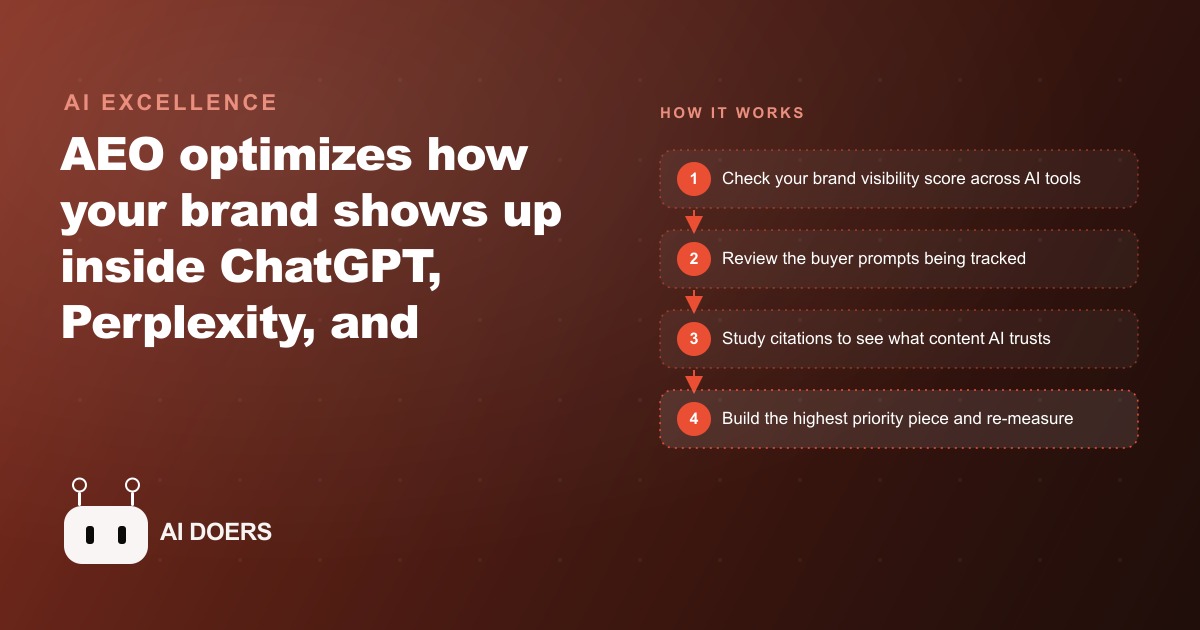
Most businesses that have invested in ranking on Google are discovering that their search position no longer tells the whole story of their online visibility. I am Madhuranjan Kumar, and the argument I want to make is direct: the AI assistant answer is increasingly where your buyer decides before they even search, and most businesses have zero presence in that channel. They are invisible where their future customers are looking.
Your Google ranking does not follow you into the AI answer
ChatGPT crossed 400 million weekly active users in early 2025. Perplexity handles hundreds of millions of queries per month. Gemini is the default AI on every Android device and deeply integrated into Google Search itself. A growing share of the research questions that used to produce a page of blue links now produce a synthesized answer from one of these tools, and the buyer acts on that answer without clicking through to verify it against ten competing pages.
The mechanism that determines which brands appear in those answers is different from the mechanism that determines Google rankings. Page authority, backlink count, and keyword density are the signals that govern search results. What the AI assistant reads and cites is governed by where the content appears across trusted sources, what format it is in, how directly it answers the specific question being asked, and which brands are mentioned in the editorial content those sources contain. A business that has spent years building Google authority has built in one channel. Answer engine optimization is a different channel that has been growing while most businesses were not paying attention to it.
The conversion rate data is what makes the channel commercially important rather than just interesting. Traffic that arrives from an AI assistant referral converts at roughly three times the rate of general organic search traffic, because the buyer has already done the comparison work inside the AI interface. They have received a recommendation and they are acting on it. The intent is specific and the decision is further along than it typically is when someone clicks a search result. A business that earns AI mentions is reaching buyers at a later stage of the decision process, which is the most valuable stage.
Visibility inside AI answers requires a different kind of content than visibility on Google
The content that earns citations inside ChatGPT and Perplexity answers is not the same content that ranks on Google, even though they overlap. AI tools pull from content that directly answers comparison questions, recommendation questions, and research questions in a format that is easy to extract and include in a synthesized response. Listicles that compare options and explain why each one fits a specific situation. Long-form guides that explain a topic with specific named examples. Content that uses the brand name in contexts that signal authority and relevance on specific treatment types or service categories.
Generic blog content that explains what a service is does not earn AI citations reliably because it does not answer the specific questions buyers ask AI assistants. The questions buyers ask AI assistants are: what is the best option in my area for this specific need, what should I look for when choosing between these two options, which type of provider handles my specific situation. Content that directly addresses those question formats, with specificity and named brand references, is the content that earns citations.
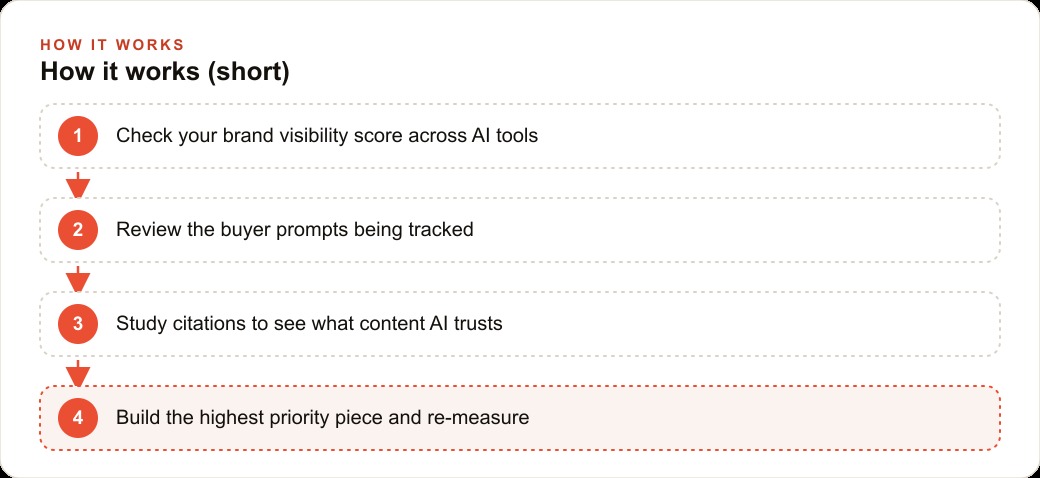
The first step in understanding where you stand is checking your current AI visibility score. Tools like HubSpot's AEO product give you a score reflecting how often your brand appears in AI answers for the buyer-journey prompts relevant to your category. A score of 14 percent means appearing in roughly one in seven relevant AI answers. A score of 66 percent means appearing in roughly two thirds. Most businesses checking this for the first time find themselves in the lower range, not because their product or service is weak, but because they have never built content in the formats that AI assistants cite.
The citation analysis is the most actionable view in the whole system
Knowing your visibility score tells you where you stand. The citation analysis tells you what to build next. The citations panel in an AEO tool shows which content types the AI is pulling from for your category: listicle blog posts, long-form guides, directory entries, earned press mentions. It shows whether the sources are owned by you or earned through third parties. That breakdown is the exact map for your content investment.
In a typical demo, listicles come out as the most-cited content type in many local service categories. That is not a coincidence. Listicles are formatted to answer comparison questions directly. They name specific options, give specific reasons, and make the recommendation clear in a way that is easy for a language model to extract and include in a synthesized answer. "The 5 best options for X in your area" is a format that AI assistants cite reliably because it answers exactly the question a buyer is asking. A business that has published zero listicles about its category has no content in the format that earns the most citations.
The recommendation section of an AEO tool goes one level further by specifying the exact next piece to build: the title, the summary of what it should cover, and the target audience. Working down that priority list, publishing one piece per month, and re-measuring every four to six weeks is the standard cadence that moves a visibility score from the low range to the mid range within a quarter. The businesses that sustain that cadence and track the results will be the ones appearing in AI answers by default for buyers in their category.
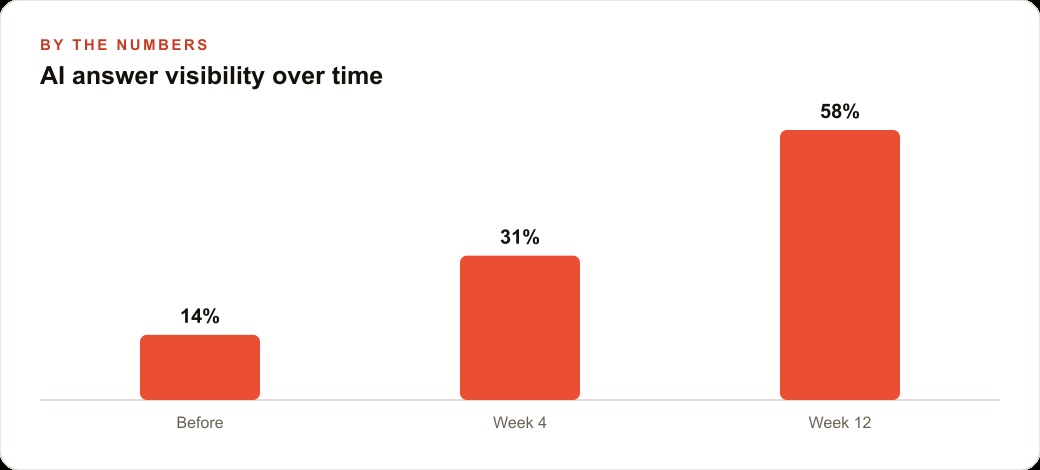
A med spa with 14 percent visibility and the path to 58 percent
For a med spa with a typical starting visibility score in the low range, the path to meaningful AI presence is three targeted pieces of content over twelve weeks and a tightened set of service pages that answer buyer comparison questions directly.
The buyer questions that AI assistants answer for aesthetics and skin treatment searches are specific: is microneedling or laser better for acne scars, which treatment tightens skin without surgery, what should I expect from a first appointment at a med spa. Those are the prompts that buyers type and the questions that AI answers. A med spa that has no content directly addressing those questions in a format that is easy to extract and cite is absent from every one of those answers.
The first piece to build is a listicle that addresses the most common comparison question in the local market. The second is a guide that explains a signature treatment in detail, answers the comparison questions within the body of the guide, and uses the clinic's name throughout in the context of expertise and outcomes. The third is a piece that earns mentions in a trusted local or industry publication, because earned citations from third-party sources carry weight in AI answer selection that owned content alone cannot replicate.
Within twelve weeks of publishing those three pieces and tightening the service pages to answer the buyer questions they currently leave unanswered, a med spa's AI visibility score realistically moves from the 14 percent starting range to the 50 to 60 percent range. The buyers who were previously researching treatment options in AI assistants without encountering the clinic now encounter it, and the three-times-higher conversion rate that characterizes AI-referred traffic makes each of those encounters more commercially valuable than a comparable organic search click.
For any business running Facebook and Instagram ad campaigns targeting buyers at the consideration stage, AI visibility in the same category makes the paid advertising more efficient because buyers arriving from an AI mention are already further along in their decision and need less persuasion in the ad creative. For businesses investing in SEO and organic content alongside paid channels, the content built for AEO also performs in traditional search, because directly answering specific buyer questions is good SEO practice as well as good AEO practice. The investment works in both channels simultaneously.
The businesses that start paying attention to this now have an advantage that closes as competitors wake up to the same opportunity. The brand that earns the AI answer position in its category first holds it more cheaply than the brand that has to fight to displace an already-established presence. The window is open. The measurement starts with a single visibility score check.
That is exactly what we do at AI DOERS. Book a private 30-minute call with Madhuranjan Kumar and we will map the fastest path to it for your specific business.
Book your call →
Madhuranjan Kumar
Madhuranjan Kumar brings 20 years of performance-marketing experience and has managed over $200 million in Facebook ad spend for brands across the United States and beyond. His expertise spans the full modern marketing stack: Meta, Google Ads, TikTok, email automation, CRM, and the websites that hold it together. At AI DOERS he turns that track record into lead-generation systems for businesses across every industry.