
The Three Ingredients of Investing, Explained for Beginners
Investing comes down to three ingredients working together. Time lets compounding grow your money and recover from crashes, diversification across asset classes cushions any single loss, and liquidity in the form of an emergency fund keeps you from selling at the wrong moment.

The whole of investing fits in three words, and the rest is noise
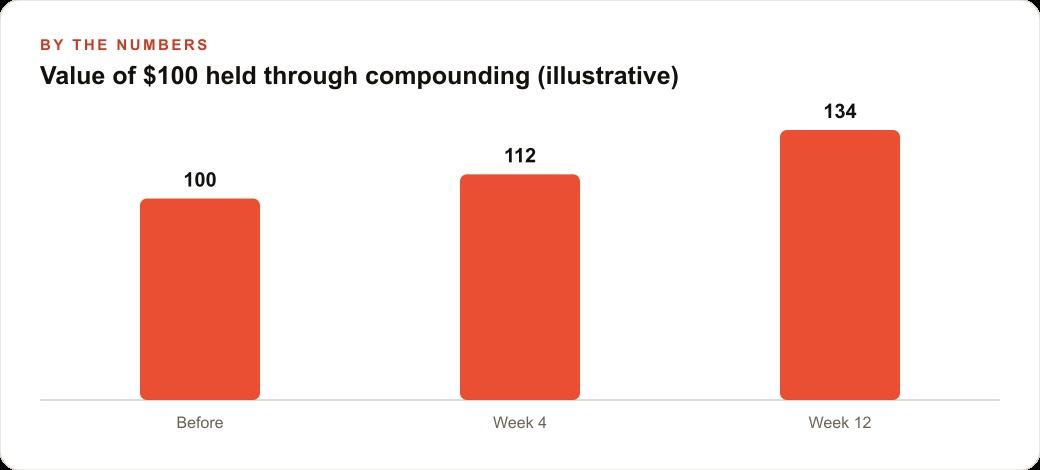
Someone put 100,000 dollars into the market right before the 2008 crash and watched it fall to roughly 52,000. By 2018 it was worth about 252,000. They did nothing clever to earn that. They simply did not sell. I am Madhuranjan Kumar, and I sat through a full beginner investing course looking for the part a busy business owner actually needs, and it turns out almost everything worth knowing hangs on three words: time, diversification, and liquidity. Get those three right and the endless jargon that surrounds investing shrinks into footnotes.
I want to make an argument in this piece, not just list facts. The argument is that investing rewards temperament far more than it rewards cleverness, and that the same steady discipline which keeps a portfolio alive is the discipline that keeps a business alive. The three ingredients are really three forms of patience, and once you see them that way the whole subject gets calmer.
Start with time, because it is the ingredient that does the heavy lifting while you sleep. Markets recover and compounding rewards those who wait, which is why the person who held through 2008 ended up far ahead of where they started. The people who actually lost money in that crash were mostly the ones who panic sold at the bottom, converting a temporary paper loss into a permanent real one. Time is not a passive backdrop to investing. It is the active ingredient. Give a reasonable portfolio enough years and the swings that terrify you in the moment flatten into a rising line. Take those years away, by needing the money too soon or by bailing out at the first scare, and you strip out the one force most reliably on your side.
Diversification is the second ingredient, and it is the one the old cliche got exactly right. Do not put all your eggs in one basket, spread money across asset classes like stocks, bonds, crypto, and real estate, so that when one investment tanks the others cushion the blow. The subtle point most beginners miss is that diversification is not about maximizing your return. It is about surviving long enough to let time do its work. A concentrated bet can win big, but it can also wipe you out before compounding ever gets a chance, and a portfolio that gets wiped out has a return of negative everything. Spreading risk is how you stay in the game, and staying in the game is the whole point.
Liquidity is the third, and it is the quiet one that saves you from yourself. Liquidity is how fast you can turn an investment back into cash, and the practical version is an emergency fund of three to six months of expenses sitting somewhere safe and reachable. Here is why it belongs in the same sentence as time and diversification. Without a cash buffer, a sudden shock, a job loss, a slow quarter, a surprise bill, forces you to sell your investments at the worst possible moment, usually when prices are down. Liquidity is what lets you hold through a crash instead of being forced to feed it. It is the ingredient that protects the other two.
Now, how these three actually combine in practice comes down to matching your risk to your time horizon and refusing to overpay in fees. Risk should track your life stage. A rough progression runs around eighty percent stocks and twenty percent bonds in your twenties, closer to sixty and forty in your thirties, and roughly twenty percent stocks and eighty percent bonds near retirement, because a shorter horizon leaves less room to recover from a swing. That is time expressed as a dial. The younger you are, the more time you have to ride out volatility, so the more of it you can afford to hold.
On cost, the honest answer for most beginners is index funds and ETFs. Active funds pay a manager and cost more, yet many of them fail to beat their own benchmark, which is a remarkable thing to pay a premium for. An index fund simply tracks something like the S&P 500 at low cost, and an ETF adds the convenience of trading like a stock with no minimum. The fee rule is blunt and worth tattooing somewhere: avoid load fees and keep the expense ratio under one percent unless performance clearly earns it. Small fees compound against you in exactly the same relentless way returns compound for you, so a one percent drag is not one percent, it is a slow tax on every future year.
If you ever do size up a single stock, three numbers keep you honest. A beta under one means it moves less than the market. The dividend yield tells you the cash payout you collect, worth comparing against a plain savings rate. And a price to earnings ratio near the market average of sixteen to seventeen suggests fair value rather than a bubble. Bonds work on a different logic entirely: you lend money to a company or government and collect interest until maturity, which makes them safer than stocks but sensitive to rising rates and to the issuer defaulting. Speculation, the crypto and gold and commodities corner, follows the opposite rule from everything above. There, going deep on one thing you truly understand beats spreading thin, which is precisely why it should stay a small, optional slice and never the foundation.
This framework is not just for individuals. Any business with cash sitting idle faces the same three questions, and the ingredients translate cleanly. Keep a liquid buffer so the business survives a slow quarter without panic. Diversify the surplus instead of betting it all on one move. Give the rest time to compound rather than yanking it out to chase a quick win. The discipline that keeps a portfolio steady is the same discipline that keeps a business steady, which is why owners who internalize this tend to make calmer decisions everywhere, including in how they spend on growth. An owner who understands that returns compound quietly also understands why a steady, well-measured spend on Facebook and Instagram ad campaigns or a patient investment in SEO and organic search beats a frantic all-in bet on one channel, and why the customers captured in a well-run CRM and website stack are an asset that compounds the same way a held stock does.
Let me make it concrete with one worked example. Picture a small accounting practice sitting on a healthy cash balance after tax season, say 120,000 dollars of surplus above what it needs to operate. The liquidity rule comes first: park three to six months of operating expenses, perhaps 40,000 dollars, in an accessible account so payroll is never at risk during a quiet stretch. The diversification rule handles the remaining 80,000: rather than dropping it all into one place, split it across low-cost index funds, some bonds, and a modest extra cash reserve, so no single stumble sinks the whole surplus. The time rule governs the invested portion: leave it to compound and rebalance once or twice a year instead of pulling it out every time the market wobbles. At a modest average annual return, that 80,000 growing quietly for a decade becomes a materially larger number, and the firm did nothing dramatic to earn it beyond staying patient. Here is the part that compounds beyond the money itself: when the partners run their own finances this way, they can offer the same clear, low-cost guidance to clients, which deepens trust and opens a steady advisory line beyond seasonal tax work. A firm that practices what it preaches becomes the obvious place clients turn to for money decisions.
There is a behavioral truth underneath all of this that the numbers only hint at. The enemy of the average investor is not a lack of information, it is emotion arriving at the worst possible moment. Fear peaks exactly when prices are lowest, which is precisely when selling does the most damage, and greed peaks when prices are highest, which is when buying does. The three ingredients are, in a sense, a set of pre-commitments that take those emotions off the table before they can strike. A cash buffer means fear cannot force your hand. A diversified mix means no single scare can wipe you out. A long horizon means a bad year is a chapter, not the ending. You are not trying to outsmart the market. You are trying to out-behave your own worst instincts.
I want to name the common mistakes plainly, because avoiding them is most of the game. The first is chasing performance, pouring money into whatever went up most last year, which is how people reliably buy high. The second is paying too much in fees, often without noticing, because a two percent expense ratio sounds tiny and quietly compounds into a fortune surrendered over decades. The third is treating speculation as investing, betting the foundation on crypto or a hot commodity instead of keeping it a small optional slice. The fourth, and the most expensive, is selling in a panic, converting a temporary dip into a permanent loss. Notice that none of these are failures of intelligence. They are failures of temperament, which is oddly encouraging, because temperament is something you can build with a written plan and a little distance from the daily noise.
The last thing worth saying is that consistency beats brilliance over any horizon that matters. Someone who invests a steady amount every month into low-cost index funds, keeps a proper buffer, and never sells in fear will, over twenty years, almost certainly outperform the clever trader who jumps in and out chasing the next move. That is not a motivational slogan, it is what the long arc of compounding does to steady contributions. The person who held through 2008 did not have special knowledge. They had the temperament to do nothing while everyone around them did something, and the market rewarded them for it.
It helps to remember that every asset class in the course fits somewhere on the same spine of time, diversification, and liquidity. Stocks pay through price appreciation and, for steadier companies, dividends, and they reward the long horizon. Bonds trade growth for safety and steady interest, cushioning the swings. Cash is pure liquidity, the buffer that keeps you solvent. Speculation is the small, optional edge, thrilling and dangerous, that should never threaten the foundation. Seen this way, building a portfolio is not about picking winners. It is about assembling the right mix of those roles for your stage of life, then letting patience do the rest.
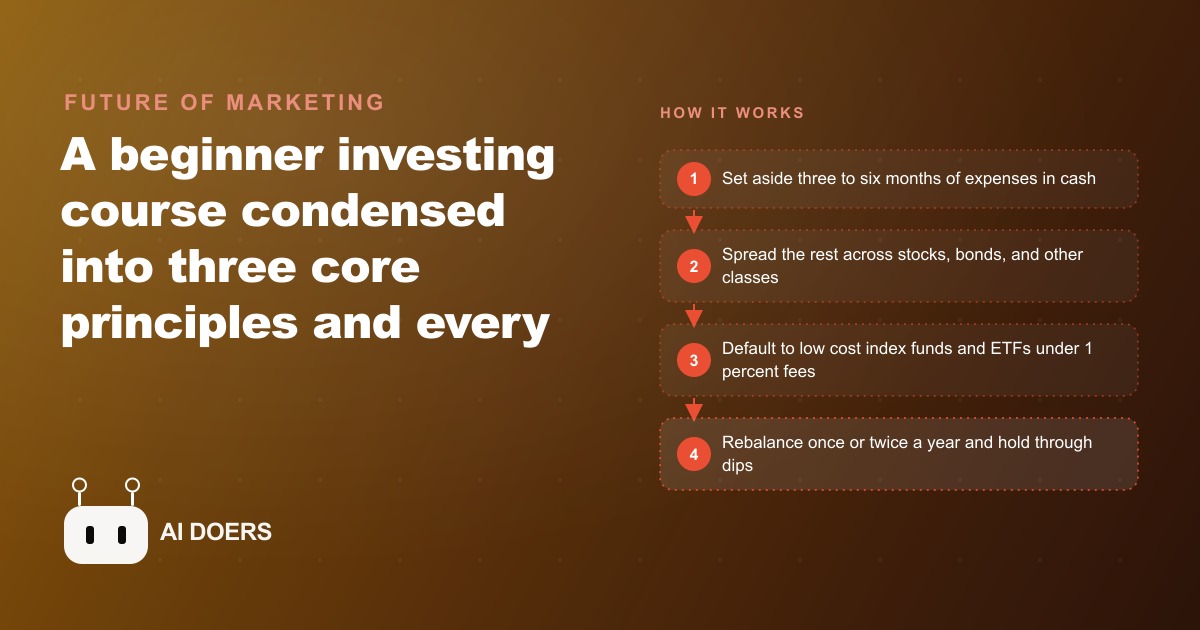
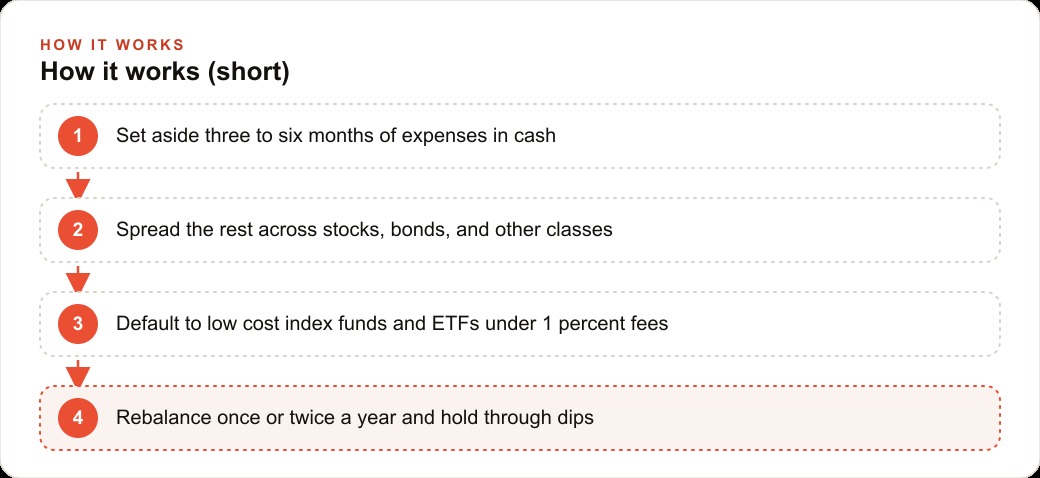
So if you want to actually do this, the order is simple and boring, which is exactly why it works. Move three to six months of expenses into a safe, liquid account before you invest a single dollar. Choose one or two broad index funds or ETFs with expense ratios under one percent as your core. Set your stock to bond ratio to match your age and your stomach for swings, and write it down so you are not improvising during a scary week. Then rebalance once or twice a year by trimming whatever has grown past target and topping up what has fallen behind, and resist every urge to sell during a dip.
The whole system rewards patience and punishes panic, which is the real lesson underneath the three ingredients. You are not trying to be brilliant. You are trying to be steady enough to let time, diversification, and liquidity do their slow and unglamorous work. You can absolutely run this yourself with a little reading and a steady hand. And if you would rather have someone help you set the buffer, pick the low-cost funds, and build a plan that fits your business and your stage of life, that is the kind of work an expert can map out with you so you are not guessing your way through it.
That is exactly what we do at AI DOERS. Book a private 30-minute call with Madhuranjan Kumar and we will map the fastest path to it for your specific business.
Book your call →
Madhuranjan Kumar
Madhuranjan Kumar brings 20 years of performance-marketing experience and has managed over $200 million in Facebook ad spend for brands across the United States and beyond. His expertise spans the full modern marketing stack: Meta, Google Ads, TikTok, email automation, CRM, and the websites that hold it together. At AI DOERS he turns that track record into lead-generation systems for businesses across every industry.