
9 AI Breakthroughs From TechCrunch Disrupt and What Restaurant Owners Need to Watch
The AI and robotics companies competing at TechCrunch Disrupt this year are not building demos. They are building the infrastructure that will reshape how food gets made, sourced, and delivered.
Restaurant Owners Who Wait for This to Come to Them Will Pay for the Delay
Every major shift in restaurant economics has followed the same pattern: the operators who engaged with the technology while it was still early received better pricing, more attentive vendor support while their operation served as a reference case, and a market position that later arrivals had to pay significantly more to approximate. Online ordering, loyalty apps, and delivery platform integration all followed this trajectory. The operators who treated them as speculative and waited for the market to mature found themselves paying full commercial rates for relationships that early adopters had locked in at launch pricing.
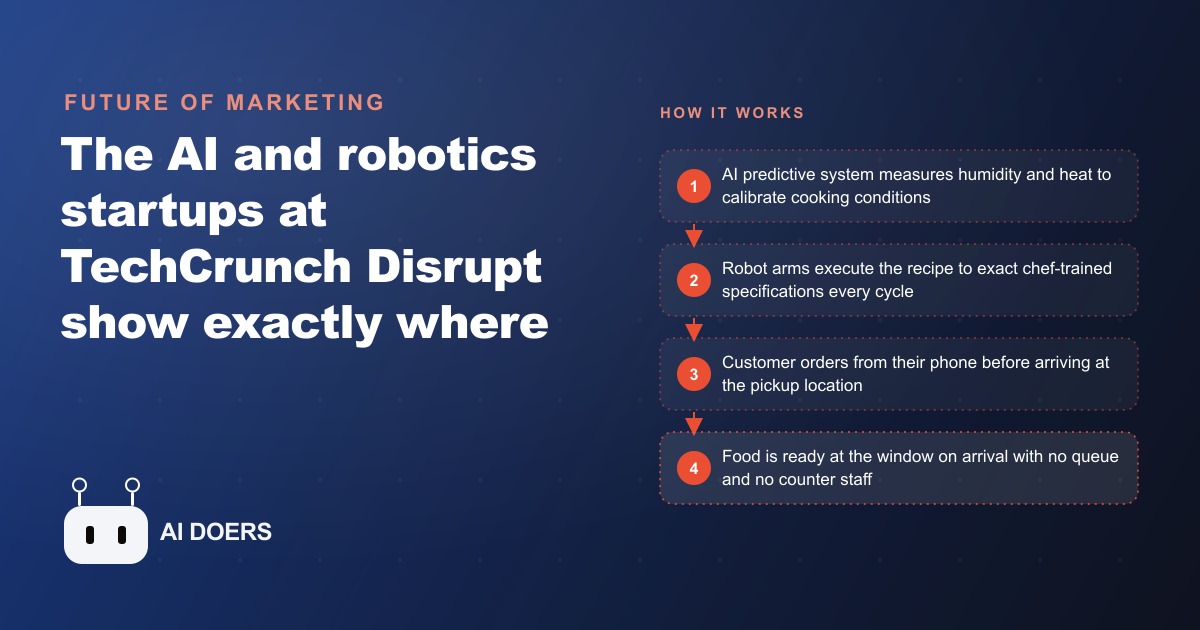
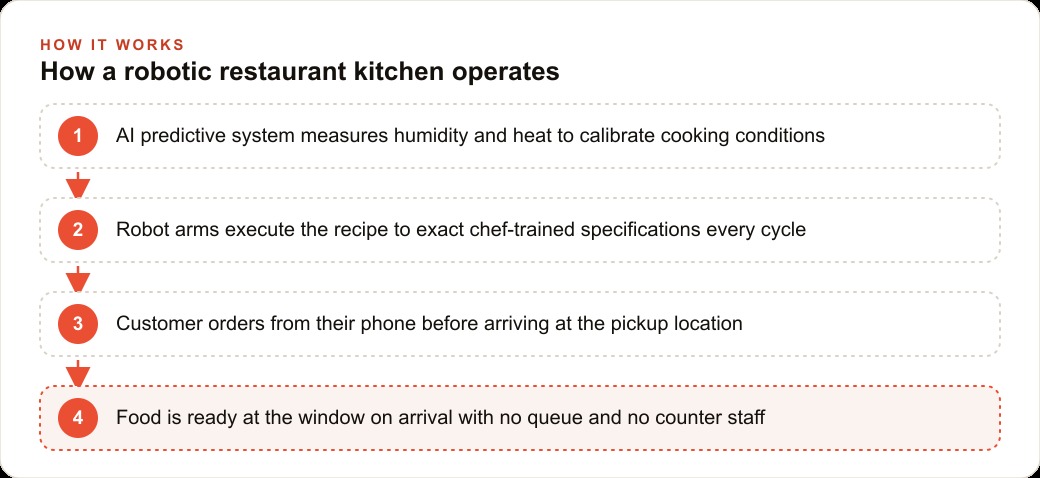
The technology showcased at TechCrunch Disrupt's 20th anniversary is not speculative. A fully robotic Korean barbecue truck called Shinstar has been operating commercially, uses AI to adjust cooking parameters in real time based on humidity and heat measurements, achieves roughly 80 percent labor reduction compared to a staffed kitchen at equivalent output volume, and is actively targeting airport deployments at LAX and San Francisco where customers order before clearing security and collect a ready meal at a pickup window. That is not a demo. It is a product in commercial operation making its next-phase market pitch right now.
The supply chain companies at the same event are similarly deployed. Instacrops connects soil sensors to an AI platform that determines optimal irrigation timing and volume for each field section, delivering approximately 30 percent water reduction and around 12 percent profit improvement for participating farms. TensorField's robots move through commercial growing operations identifying weeds from crops at quarter-inch precision without herbicides, running at approximately one mile per hour across open fields. These are active commercial deployments producing measured outcomes, not prototypes behind glass.
The position here is specific: restaurant owners who treat these announcements as interesting-but-distant are making a structural decision about their competitive position two to three years from now. The vendors building commercial relationships today will treat their early partners differently from operators who arrive after the technology has proven itself to the skeptics.
Robotic Kitchens Are Not Replacing Chefs, They Are Replacing the Decisions Nobody Wants to Make
The most common misframing of robotic kitchen technology is that it eliminates cooks. Shinstar's system was built by a world-renowned Korean chef who spent months teaching it his specific judgment calls during cooking, not just the recipe steps. The AI replicates the decisions about when to adjust heat intensity, how to respond to humidity changes in the cooking environment, and when a cycle needs a mid-course correction based on what the sensors detect. It replicates those decisions consistently on every single cycle, at 2 p.m. and at 2 a.m., without the variance that fatigue, skill differences between staff members, and the friction of high-volume service conditions introduce.
What the system replaces is not the chef's creative work. It replaces the repetitive physical execution of decisions the chef already made during recipe and system development. The chef decided what to cook, how to cook it, and what environmental variables to respond to and how. Those decisions are encoded in the system. The consistent execution of those decisions at scale and at all hours is what the robotic system handles.
This distinction matters practically for how an owner should think about the technology. The high-value human contribution to food service is not executing the hundredth preparation of a dish during a busy service shift. It is developing the recipe that makes the dish worth ordering, building the relationship with the regular who has been coming in for years, training the front-of-house team that elevates the guest experience beyond what the food alone provides, and making creative decisions about the menu that keep the operation relevant as the market changes. Robotic systems are designed specifically for the repetitive, high-consistency execution component, leaving the higher-judgment components to people who add real value in those areas.
For quick-service and fast-casual operators, the business case is most immediate. These operations have the highest labor ratios relative to preparation complexity, the most standardized recipes, and consumer expectations around consistency that robotic execution directly addresses. A quick-service operator where two or three high-volume preparation stations account for the majority of kitchen labor hours per service is looking at the first category of work that robotic kitchen vendors will approach with a commercial pitch.
The other operational implication is 24-hour viability for locations that cannot currently justify staffing overnight. Airports, transit hubs, hospitals, and venues with unpredictable peak periods all represent market segments where a robotic kitchen's ability to run at 2 a.m. at the same cost as 2 p.m. changes the unit economics entirely. Shinstar's airport roadmap reflects this logic: an order placed in a security line and collected at a window with no wait and no counter staff is a customer experience that a staffed kitchen cannot replicate at equivalent cost.
The Supply Chain Disruption Is Bigger Than the Robot Story and Almost Nobody Is Watching It
The supply chain story from TechCrunch Disrupt is less visible than the robotic kitchen story but has more near-term implications for restaurant operators managing food cost and quality consistency. Two of the most commercially advanced companies at the event were focused not on the restaurant kitchen but on the agricultural operations that supply it.
TensorField's robots move through commercial growing operations identifying weeds from crops at quarter-inch precision and eliminating them without herbicides, running at roughly one mile per hour. The commercial implication for farms adopting the technology is a reduction in chemical input costs and in the labor cost of manual weeding. Those cost reductions eventually translate to more stable wholesale pricing and fewer quality inconsistencies caused by herbicide stress on crops that absorb more chemical than intended.
Instacrops connects wireless soil sensors to an AI platform that determines the precise irrigation timing and volume optimal for each crop type and each section of a farm. The company reports approximately 30 percent water reduction and roughly 12 percent profit improvement for participating farms. For restaurant operators sourcing fresh produce, the implication is more consistent quality: crops grown with optimal irrigation timing show less size and density variation across a harvest, which reduces the prep waste that comes from oversized or undersized produce that does not conform to recipe specifications.
Uni Bio presented another agricultural technology at the event: a shrimp shell-derived nano-powder that improves how crops absorb pesticides, reducing the total volume required by approximately 50 percent while maintaining effectiveness. A palm-sized application covers the equivalent of 20 tennis courts of growing surface. The pesticide reduction has both an input cost implication for farms and a residue implication for the quality and regulatory profile of the produce that reaches the restaurant.
The aggregate effect of precision agriculture technology on the supply chain becomes meaningful when adoption reaches a threshold across major growing regions for key ingredients. Restaurants that have built supplier relationships with farms using these tools will have established communication channels and preferred-buyer status that gives them access to the most consistently high-quality produce, preferential allocation during constrained periods, and the pricing advantages that come from being a valued early partner to a supplier that is genuinely improving its cost structure.
Drone Delivery Infrastructure Is Being Built Right Now and the Early Relationships Are Being Formed
The Startup Battlefield winner at TechCrunch Disrupt, Glide, built a freight system that converts a standard truck into a rail vehicle in under 90 seconds. Its AI routing system optimizes freight movement across road and rail networks to reduce both cost and emissions. The near-term commercial application is fleet operators and logistics companies, but the downstream effect for restaurants is in delivery cost structures as the freight network adapts.
Gargoyle Systems, another company at the event, is building a distributed drone detection network that airports, stadiums, and municipalities use to identify and track unauthorized drones in controlled airspace. The company pays node owners a share of subscription revenue when their rooftop sensor contributes to the detection grid. The relevance for restaurant operators is structural: the same regulatory frameworks being built around drone detection and airspace management are the frameworks within which commercial drone delivery will operate as it scales.
Commercial drone delivery for food and consumer goods is already operating in limited US markets. The restaurant operators in those markets who engaged early with the logistics companies building drone delivery networks received preferential placement in launch coverage zones and first access to per-delivery cost structures that were most favorable before commercial rates were established. That pattern will repeat as drone delivery expands to additional markets, and the window for early engagement with the companies building that infrastructure is open now.
For an operator in a market where drone delivery is not yet available, the relevant action is awareness and early relationship-building, not waiting for a vendor to knock. Understanding which logistics companies are actively expanding drone delivery coverage and establishing contact with the operators developing those networks positions the restaurant to be an early partner when coverage reaches the market, rather than a late adopter paying commercial rates with no negotiating leverage and no standing as a reference customer.
Three Moves a Restaurant Owner Can Make Before the First Vendor Knocks
Here is the concrete case for translating TechCrunch Disrupt observations into near-term positioning decisions for a quick-service operator.
The first move is a time audit on the three highest-labor preparation stations in the kitchen. Document how many staff-hours per week go into each station, what the specific preparation tasks are, and how standardized the execution is across shifts and staff members. This audit creates the data foundation for evaluating robotic kitchen systems when vendors begin commercial conversations. A station running 10 or more staff-hours per week of highly standardized preparation is a strong candidate for early automation. A station running equivalent hours with high variability in preparation requirements, based on special orders or frequent menu variation, is a weaker candidate for the first generation of systems. The audit takes two to three shifts to complete properly and produces the specific numbers any vendor will ask for when assessing fit.
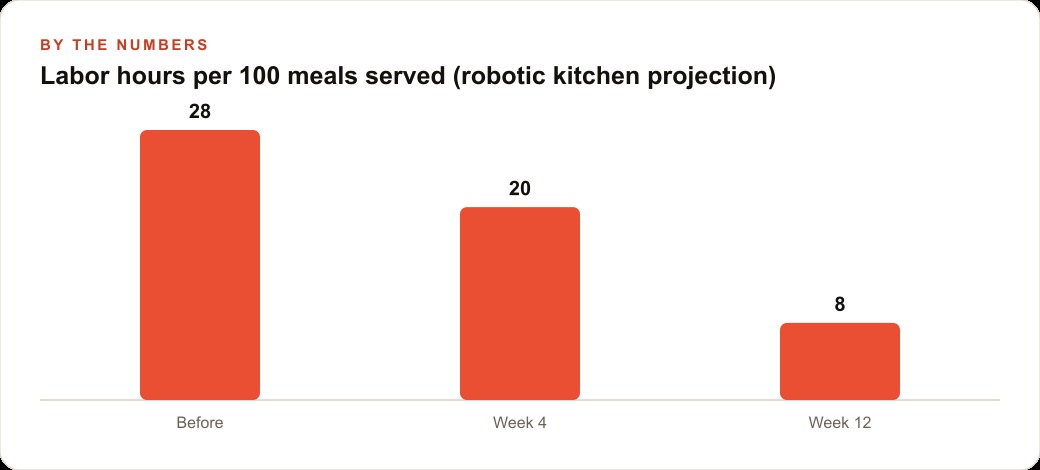
For a quick-service operator running this audit across three high-volume preparation stations, illustrative numbers look like this. Three stations consuming a combined 32 staff-hours per week, at an average labor cost of $18 per hour including employer-side costs, represent $576 per week in preparation labor. Systems of the type Shinstar demonstrates are projected to handle approximately 80 percent of equivalent high-standardization volume. At 80 percent labor offset on those 32 hours, the savings potential is approximately $461 per week, or roughly $24,000 per year in labor cost that shifts from a recurring operating expense to a capital investment in the robotic system. The payback period depends on system cost and financing terms, both of which are currently being defined through early commercial deployments. Operators in conversation with vendors now influence what those terms look like.
The second move is a direct supplier conversation. Ask current produce and protein suppliers which farms in their network are using precision irrigation, robotic weed management, or other AI-driven agricultural technology. Identify the farms that are, and request priority sourcing from those farms going forward. In most cases this costs nothing to request and positions the restaurant to benefit from quality consistency advantages as those farms' production techniques mature and their cost advantages become more pronounced.
The third move is direct contact with the companies building the technology. Shinstar, Instacrops, TensorField, and Gargoyle Systems all have public contact channels. Getting on an interest list or establishing a commercial conversation with their teams costs nothing and creates the relationship that early-partner pricing and pilot access flow through.
Madhuranjan Kumar, who works with restaurant and food-service clients on marketing and operations strategy, frames this as the difference between being a vendor's case study and being a vendor's reference customer. Case studies get written after the commercial relationship is established at standard terms. Reference customers helped shape what the product looked like in its early commercial form, received pricing that reflected the vendor's need for validated deployments at that stage, and hold a relationship with the vendor team that translates into better support, earlier access to product updates, and a voice in how the product evolves. The window for being a reference customer on these specific technologies is open now. It will not stay open indefinitely, and the operators who show up after that window closes negotiate from a structurally weaker position on every dimension.
That is exactly what we do at AI DOERS. Book a private 30-minute call with Madhuranjan Kumar and we will map the fastest path to it for your specific business.
Book your call →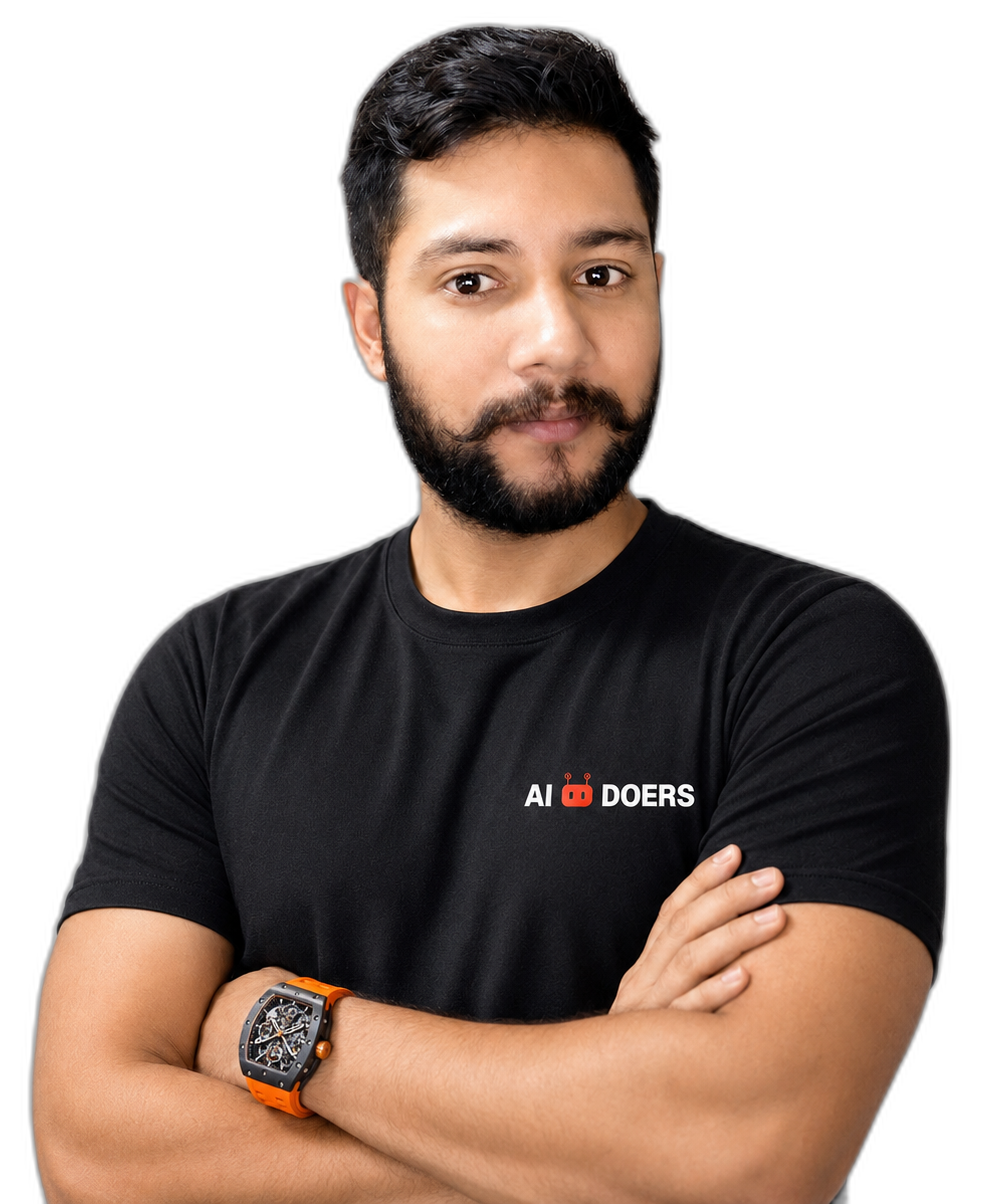
Madhuranjan Kumar
Madhuranjan Kumar brings 20 years of performance-marketing experience and has managed over $200 million in Facebook ad spend for brands across the United States and beyond. His expertise spans the full modern marketing stack: Meta, Google Ads, TikTok, email automation, CRM, and the websites that hold it together. At AI DOERS he turns that track record into lead-generation systems for businesses across every industry.