
What Sora 2 Is Really About and What E-Commerce Brands Should Do About It Now
Sora 2 is both a powerful AI video model and a TikTok-style social app. Now that the launch hype has settled, here is an honest look at what it can do, who it is for, and how e-commerce brands can use it before the window closes.

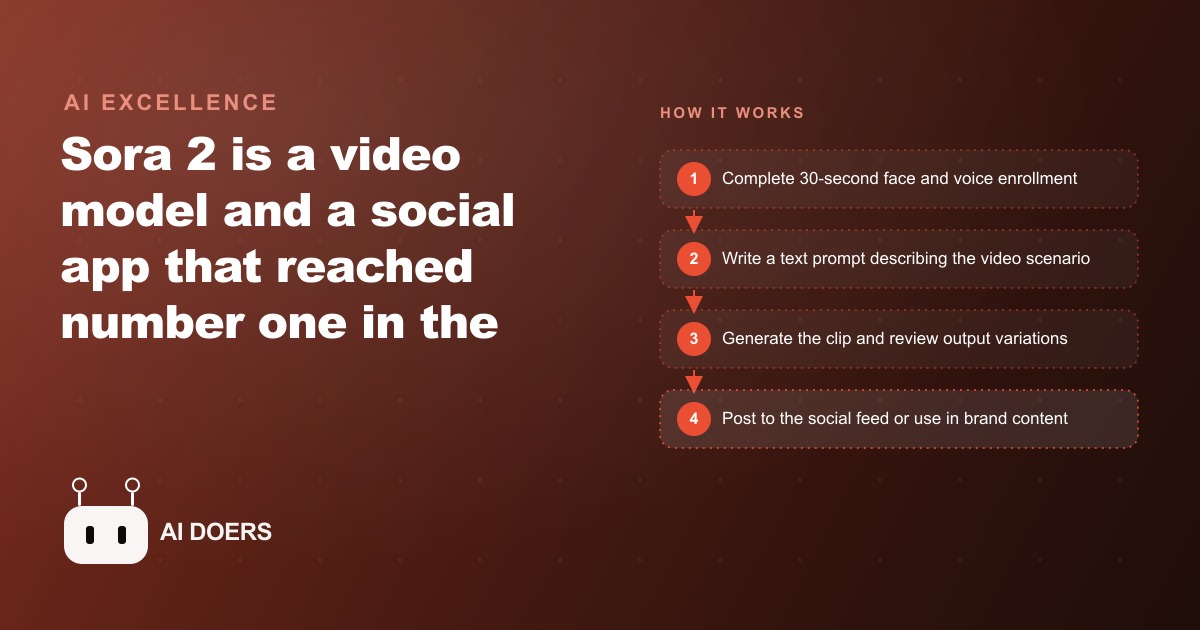
Two weeks after Sora 2's launch, Madhuranjan Kumar who tested it most publicly stopped opening the app but kept gaining followers as others generated content featuring their likeness, which is either the most interesting or the most uncomfortable social media dynamic of the year.
The launch coverage treated Sora 2 primarily as a video generation model. The quality improvement was real and received justified attention. But the coverage missed the more interesting story: Sora 2 is a social application with an integrated video generation model, and those two things are not the same thing even if they share an interface. The strategies that make sense for a video tool are not the same strategies that make sense for a social platform with passive audience growth mechanics, and conflating the two is how brands end up applying the wrong framework from the beginning.
Madhuranjan Kumar tracks these platform releases closely for their implications on how businesses should allocate their content production and distribution resources. Here are six things about Sora 2 that the launch coverage either got wrong or missed entirely.
1. It is a social app with an integrated video model, and conflating the two leads to the wrong strategy
The framing in most launch coverage was: Sora 2 is an AI video generator. The accurate framing is: Sora 2 is a social media application in which AI video generation is the native content format.
This distinction matters because it changes the strategic questions a brand should be asking. If you are evaluating a video generator, the questions are: How good is the quality? How fast does it generate? What does it cost per clip? Can the output be used in paid advertising? These are valid questions for the generation model but they miss the social layer entirely.
If you are evaluating a social platform, the additional questions are: Who is the audience? What content performs on the feed? What is the organic reach potential for early accounts? How does the platform's distribution algorithm weight different content types? What are the rules about brand content and commercial use? How does this platform fit into the broader channel mix?
Sora 2 requires both sets of questions simultaneously, which is an unusual evaluation framework that most teams are not structured to apply. The team assessing video generation quality is typically not the same team assessing social media platform strategy. Routing the Sora 2 evaluation to only one of those groups produces an incomplete assessment that leads to either over-indexing on the production quality story or under-resourcing the platform presence entirely.
The practical consequence of conflating the two is that brands either miss the social distribution opportunity by treating Sora 2 as a production tool only, or they treat it as just another social channel and miss the production efficiency story that makes it worth the subscription cost regardless of social performance. The correct approach is to assess both dimensions separately and build a strategy that captures value from each.
2. The cameo feature creates passive audience growth without Madhuranjan Kumar producing any content
The cameo feature is the most strategically underappreciated element of Sora 2, and it received less coverage in the launch wave than almost any other feature.
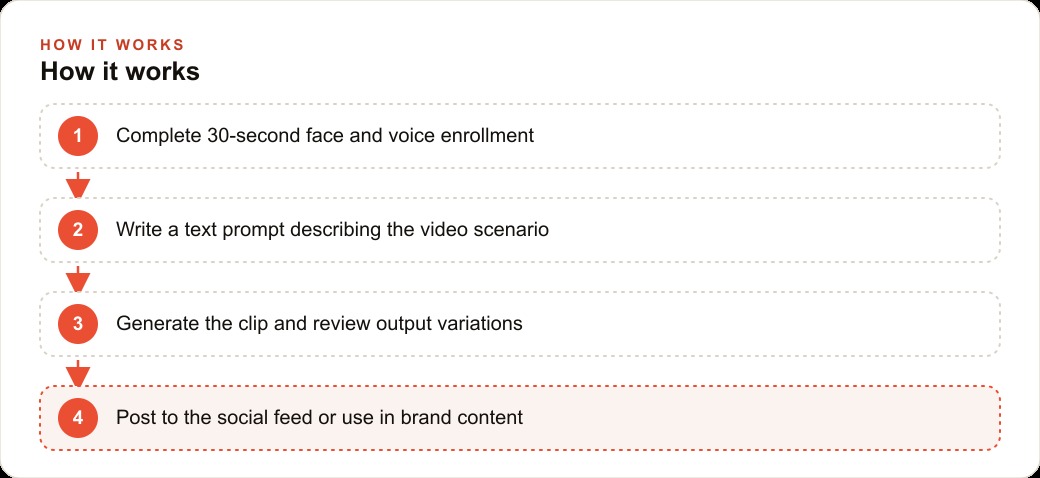
Here is how it works. Any enrolled user who has made their likeness publicly available can appear in videos generated by other users. When another user creates a video that includes an enrolled person's likeness, that enrolled person receives a notification, and this breakdown appears in their cameo feed. Their followers can see this breakdown. Their profile gains visibility with the generating user's audience.
The implication is that an enrolled creator gains audience exposure through content they did not create, did not approve, and did not have to spend time producing. Madhuranjan Kumar who stopped opening the app two weeks after launch and continued gaining followers was experiencing this dynamic directly. Other users were generating content that featured their enrolled likeness, and each piece of that content was extending Madhuranjan Kumar's visibility to audiences they had not specifically reached through their own posting.
For personal brands and solopreneurs, this is a meaningful passive distribution mechanism. The enrolled creator's likeness appears in the feeds of audiences following the generating users, which functions as unpaid reach extension without any effort from Madhuranjan Kumar after the initial enrollment.
The strategic considerations around this feature require careful thought. Enrollment means consenting to appear in content that others create, which involves some loss of control over context and representation. The platform's content policies govern what is technically permissible, but those policies are imperfect guardrails. Brands and personal brands considering enrollment need an explicit internal position on what kinds of generated appearances are acceptable before enabling the public likeness option, because the cameo system does not require the enrolled person's approval for each individual video.
3. App Store number one on launch day is a novelty signal, not a retention forecast
Sora 2 reaching the top of the Apple App Store on launch day generated significant coverage and was widely cited as evidence of strong consumer demand. The number is real. The interpretation is often overextended.
App Store rankings on launch day measure peak initial interest. They are driven by notification-style marketing: announcements, coverage, social media discussion, and the natural curiosity of a tech-aware audience that follows AI product news. A product can reach number one on launch day without having strong engagement after day seven or without retaining meaningful monthly active users after the first thirty days.
This is not unique to Sora 2. Most major AI consumer apps have shown the same pattern: a significant launch-day spike in downloads, followed by a retention curve that reveals whether the product has genuine sustained utility or only novelty appeal. The launch-day ranking tells you the size of the interested audience at the moment of launch. It tells you nothing about whether that audience returns the following week.
For brands deciding whether to invest in building presence on Sora 2 now, the App Store number is useful as a signal that there is a real initial audience. It is not useful as evidence that the platform will have sustained user engagement twelve months from now. The better leading indicators for that question are daily active user data, session length data, and the retention curve for the earliest cohorts of users. None of those figures have been published.
The practical implication for early-mover strategy is to invest lightly enough that the investment is worthwhile even if the platform's user base contracts significantly in the first six months. Posting content, enrolling a likeness, and building familiarity with the generation interface at low cost are appropriate early-mover investments. Committing a dedicated team and significant budget before retention data is available is a bet with odds that have not yet been clarified.
4. Hollywood's quiet AI video adoption is the real context behind the quality claims
Every launch announcement for a major AI video model includes quality claims and demo videos that demonstrate the model's capabilities at their best. The more informative context for evaluating those quality claims is not the demo videos. It is what professionals who work with video every day are actually using.
The adoption of AI video tools in film and television production is not a secret. Industry professionals have confirmed it in interviews, in production credits, and in discussions at industry events. The scale is difficult to measure because the incentives around disclosure are mixed. Studios and production companies that use AI video tools in production do not necessarily want to publicize that fact, either because of union concerns or because of audience perception concerns. The result is that AI video usage in professional production is more widespread than public announcements suggest.
This context matters for evaluating Sora 2's quality claims because Hollywood professionals have access to every available AI video tool and use the ones that produce the most useful output for their specific production needs. If professional production teams are incorporating AI-generated video into finished content that audiences pay to see, that is a much stronger quality signal than any promotional demo video.
The specific implication for e-commerce and brand content teams is that if AI video quality is good enough for professional production use in some contexts, it is good enough for lifestyle content, product demonstrations, and social advertising at the quality level those applications require. The quality bar for a 15-second Instagram lifestyle clip is substantially lower than the quality bar for a streaming series. If AI video tools are meeting the higher bar in some professional contexts, they are almost certainly meeting the lower bar for most commercial brand content needs today.
5. The e-commerce production math is the clearest case for trying it in the first 90 days
The production economics of AI video are most straightforward for e-commerce brands that depend on lifestyle content for conversion and spend predictable amounts on content production each month.
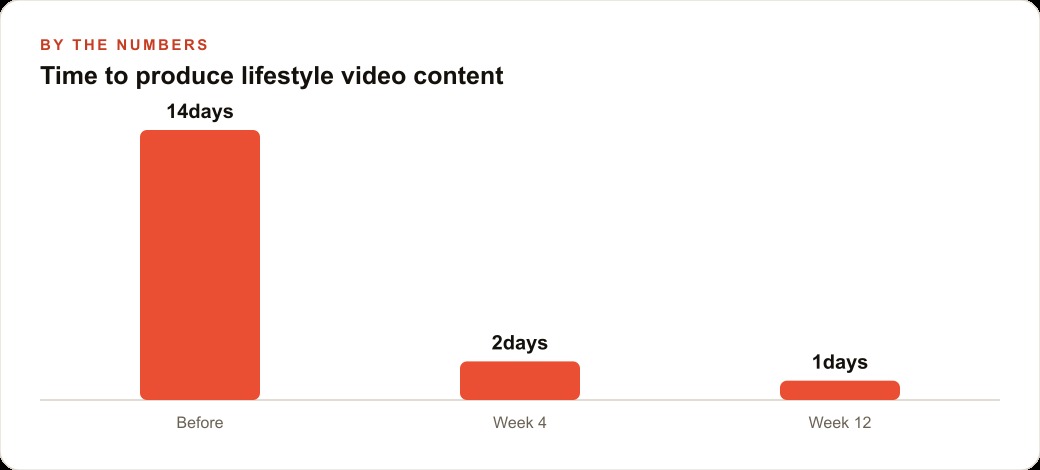
Consider a direct-to-consumer apparel brand with a $2,000 monthly budget for content production. That budget currently funds a combination of photographer and videographer day rates, model fees, location costs, post-production, and the time cost of art direction and briefing. A typical production cycle for a small brand at this budget level produces four to eight lifestyle video clips per month, requires two to three weeks of lead time from brief to final deliverable, and leaves almost no capacity for reactive content that responds to seasonal moments or trending topics within a short window.
Reallocating $600 of that $2,000 budget to a Sora 2 subscription and dedicated generation time produces a different production profile. In two days of focused generation work, the team produces fifteen to twenty clip variations across different settings, lighting conditions, and lifestyle scenarios. The selection process narrows to the five or six strongest for active use in paid and organic distribution. In those same two days, the brand has produced more lifestyle content than it previously generated in two full weeks of traditional production.
The remaining $1,400 continues to fund traditional production, but now focused only on the content types where AI generation cannot match traditional quality: close product detail shots, texture and fabric work, and any content requiring accurate representation of specific proprietary products. The traditional budget is freed from generating generic lifestyle content that AI handles competently and redirected toward the content categories where human production adds irreplaceable value.
The outcome is more total lifestyle content per month, a shorter lead time for reactive content that does not need the traditional production pipeline, and a redistribution of the traditional budget toward the content categories where it adds the most value per dollar spent. The brand that tests this math in the first 90 days has a real answer to the question of whether AI video generation belongs in its content strategy. The brand that waits will spend those 90 days without that answer while competitors develop it.
6. The CEO's written shutdown pledge is the most unusual public accountability commitment in AI product history
Before Sora 2 launched, the chief executive stated in writing that Sora would be discontinued if it could not demonstrate that it makes users' lives better. This public pledge is an unusual commitment for any consumer product, and it is particularly unusual for an AI product launched into an environment where public skepticism about AI tools is high.
Most product commitments of this kind are directional. They promise that the company will strive to improve, will listen to feedback, or will work to ensure the product meets user needs. The commitment here was conditional and specific: the product would be shut down if it did not meet a defined standard. That framing shifts the accountability structure in a way that most product announcements do not.
Whether this commitment is enforceable in any meaningful practical sense is a separate question. The definition of "makes users' lives better" is subjective enough that it could be interpreted in many ways, and the history of technology products includes many examples where strong initial commitments were revised as commercial realities changed. But the public nature of the commitment creates a reputational accountability mechanism that is unusual in the AI product space. Walking back a written shutdown pledge would itself become a significant story in the coverage of both the product and the company.
For brands evaluating Sora 2 as a potential production tool, the shutdown pledge is relevant context in two ways. First, it signals that the team building the product is thinking about the social dynamics of the platform, including the cameo feature and the likeness sharing system, in terms of genuine user value rather than purely engagement metrics. That alignment between stated values and feature design is not guaranteed to hold, but it is a better starting signal than platforms that make no such commitment. Second, the pledge is a useful framing device for internal conversations about risk. When a leadership team is deciding whether to invest real resources in a new platform, the existence of a public accountability commitment at the CEO level is a factor in the risk assessment that most new platform launches do not offer.
The unconventional nature of the commitment is itself a signal worth noting. A pledge that a product will be shut down if it does not produce genuine value is a higher-stakes public statement than any promotional claim about quality or capability. It places a verifiable standard on the record. Whether that standard is met will be observable over time, which makes the launch of Sora 2 a case study in AI product accountability that is worth watching regardless of whether the platform becomes a core channel for any specific business.
That is exactly what we do at AI DOERS. Book a private 30-minute call with Madhuranjan Kumar and we will map the fastest path to it for your specific business.
Book your call →
Madhuranjan Kumar
Madhuranjan Kumar brings 20 years of performance-marketing experience and has managed over $200 million in Facebook ad spend for brands across the United States and beyond. His expertise spans the full modern marketing stack: Meta, Google Ads, TikTok, email automation, CRM, and the websites that hold it together. At AI DOERS he turns that track record into lead-generation systems for businesses across every industry.