
Sora 2 Is Scary Good: What Realistic AI Video Means for Local Trades
OpenAI's Sora 2 generates believable short video from text. Here is what it does well, where it slips, and how an electrician can use it honestly.

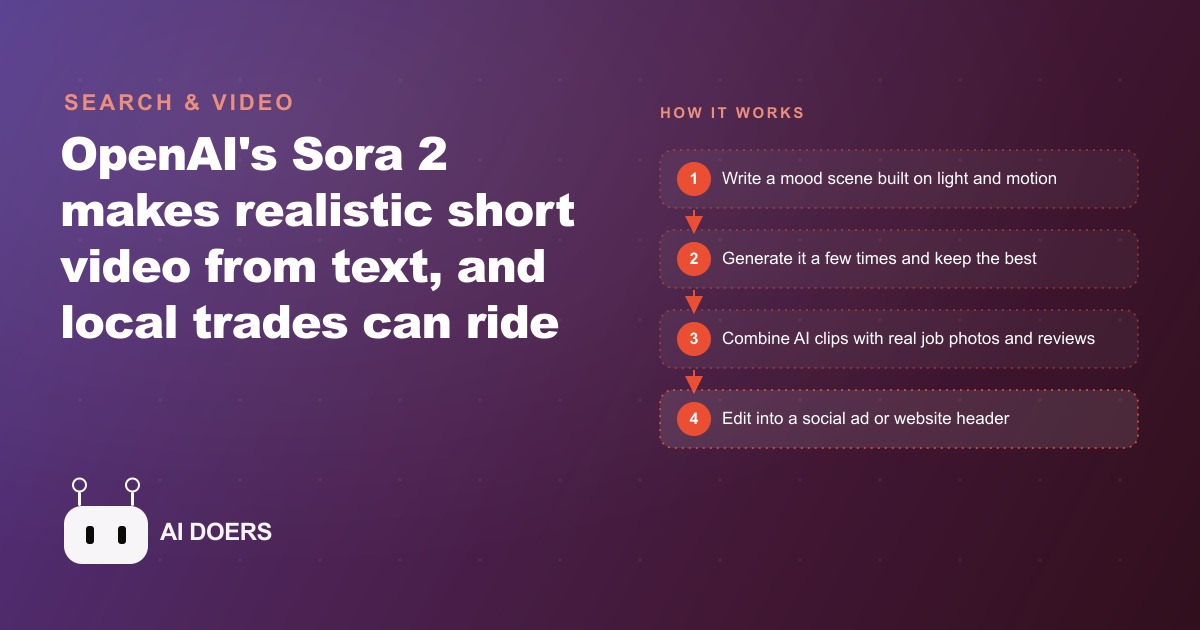
The problem: every competitor is posting the same phone snapshot
I am Madhuranjan Kumar, and this is the story of an electrical contractor who figured out video marketing before most of their competitors understood it was even possible at this scale. The business has been operating in a mid-sized metro area for eleven years, doing residential panel upgrades, EV charger installations, and whole-home rewiring projects. Good reputation, strong word of mouth, consistent Google reviews. The weakness was social media and the overall visual presence. The website photos were taken on a phone at job sites. The social posts were infrequent and looked like everyone else's: a finished panel with the new breakers lined up neatly, a close-up of a properly labeled circuit, an exterior conduit run. Honest documentation of real work, which is what everyone in the trades does, which means it blends into the feed rather than stopping anyone mid-scroll.
The owner looked at the marketing of larger companies in adjacent categories, the home renovation shows, the luxury appliance brands, the smart home system sellers, and noticed that those companies used video to sell a feeling rather than to document work. A GE refrigerator ad does not show the inside of the refrigerator motor. It shows someone pulling out a perfect meal for a family gathering in a warm, well-lit kitchen. The refrigerator is the enabler of the scene, not the subject of it. The owner started thinking about electrical work differently. The panel upgrade is not the product. The safe, well-lit, modern home is the product. The question became whether video of that end state, the warm and reliable home, could be produced at a cost that made sense for a business with a modest marketing budget.
Week one: twenty prompts and what survived the test
The first week with Sora 2 was not efficient. The owner spent about six hours across several evenings generating clips and most of what came out was not usable. The early prompts were too vague. "Show a well-lit modern home interior" produced clips that looked like stock footage from a decade ago: generic staging, soft-focus backgrounds, no character. The clips that survived the test were the ones that named specific physical properties rather than general aesthetic qualities.
The distinction took a few hours to discover through trial and error. Prompts that mentioned the quality of the light, not just "warm lighting" but "late afternoon light through large windows casting long shadows on hardwood floors," produced clips with a distinctive character. Prompts that specified a camera movement, "slow push from the front door toward the living room, steady and unhurried," produced something that felt intentional rather than randomly generated. Prompts that named a time of day and a weather condition, "dusk exterior, overcast sky, porch light and window light both visible against the dimming sky," produced the kind of atmosphere that makes a viewer feel something rather than just see something.
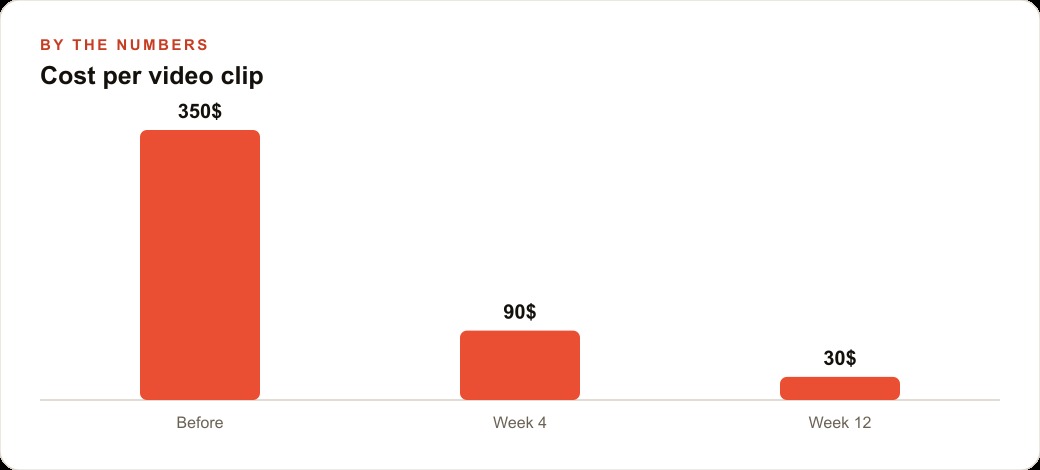
After six hours of generation across two evenings, three clips were genuinely good. A slow interior push through rooms where every light source was warm and even. An exterior dusk shot where the house glowed against a darkening sky. A master bedroom with soft bedside lamp light and the overhead light off, the kind of scene that reads as settled and comfortable rather than bright and clinical. Each clip was generated four to six times before the best version was kept. Total cost for the week's generation: about fourteen dollars in API costs and six hours of the owner's time.
What the model does well and what it cannot safely fake
The testing process produced a clear understanding of what to prompt for and what to avoid. The model handles light, atmosphere, and camera movement with impressive reliability. Interior scenes with warm, even lighting and slow deliberate camera moves look genuinely polished. Exterior scenes at dusk or dawn where the light is doing something interesting look like they could have been shot by a competent videographer with good timing. Nature and weather elements, rain on a window, wind in trees outside, morning mist over a suburban street, add atmosphere and the model renders them naturally.
What the model does poorly is anything requiring precise detail or accurate text. The owner tried one prompt that included a visible address plaque on the exterior, asking for it to show the house number clearly. The clip produced something that looked like a number at the right scale and position but the digits were not legible. Text in generated video is unreliable at this stage, and anything requiring specific visible text should either be added afterward in a simple editor or avoided entirely. A promotion with the service price visible in the clip cannot be generated this way yet.
The other limitation is technical process. The owner tried generating a clip of a panel installation with a technician working at the board. The clip was unsettling rather than convincing: the hands moved in ways that were slightly wrong, the tools were generic rather than the specific tools an electrician actually uses, and the panel itself looked plausibly like a panel but not quite right enough to show to anyone who knows what a panel looks like. The lesson was clear: the AI video is for the before and after atmosphere, not the work itself. The work is documented on a phone by the actual technician. The atmosphere is generated.
Pairing AI clips with real footage to build trust, not just attention
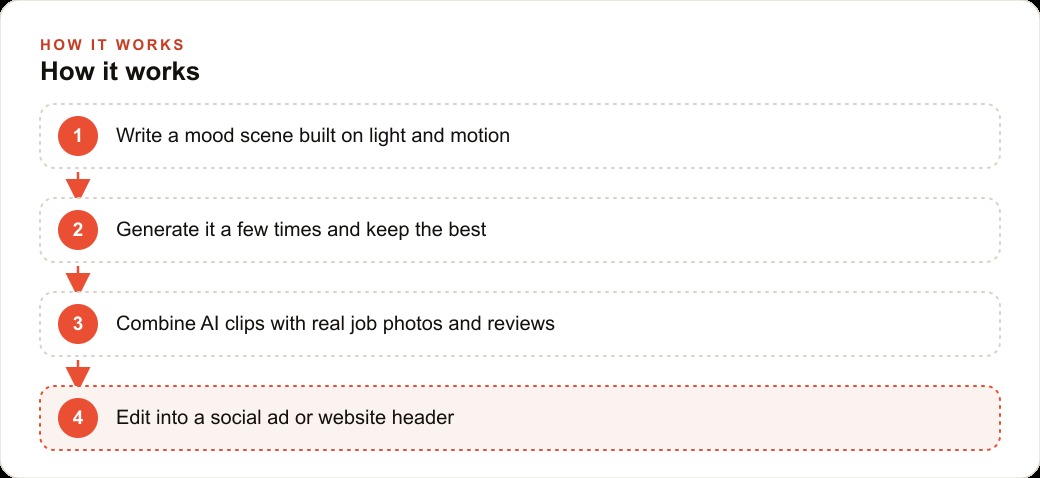
The clip that performed best on social media was not the most technically impressive one. It was the one that combined a generated atmospheric opening with real job documentation. The format went: five seconds of the generated interior push through warm, well-lit rooms, then three real photos of the completed panel upgrade that produced that well-lit house, then a pull quote from the homeowner's Google review, then a call to action. The generated clip earned the scroll-stop attention. The real photos earned the trust. The review earned the click.
This combination, AI for atmosphere, real footage for proof, is the sustainable model for any trade business using generated video for marketing. Generated clips can look remarkable and stop a feed scroll. But a viewer who sees only generated content and no evidence of real work has no reason to trust the business behind it. The generated clip is the door. Real documentation and genuine reviews are what the door opens to. Removing either half produces either content that is ignored or content that creates curiosity without conversion.
The owner built a simple production template: one generated atmosphere clip, two to four real job photos from that installation, one review excerpt from a verified customer. The whole package takes about forty minutes to assemble once the generated clip is selected. The generated clips take a few hours to produce in a batch once per month, then are filed for use over the following weeks. The real photos are taken by the crew at every job using a phone. The reviews accumulate naturally and are pulled from Google at assembly time.
Six months in: what the numbers showed about reach and bookings
At the six-month mark the owner compared the social metrics to the same period the prior year. Total reach on social platforms was up substantially, primarily because video consistently outperforms static images in distribution on Facebook and Instagram. The average video post reached roughly three to four times as many people as the average photo post, and this breakdown retention rate, how long people watched before scrolling past, was long enough to indicate genuine interest rather than accidental pauses.
The more concrete measurement was inbound contact volume. In the six months before starting this breakdown content, the business received an average of seven inbound inquiries per month from social media and the website combined. In the six months of consistent video content, that average rose to fourteen. The doubling cannot be attributed entirely to this breakdown content, since other factors including some Google review work and a website update were also in play, but the correlation is close enough that the owner attributes this breakdown as a major contributor.
The actual financial effect across the six months was an additional eight to ten booked jobs from social media referrals, at an average job value for this contractor of around $2,400. That is roughly $19,000 to $24,000 in additional revenue generated over six months from a marketing effort that cost approximately $85 in AI generation fees, sixty hours of the owner's time across the entire period, and nothing for video production because there was no crew, no shoot day, and no editing facility involved. The cost per additional booked job from this channel was well below $100 including the owner's time at any reasonable hourly valuation.
The owner's framing of the result was straightforward: this breakdown content is doing what good marketing is supposed to do, which is making the business visible to people who were not previously aware of it and giving those people a reason to call. The AI-generated clips handle the visibility. The real work documentation handles the credibility. The combination produces both the reach and the trust that convert attention into inquiries. Neither half of the formula works without the other, and the combination is accessible at a cost that any established trade business can afford to sustain over months rather than managing as a one-time experiment.
That is exactly what we do at AI DOERS. Book a private 30-minute call with Madhuranjan Kumar and we will map the fastest path to it for your specific business.
Book your call →
Madhuranjan Kumar
Madhuranjan Kumar brings 20 years of performance-marketing experience and has managed over $200 million in Facebook ad spend for brands across the United States and beyond. His expertise spans the full modern marketing stack: Meta, Google Ads, TikTok, email automation, CRM, and the websites that hold it together. At AI DOERS he turns that track record into lead-generation systems for businesses across every industry.