
Proactive AI Is Coming, and It Will Quietly Run Parts of Your Business
A senior OpenAI leader says AI is shifting from reactive to proactive, doing work before you ask. Here is what that means for a small business and how to prepare.

A Med Spa That Stopped Chasing Its Own Calendar
On a Tuesday morning in March, the med spa had three open afternoon slots and no one actively watching the waitlist. The front desk was managing checkout for a post-treatment client, confirming the next day's appointments by phone, and helping a walk-in price a service package. The waitlist had twelve names on it. None of them were contacted.
By Tuesday evening, all three slots were still empty. The revenue from three afternoon appointments at an average of one hundred and sixty dollars each had disappeared before anyone had a moment to act on it.
This is not a staffing failure. It is a timing problem. The information existed at 9 a.m.: three open slots, twelve waitlisted clients. The action required by that information, contacting those clients, needed someone to have a free moment at exactly that time. In a working med spa, that free moment almost never arrives during the scheduling window where it would actually help. The staff is doing the work of the day, and the calendar problem is always one task too many.
Proactive AI solves this specific problem by acting on information at the moment it becomes relevant, without waiting for a human to notice and remember to respond.
What a Senior OpenAI Leader Said and What It Actually Means
A senior leader at OpenAI described a shift underway in the AI industry: the move from reactive AI, which responds only when you prompt it, to proactive AI, which identifies what needs to be done and acts before you ask. The vision is AI that you hand a goal to and then step away from, with the AI doing meaningful work over hours or even a full day and returning something useful without constant direction.
For a business owner, that description might sound like something from the future. It is not fully available today in the form the leader described. But the practical version of it is already operating in real businesses.
Proactive AI in its current form is AI that watches a defined set of conditions and acts when those conditions are met, without requiring a human to notice the trigger and remember to respond. The waitlist outreach does not happen when the front desk remembers to do it. It happens the moment a slot opens, because that is the condition the system is watching for. The AI does not decide the task is important. You decided that. The AI executes it reliably, at the right moment, every time.
For the med spa, this means the question is not whether to wait for more capable AI to arrive. The question is which existing tasks are well-defined enough to delegate to a system that watches conditions and acts on triggers. Those tasks are available for delegation right now.
The First Four Tasks the Spa Delegated Without Reservation
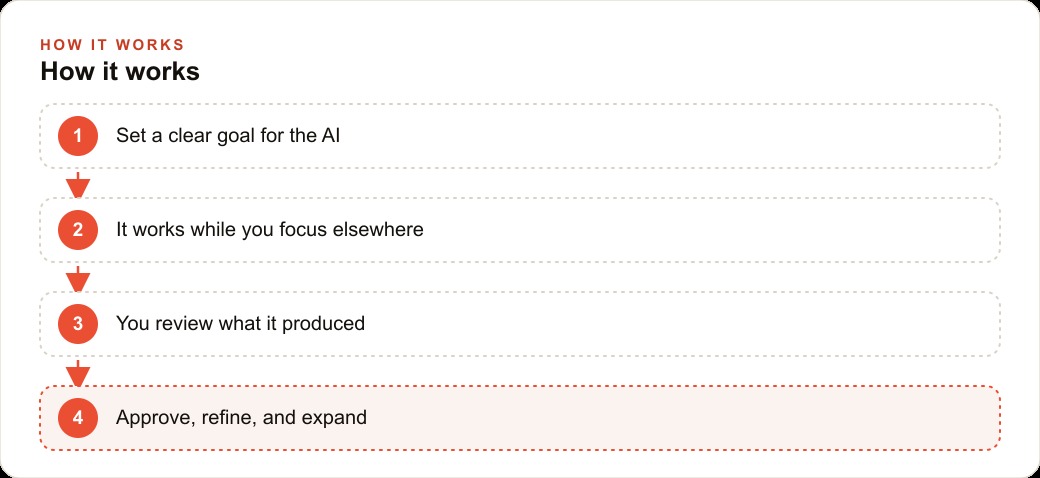
The owner started with four tasks she could hand off with confidence, because each had clear inputs, clear outputs, and low risk if something was slightly off.
The first was appointment reminders. Every client with an appointment in the next twenty-four hours received a reminder message in the spa's warm, professional voice, confirming the time and noting any relevant preparation instructions. Laser clients were reminded to avoid sun exposure. Facial clients were reminded to arrive hydrated. This had previously been a front-desk task that was skipped on busy mornings.
The second was waitlist outreach. When a cancellation created an open slot, the system checked the waitlist for clients who had requested that service type and sent availability messages to the top three matches. It noted the slot time, included a booking link, and sent a follow-up if the first message was not acted on within two hours.
The third was post-treatment follow-up. Forty-eight hours after each treatment, every client received a short check-in: how is your skin feeling, any questions, here is what to expect over the next week. The messages used a template the owner had written and approved. Nothing reached a client without having come through a human-reviewed template first.
The fourth was review reply drafts. When a new review appeared on Google or Yelp, the system drafted a reply in the spa's voice and held it for the owner to confirm before posting. The owner reviewed each draft and sent it or made small adjustments. This removed the time cost of composing replies while keeping the owner in control of every word that went public.
None of these tasks required the AI to make a significant judgment call. Each had a clear trigger, a clear output, and a human in the loop for the action with the highest public visibility. That combination, structured triggers with human review for anything external-facing, is the right starting configuration for AI delegation in a client-facing service business.
The Turning Point: Tuesday Gaps Started Filling Before Anyone Asked
Six weeks into running the waitlist outreach workflow, a Tuesday with two late cancellations produced something the front desk noticed immediately: both slots were filled by 11 a.m., before anyone on the team had looked at the afternoon schedule.
The system had sent outreach messages at 9:45 a.m. when the cancellations registered. By 10:20, one waitlisted client had booked through the link. By 10:55, the second slot was confirmed. The front desk discovered the full schedule not because they managed it but because they checked it at noon out of habit and found it already complete.
This was the moment the owner described as the system proving itself in an undeniable way. She had expected it to help with routine tasks. She had not expected it to run a complete fill cycle on two slots before she had thought about those slots at all. The Tuesday problem that had cost the spa revenue consistently, because cancellations tend to arrive Tuesday morning after the weekly schedule is built, was now handled before anyone asked about it.
The shift in the team's relationship to the calendar was gradual but real. Instead of monitoring the schedule for gaps throughout the day and carrying the mental load of the waitlist, the front desk began trusting the system to act on gaps as they appeared. That trust built over two weeks of watching the AI send accurate outreach, seeing clients respond and book, and confirming that no message had been sent to the wrong person or at the wrong time. After that verification period, monitoring the calendar specifically for waitlist management stopped being a daily task.
Three Months of Data
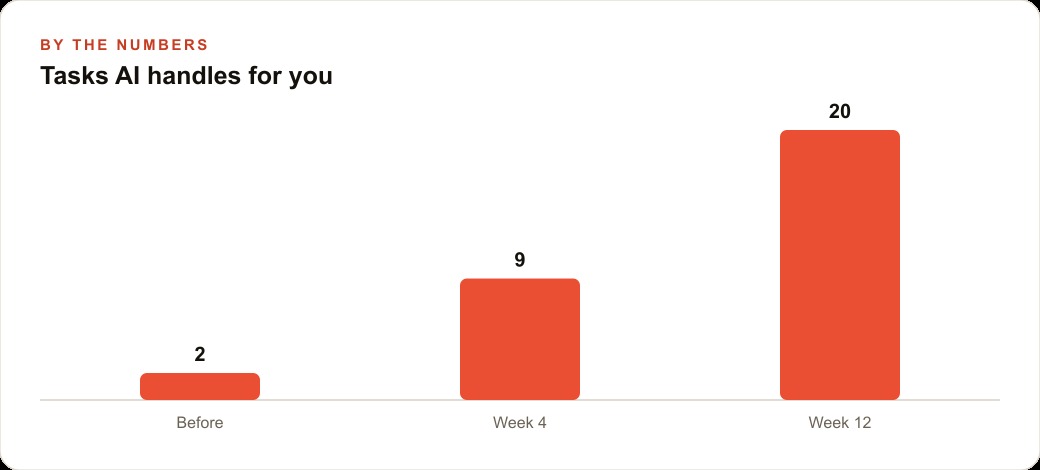
Over the first three months of running all four delegated tasks, the spa tracked a small set of metrics to confirm the system was producing real outcomes.
Tuesday afternoon bookings, the slot type that had historically been the hardest to fill because cancellations arrived Tuesday morning after the weekly schedule was locked, rose by approximately twenty-eight percent compared to the same quarter the previous year. The waitlist outreach was the primary driver.
Post-treatment rebooking rate, the percentage of clients who booked a follow-up appointment within thirty days of their last visit, rose from thirty-one percent to forty-four percent over the same period. The forty-eight-hour follow-up message was the primary driver. Clients who received the check-in were more likely to rebook and more likely to respond when they had a question, which reduced the number of clients who drifted away after a single appointment without the spa knowing there was an issue.
Review volume on Google increased by sixty percent over the same period. Not because the AI wrote the reviews, but because the review reply drafts made the owner consistent about engaging with every review quickly. Clients who see that a business reads and responds to every review are more likely to leave one themselves.
The total cost to set up the four workflows was under two hundred dollars in tools and initial configuration time. The monthly running cost at the spa's usage volumes was under thirty dollars. The revenue impact from recovered Tuesday slots and improved rebooking rates alone substantially exceeded both figures within the first month.
What the Owner Spent That Time On Instead
The owner recovered approximately six hours per week from the delegation of these four tasks. She is specific about where those hours went.
One hour weekly went back into client consultations. She opened an additional Monday afternoon consultation slot that had previously been kept free as administrative buffer. That slot generated an average of one hundred and forty dollars per week in direct revenue and became a reliable source of first-time clients who converted into regular visitors.
Two hours went into reviewing and adjusting the AI's output. She read every review reply draft before it posted. She scanned the follow-up message templates once a week to confirm the tone remained consistent with the brand's voice. She reviewed the waitlist outreach list on Monday mornings to remove any client whose situation had changed since they joined the waitlist. This oversight was meaningful but efficient, because reviewing accurate, templated output is faster than composing from scratch.
The remaining three hours went into two projects she had been postponing for eight months: evaluating a new treatment menu addition and reviewing a product line she had been considering for the retail section. Both moved forward within the first month after the delegation. Neither had been possible before because there was never a stretch of focused time long enough to think them through properly.
The owner made one observation that cut to the heart of what the delegation produced. She did not miss any of the four tasks. None of them had required her creativity or her relationship with clients. They had required her time and her attention at specific moments in the day. Giving that time and attention to the system did not diminish the client experience. It improved it, because the execution became more consistent than it had ever been when it depended on human memory and available bandwidth. The clients did not notice a change in who they were hearing from. They noticed that follow-up arrived reliably, every time, which is an improvement most clients register positively without being able to say why.
The Gap Between Today's Tools and the Proactive Future
The version of proactive AI the senior OpenAI leader described, where AI works independently on an ambitious goal for hours or days without supervision, is not what the spa is using. What the spa is using is the practical version available now: AI that executes well-defined tasks on specific triggers, reliably, without being prompted each time.
The gap between today's practical version and the future aspirational version is real. Today's tools excel at repeating a consistent action when a condition is met. They are less capable of deciding which of several possible actions to prioritize when conditions are ambiguous, handling genuinely novel situations that fall outside the defined patterns, or managing long chains of dependent decisions where early errors compound. Those capabilities are developing but are not reliably available for business use yet.
The implication for any business owner is not to wait. The practical version produces real, measurable results right now. Businesses that build the habit of delegating structured tasks to AI will understand these tools better when they grow more capable. They will have documented what they delegate, how they verify it, and where human oversight belongs. That operational knowledge compounds over time. A team that has spent twelve months learning which tasks AI handles reliably and which require human judgment is far better positioned when more capable AI arrives than a team starting from zero.
The starting point is the same set of tasks the spa started with: reminders, outreach on a defined trigger, templated follow-up, and draft-and-review for anything that reaches clients or the public. These categories cover the bulk of the routine operational tasks in most service businesses. Build confidence in those first. Extend as the tools prove themselves on each new task type. The future the senior leader described will arrive on its own timeline. The preparation for it is available right now, and the businesses that begin it today will meet that future from a position of operational maturity rather than one of scrambling to catch up.
That is exactly what we do at AI DOERS. Book a private 30-minute call with Madhuranjan Kumar and we will map the fastest path to it for your specific business.
Book your call →
Madhuranjan Kumar
Madhuranjan Kumar brings 20 years of performance-marketing experience and has managed over $200 million in Facebook ad spend for brands across the United States and beyond. His expertise spans the full modern marketing stack: Meta, Google Ads, TikTok, email automation, CRM, and the websites that hold it together. At AI DOERS he turns that track record into lead-generation systems for businesses across every industry.