
OpenAI's Big Week: GPT-5.5, Real-Time Voice, and the Shift to Proactive AI
GPT-5.5 instant became the new ChatGPT default, OpenAI shipped three API-only real-time voice models and a Codex Chrome plugin, and Anthropic answered with dreaming memory and a SpaceX compute deal. The real story is AI moving from reactive to proactive.

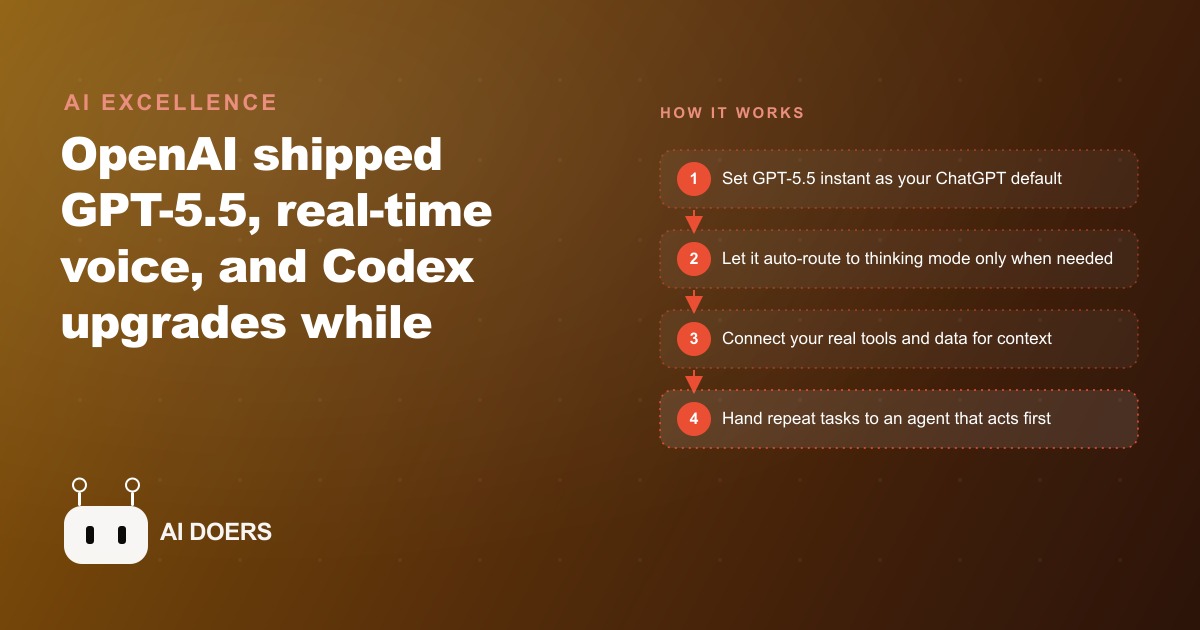
The service business in this story loses two to three calls a day. Not because the phones are broken. Because the owner is under a sink when the phone rings and there is no one to answer it. Each missed call is worth several hundred dollars in potential service, and across a year the math adds up to a significant revenue gap. This is the story of one particularly busy week in AI releases and what it means for exactly that kind of business.
The problem every solo service operator knows
A plumbing company with one lead technician and a part-time dispatcher faces an operational constraint that no productivity tip resolves: the owner cannot answer calls while doing billable work. The dispatcher covers the peak hours but not weekends. The business misses two or three calls on a typical Saturday, and each one is a homeowner with a real plumbing problem who will call the next result on the search page if no one picks up in thirty seconds.
This is not a staffing failure. It is a coverage architecture problem. And an entire week of AI product releases pointed at the same solution from multiple directions.
Monday: GPT-5.5 instant takes over the daily default
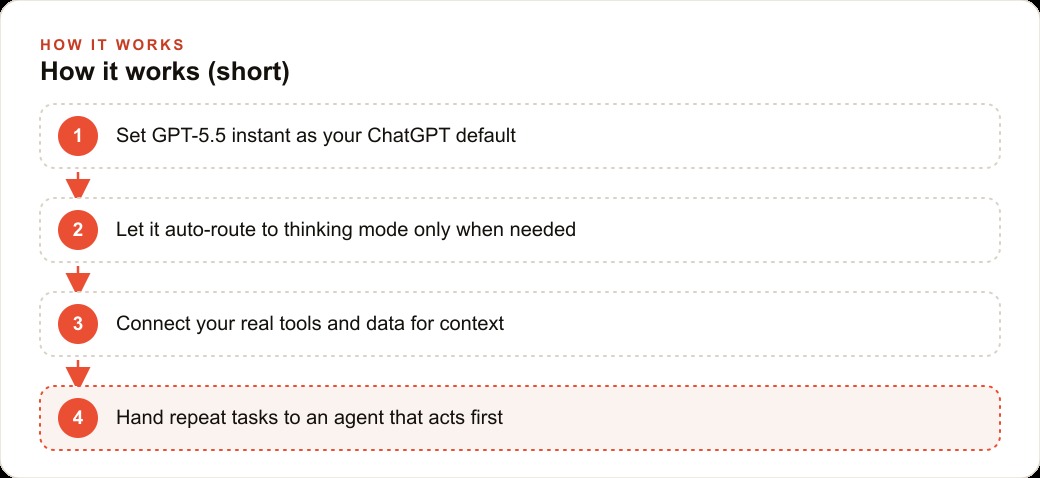
OpenAI made GPT-5.5 instant the new default model inside ChatGPT for both free and paid users at the start of the week. The announcement read as incremental: a refinement, not a step change. Answers arrive faster, the model draws more consistently on stored memory, and output is more concise. The typical plumbing owner using ChatGPT to draft service descriptions, answer template questions, or write quote follow-ups notices the conversations feel sharper without any change in their workflow.
This is the category of AI product news that actually matters most to small businesses: improvements that show up in tools they already pay for without requiring any behavior change to benefit. GPT-5.5 instant will handle the routine office communication faster and with less re-prompting than its predecessor. For a business where the owner is also the person drafting follow-up emails between jobs, that friction reduction accumulates across every communication task in the week.
The more significant element in Monday's news was what it suggested about the model's architecture. GPT-5.5 instant leans harder on stored memory and personal context to deliver more personalized answers. For a business that has been using ChatGPT consistently, feeding it the company's pricing structure, service territory, and common quote scenarios, the memory improvement means the assistant starts behaving more like someone who knows the business rather than a general-purpose tool being briefed from scratch at the start of each session.
The voice model release that changes the Saturday coverage problem
Three API-only voice models shipped the same week, and the most important of them for the plumbing company is the voice agent with what the demos called be-quiet-then-resume behavior. The demo showed a user telling the agent to hold on and listen while they had a side conversation, then picking back up the main conversation on a specific cue. The agent held its place, kept listening, and resumed without any loss of context or interjection.
That behavior is not a technical curiosity. It is a description of exactly what a professional dispatcher does on a phone call. When a homeowner calls to describe a leak and starts getting interrupted by their kids in the background, a good dispatcher waits, listens, and picks back up when the caller is ready. That precise skill is what the new voice architecture is designed to enable.
These models are API-only for now, not yet inside ChatGPT or any consumer app. But API-only access today consistently becomes consumer product features within a few months. The plumbing company owner who understands what be-quiet-then-resume means for their specific Saturday coverage problem is better positioned to adopt it immediately when it ships in a simplified form than the owner who has to figure out the use case from scratch at that point.
The live translate model that shipped the same week handles over seventy input languages simultaneously. For a plumbing company operating in a mixed-language neighborhood, the ability to conduct a service intake call in the homeowner's primary language without a human interpreter is a meaningful trust signal and a real reduction in the friction that causes some callers to hang up and call someone else.
Anthropic's dreaming memory and what a self-improving assistant means
The same week, Anthropic shipped a feature called dreaming for managed agents. The mechanism is worth understanding at the architecture level rather than just the surface level. Dreaming is a scheduled background process that runs when the user is not actively working. During those background passes, the system reviews past sessions, identifies recurring patterns, and restructures its memory to keep the stored information high-signal as volume grows.
This is a materially different architecture from simple memory recall. Standard memory stores a log. Dreaming distills a log. The difference between a system that remembers everything you told it and one that has refined what it learned from everything you told it is the difference between a new employee still learning the job and one who has internalized the patterns of how the business actually runs.
For the plumbing company, a Claude agent with dreaming memory would, after a month of consistent use, know that the company always adds a distance markup for jobs outside a certain radius, always sends a follow-up quote within 24 hours, and always prefers the customer to confirm the appointment by text rather than by call. None of this was explicitly programmed. It was learned from the pattern of interactions and distilled into standing behavior. That is the kind of operational alignment that currently requires a long-tenured employee. Dreaming offers a path to building it into an AI assistant over time instead.
Claude lands inside Microsoft Office
Anthropic also put Claude directly into Excel, PowerPoint, Word, and Outlook during the same week, with shared context across all four applications. For the dispatcher side of the plumbing business, this is practically significant. A quote drafted in Word and an appointment scheduled in Outlook now share the same conversational context without requiring the user to re-explain which customer or which job is being discussed.
The operational use case for a small service business is cleaner job records and faster follow-up drafting. The owner completes a job, opens Outlook to send the post-job follow-up, and the assistant already knows this was the three-hour copper pipe replacement from Tuesday because it saw the job summary drafted in Word earlier in the day. The continuity eliminates a small amount of re-explanation that happens dozens of times per week and accumulates into meaningful administrative overhead over a month.
Anthropic also raised Claude's usage limits during the week through a compute partnership with SpaceX and a substantial commitment to Google cloud infrastructure. For users who have been hitting limits during heavy workdays, the practical effect is fewer interruptions in the workflow.
Where the story lands
The five developments from this single week, a faster default model with improved memory, three API-only voice tools, dreaming memory architecture, cross-application context in Office, and a SpaceX compute deal that raises limits, are individually modest. Stacked together they describe a single directional shift: AI moving from reactive chatbot to proactive assistant that learns the business over time and acts across tools rather than waiting for a single prompt.
For the plumbing company, the timeline is approximate but the trajectory is clear. The GPT-5.5 instant improvement is available now and benefits routine communication immediately. Claude in Office is available now and benefits the administrative side of the job. Dreaming memory is rolling out and will compound in value over months as the pattern of interactions builds. The voice agent with dispatcher-quality behavior is months away in consumer form but is worth understanding now so the adoption is immediate when it arrives.
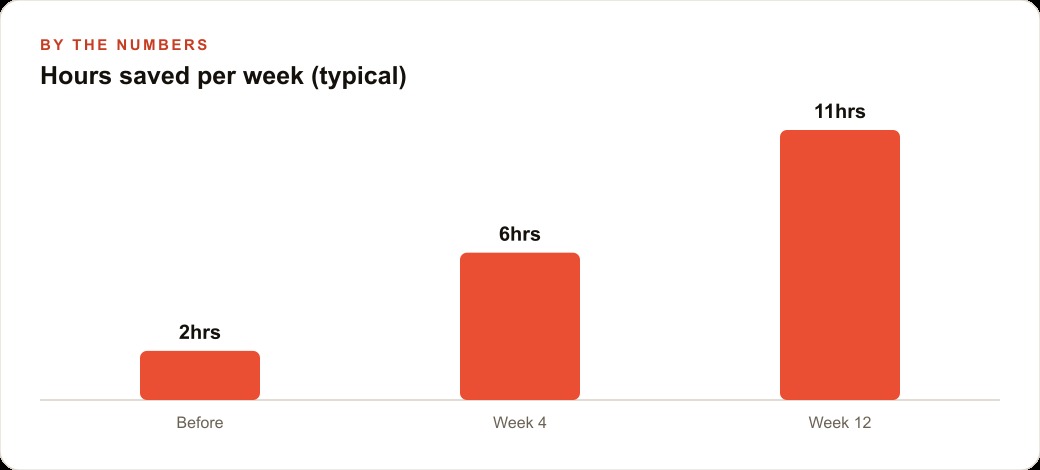
The business that emerges from applying these tools consistently is not dramatically different in its core service offering. It still has the same technicians doing the same plumbing work. What is different is the coverage architecture. Calls answered. Follow-ups sent. Quotes drafted. Memory accumulated about how the business actually runs. The administrative drag around the work is lower, the missed Saturday calls are fewer, and the revenue per technician-hour is higher because the assistant absorbed the overhead that was previously eating into billable time. That is the story of one week of AI releases, translated from lab announcements into operational reality.
That is exactly what we do at AI DOERS. Book a private 30-minute call with Madhuranjan Kumar and we will map the fastest path to it for your specific business.
Book your call →
Madhuranjan Kumar
Madhuranjan Kumar brings 20 years of performance-marketing experience and has managed over $200 million in Facebook ad spend for brands across the United States and beyond. His expertise spans the full modern marketing stack: Meta, Google Ads, TikTok, email automation, CRM, and the websites that hold it together. At AI DOERS he turns that track record into lead-generation systems for businesses across every industry.