
Nano Banana 2 Review: Consistency and Prompt Adherence Finally Land
Nano Banana 2 is Google's upgraded image model, and in head-to-head tests it beat the major rivals on realism while delivering near-flawless text, strong prompt adherence, and consistent characters across scenes. Here is what that unlocks, with a worked example for an accounting firm.
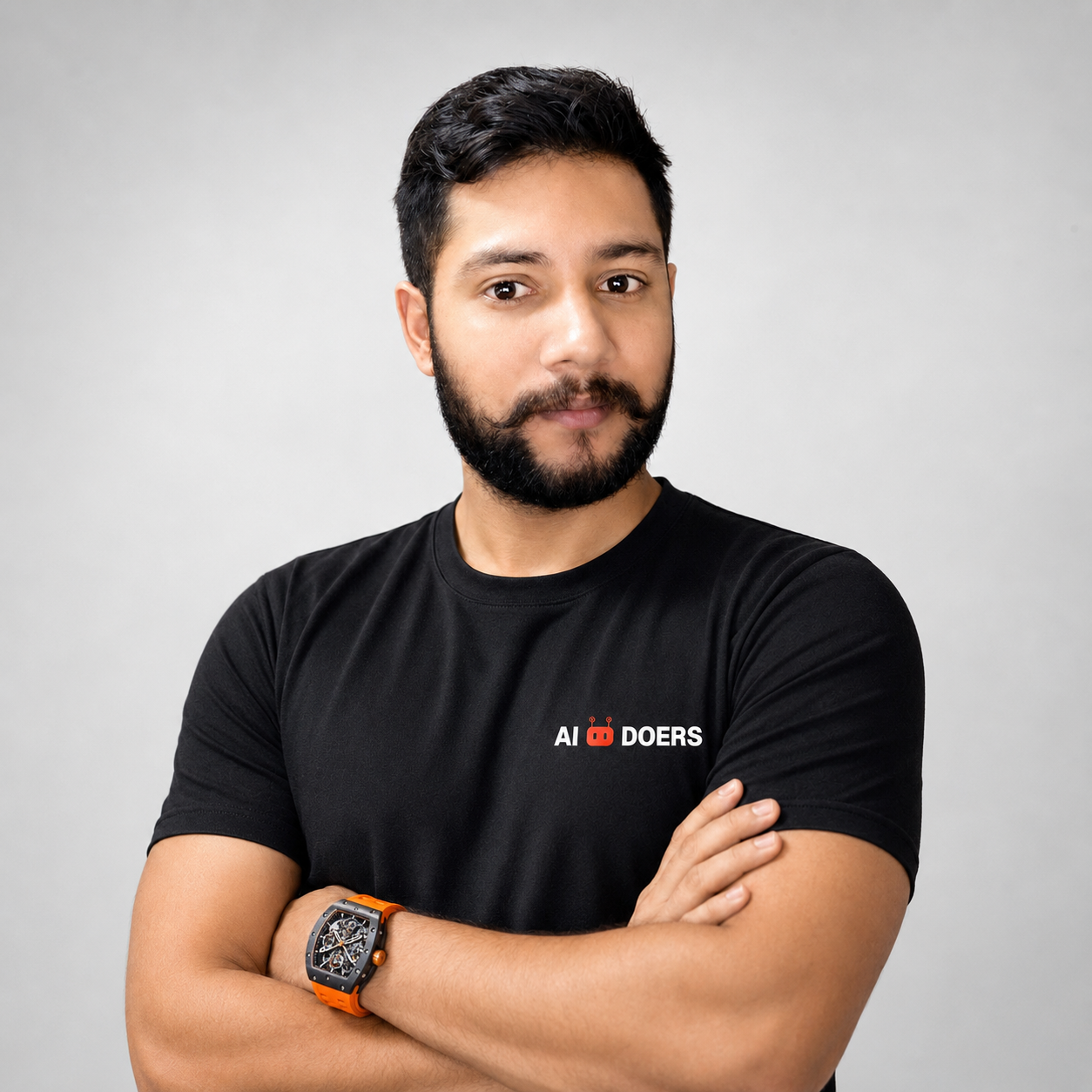
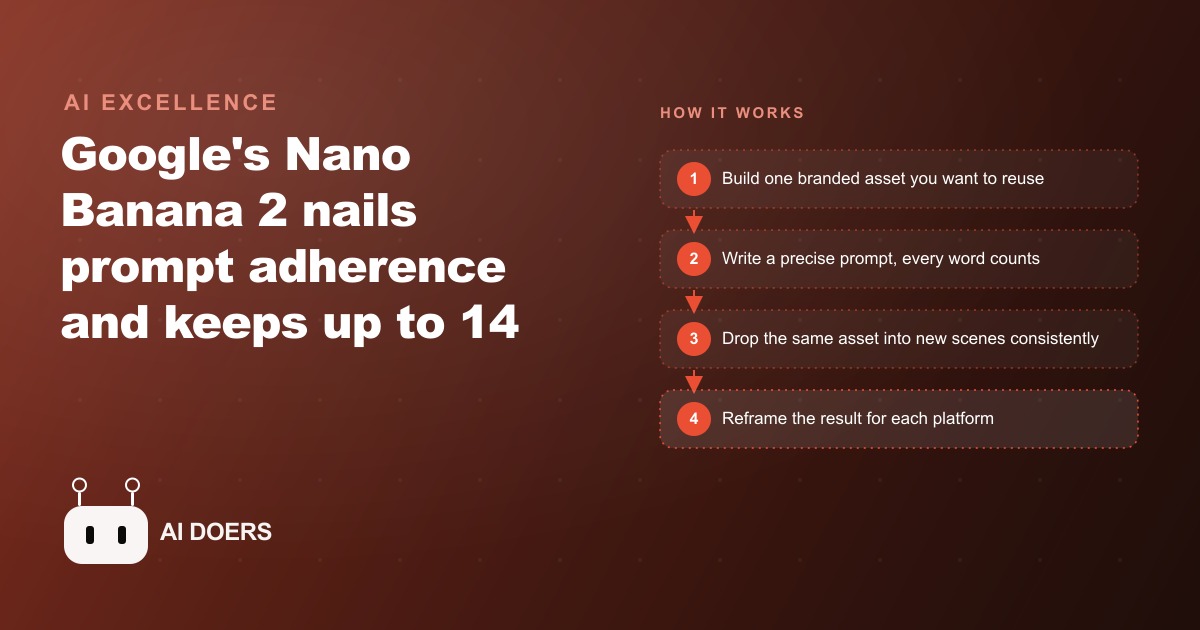
Google's Nano Banana 2 shipped quietly, but in head-to-head tests against the major image generation alternatives it outperformed them across nearly every category that matters for business use. I am Madhuranjan Kumar, and after putting it through a structured review across portrait realism, text accuracy, character consistency, and platform flexibility, the verdict is clear enough to be useful to anyone deciding where to send their image generation work.
The predecessor, Nano Banana Pro, was already considered the industry benchmark by many practitioners. The question with the sequel was how much of an actual improvement it represented rather than a version number change. The answer turned out to be substantial in several specific areas that directly affect whether AI-generated images can function as production-ready business assets rather than demos.
Here are eight things Nano Banana 2 gets right that earlier image models kept getting wrong.
Portrait realism that reads as a photograph rather than a render
Portrait photography is where the gap between AI output and professional photography has historically been most visible. Earlier models produced faces with subtly wrong skin texture, lighting that looked computed rather than natural, and expressions that read as staged even when the pose was technically correct.
Nano Banana 2 closes this gap to a degree that matters for production use. Skin texture, pores, and lighting read as photographic rather than rendered. The model produces portraits where someone who did not know they were looking at AI-generated output would not immediately identify it as such. That threshold, where a client or a customer sees the image and does not flag it as artificial, is the threshold at which AI portrait generation becomes commercially viable for service businesses that need to represent people in their marketing.
For a professional services firm that needs headshot-style imagery for its website or social content but does not have a budget for individual photography sessions, this level of realism opens a category of use that was not practically accessible before. The images can represent the firm's professionals in context, in front of relevant backgrounds, in different settings, without scheduling a photographer.
Cinematic stills without the oversaturation problem
One of the persistent weaknesses of earlier image models was a tendency to produce cinematic imagery that looked obviously artificial because of oversaturation, excessive color grading, and stylization that read as the model's aesthetic preferences rather than the realistic look of actual cinematography.
Nano Banana 2 produces neutral, grounded cinematic frames that look like stills pulled from a film rather than AI renderings of what a film still should look like. The difference is the absence of over-processed color and the presence of naturalistic lighting that matches the described setting rather than the model's default visual style.
For businesses that need scene-setting imagery, hospitality brands showing property interiors, wellness businesses showing treatment environments, or real estate professionals showing lifestyle contexts, this neutrality is more useful than a strong stylistic identity. The images support the brand's own visual language rather than competing with it.
Text inside images at close to one hundred percent reliability
The inability to produce correct text inside images was one of the most visible failure modes of earlier AI image generation. A promotional graphic with a misspelled word, a pricing card with a wrong digit, or an infographic with scrambled labels was an embarrassment that made AI-generated marketing assets unusable for anything client-facing or public-facing without careful human review of every output.
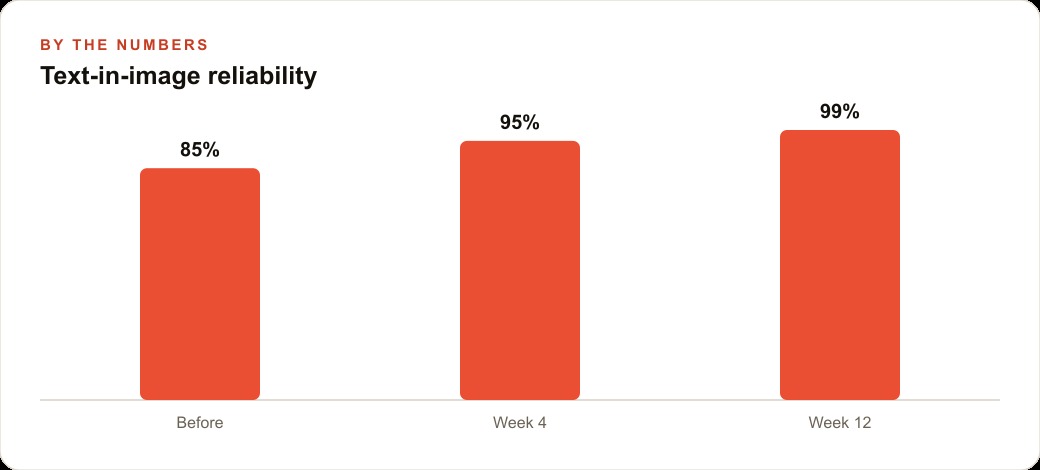
Nano Banana 2 has improved text reliability to the point where it functions correctly in the large majority of cases, moving from a reliability rate that hovered around 85 to 95 percent on earlier models to something close to 100 percent on straightforward text in images. Numbers, short phrases, multi-word labels, and specific formatting instructions in prompts are executed faithfully rather than approximated.
This unlocks a category of business marketing asset that was previously too risky to produce with AI: price lists, promotional graphics with specific dollar figures, infographic text labels, numbered tip cards, and any visual where the exact wording matters. An accounting firm providing client education materials needs the tax-season deadline dates to render correctly. A contractor showing before-and-after work needs the project cost figure to be accurate. A clinic sharing appointment preparation instructions needs the timing to be right. All of these are now practical to produce with the model rather than requiring a designer to produce and verify each one.
For an accounting firm with no product to photograph, text reliability is the capability that makes AI image generation genuinely useful. The firm can build a branded visual library of tax-season checklists, quarterly deadline reminders, deduction guides, and year-end preparation materials. Each asset carries real figures that render correctly, text that matches the firm's exact wording, and a visual style consistent with the firm's brand. A firm spending around two hundred dollars per month on stock photo subscriptions that deliver generic imagery can redirect that budget and produce custom branded materials directly relevant to their specific services and their clients' needs. The precise prompting discipline matters here: specifying the exact text, the layout, and any color requirements in the prompt gives the model clear instructions to execute rather than interpretive latitude that produces variation.
Scrapbook and collage visuals that look genuinely handmade
One of the more surprising capabilities in the review was Nano Banana 2's ability to produce scrapbook and collage-style imagery that reads as handmade rather than digitally generated. The texture of the compositions, the apparent physicality of layered elements, and the informal warmth of the aesthetic are convincing in a way that earlier models could not approach.
For brands that want warmth, texture, and a human feel rather than the clean digital look that AI generation tends toward, this opens a visual register that was previously only accessible through actual physical design work or very skilled digital illustration. A boutique food brand, a children's education company, a wellness practice, or a personal finance coach can use this aesthetic to produce visuals that feel approachable and personal rather than corporate and polished.
The business application goes beyond brand aesthetics. Scrapbook and collage styles are effective for educational content, for step-by-step guides that benefit from a visual structure that feels informal rather than instructional, and for social content where the goal is engagement rather than product presentation. A service business that produces a lot of how-to content for platforms like SEO and organic search can use this style to differentiate their visual assets from the uniform AI-generated look that has become common.
Character consistency across scenes rated at nine out of ten
Character consistency across scenes was the most significant practical limitation of earlier image generation models for business use. Creating a branded mascot, a recurring character for educational content, or a product placement that needed the same person in multiple settings required either very expensive multi-step workflows or accepting inconsistency that undermined the visual coherence of the asset library.
Nano Banana 2 scores approximately nine out of ten on character consistency across scenes, up from a five or six for earlier models. Creating a specific character or object in one scene and then placing that same character or object in a completely different scene, different lighting, different background, different clothing if applicable, produces a result where the character is recognizably the same entity rather than a similar-looking variation.
For e-commerce and product-based businesses, this means a single product placed in multiple lifestyle settings, at home, outdoors, in a professional context, can maintain the same product appearance across all settings. For content creators building an educational series around a recurring character or persona, the character stays visually consistent across episodes. For Facebook and Instagram ad campaigns that run the same product across multiple creative variants, consistent character appearance is what allows A/B testing of settings, copy, and context without introducing visual inconsistency as a variable.
Up to fourteen objects held steady in a single complex scene
Google's stated claim that the model can maintain consistency for up to fourteen objects in a complex scene is a first for any major image model. Practical testing confirmed that multiple distinct characters, each with their own specific visual attributes including accessories and clothing details, remain consistent through scene changes that rearrange their positions and context.
The business implication is that group scenes, product arrangements with multiple distinct items, and brand illustrations that feature several characters or objects simultaneously are now achievable without the elements losing their individuality or merging into undifferentiated background elements. A review of five distinct figurines placed in a complex beach scene found that each retained its specific hat, ribbon, and bow tie details without the model simplifying the scene by dropping attributes.
This matters for any business that needs to represent multiple products together, show team illustrations with distinct individuals, or produce educational content where multiple concepts need to be visually distinct and consistently identified across a series of images.
Prompt adherence that places every element where the instructions specify
A practical test with a long, detailed prompt containing multiple specific positioning requirements, character attributes, and contextual details found that Nano Banana 2 placed every specified element correctly. Attributes specified per character were maintained per character rather than distributed generically. Positions described in the prompt were respected in the output. Elements that were excluded from a character by specific instruction remained excluded.
This level of adherence to a precise prompt means that business users who invest in writing detailed, specific prompts get outputs that match those specifications rather than a best-effort approximation. The model executes rather than interprets, which is a meaningful distinction for any use case where exact specification matters.
For marketing teams producing multiple variants of the same base asset, prompt adherence means that systematic variation in one element while holding all others constant actually produces controlled variation rather than unpredictable change. For creative directors who have a specific visual in mind, the instruction-to-output fidelity reduces iteration cycles because the first generation is closer to the target.
One source image reframed to fit any platform's format without regenerating
The reframe capability allows a generated image to be extended to fit different aspect ratios without regenerating from scratch. A square image can be extended vertically to fit a story format with room for text at the top or bottom. A horizontal image can be trimmed and extended to fit a vertical feed post. The extension adds appropriate content to the edges of the existing image rather than scaling or cropping the original.
For businesses that distribute content across multiple platforms with different format requirements, this means one well-executed base image can serve Instagram feed, Instagram story, LinkedIn, and Facebook without a separate generation for each. The visual consistency across formats is maintained because the core image is preserved rather than re-prompted. The CRM and website stack that manages content publishing schedules can handle the format variants from a single source asset rather than treating each platform as a separate production task.
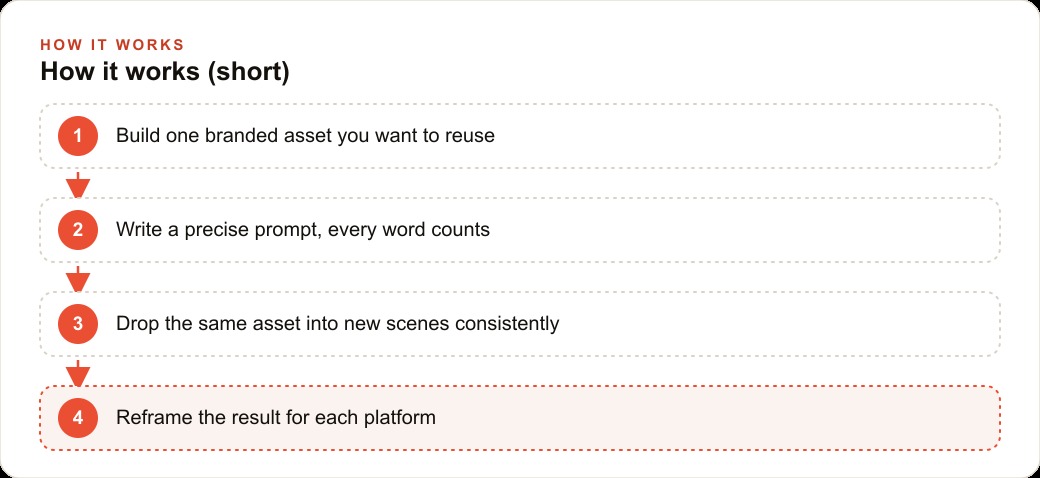
The practical workflow is: generate the canonical version at the base aspect ratio you need most often, then reframe for each additional format rather than re-prompting. Specifying where you want the blank extension space to fall in the reframe prompt ensures the added canvas appears in the right position to accommodate your text overlay or call to action.
Closing note on access and content refusals
Nano Banana 2 runs on Gemini, is accessible on plans starting around ten to twenty dollars per month, and has a free tier with usage limits. The content safety guardrails are conservative and occasionally refuse images that fall well within reasonable business use. In the majority of these cases, rerunning the same prompt without any changes produces the desired output within one to three attempts. If a specific prompt consistently refuses, rephrasing the setting description while keeping the subject unchanged typically resolves the interpretation. For business use, the refusal rate is low enough to be a minor friction point rather than a workflow barrier, and it improves across successive model updates.
The combination of portrait realism, text accuracy, character consistency, prompt adherence, and platform flexibility makes Nano Banana 2 the most practically useful image generation model available for business visual production at its price point. Businesses that invest the time to learn precise prompting will find it reduces stock photo spend, eliminates the need for certain photography sessions, and enables a visual content production cadence that previously required either a design team or a significant budget.
That is exactly what we do at AI DOERS. Book a private 30-minute call with Madhuranjan Kumar and we will map the fastest path to it for your specific business.
Book your call →
Madhuranjan Kumar
Madhuranjan Kumar brings 20 years of performance-marketing experience and has managed over $200 million in Facebook ad spend for brands across the United States and beyond. His expertise spans the full modern marketing stack: Meta, Google Ads, TikTok, email automation, CRM, and the websites that hold it together. At AI DOERS he turns that track record into lead-generation systems for businesses across every industry.