
How a Hiring Manager Actually Screens Resumes and Portfolios
Most applications die in the first ten seconds over a missing portfolio, a typo, or a school email, while referrals skip the whole funnel. Here is the exact screening logic, and how I would turn it into a hiring system for a recruiting agency.
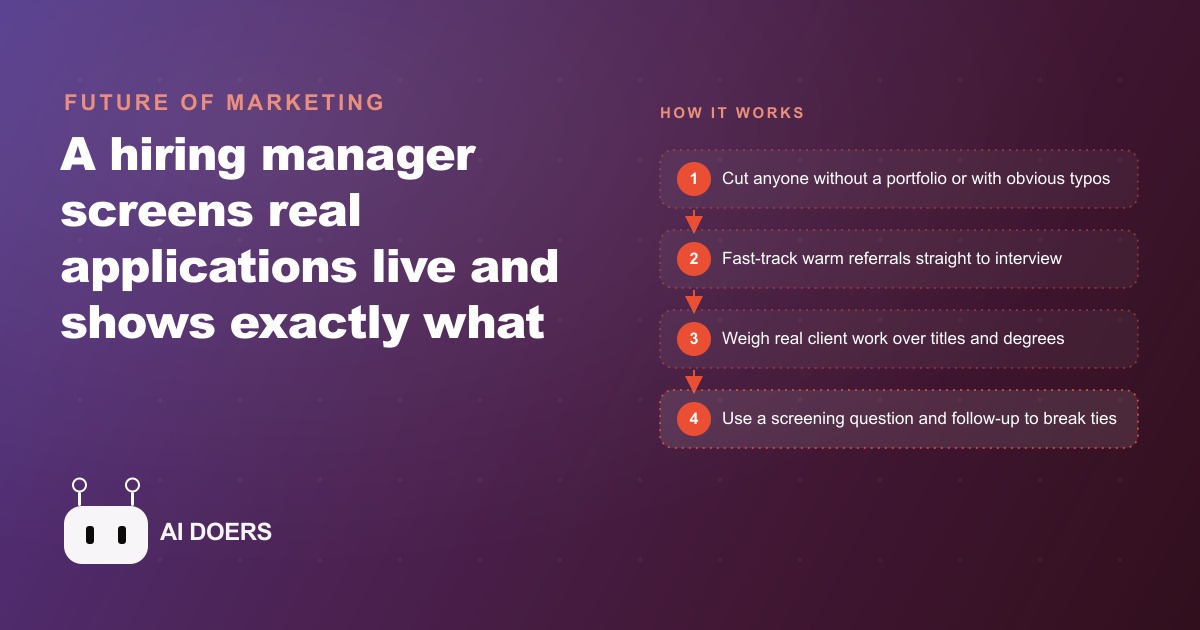
Between fifty and eighty percent of jobs get filled before the listing ever goes public. That figure comes from multiple labor market studies and means that the average applicant responding to a posted job opening is competing for roughly a fifth of the positions that actually exist. The rest were filled through introductions, referrals, and conversations that happened before the job went anywhere. A hiring manager who recently walked through thirty-one real applications for a remote product marketing role confirmed this pattern in her own process: eight candidates arrived through warm introductions and were never screened at all. They went directly to the interview stage.
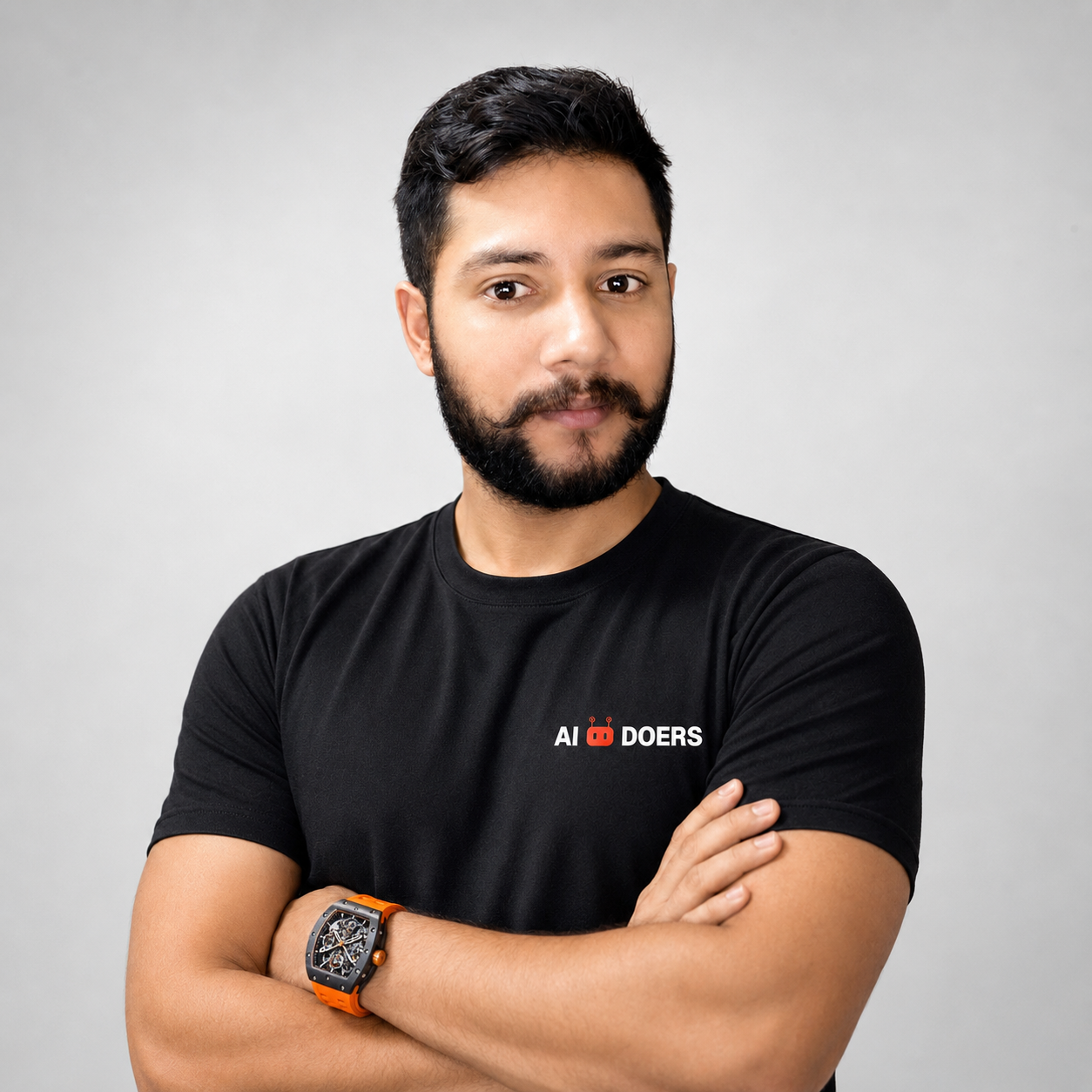
I am Madhuranjan Kumar, and I want to take this screening session apart because it reveals something most job seekers and most hiring managers have not made explicit, which is that the hiring process has two entirely different funnels running at once and the informal one is almost always faster and higher-converting.
The instant disqualifiers that most applicants do not know about
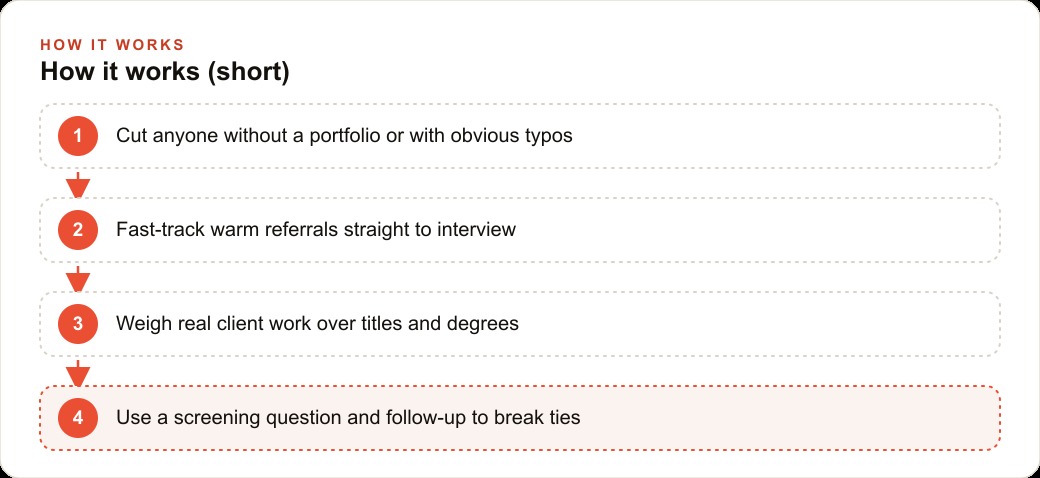
For the candidates who entered the formal funnel, the screening session began not with reading resumes but with instant disqualification. The first cut removed everyone without a portfolio. A LinkedIn profile did not count. A bare Instagram link did not count. A list of skills like analytics, Python, or content strategy did not count. The requirement was a portfolio: actual work visible to the screener before any conversation happened. The reasoning is straightforward for a freelance-style remote role. If the candidate cannot show existing work, the screener cannot assess independence, the single most important trait for someone working without daily oversight.
The second instant disqualifier was carelessness in the application itself. Misspelling a tool name like Instagram in a marketing application was treated as an immediate rejection. The logic behind that rule is also direct: if a candidate is sloppy in the small, low-stakes field of submitting an application, the screener has no reason to expect them to be careful in the high-stakes work of actually doing the job. Small errors in the application are a reliable signal of larger patterns of carelessness.
Taken together, these two filters removed a substantial portion of the applicant pool in seconds. The remaining pool was people who could show real work and had been careful enough to submit a clean application. Both of those traits are actually predictive of job performance, which is why the filters work even though they are blunt.
Why a referral does not just help but nearly guarantees the interview
The eight candidates who came through warm introductions did not face these filters. They went directly to the interview stage because someone the screener trusted had already done an informal quality check by choosing to recommend them. That informal endorsement carries more information than a resume because the person making it is staking their own credibility on the recommendation.
This is why the fifty-to-eighty percent statistic matters practically. The formal application process is not the main channel through which good roles get filled. It is the backup channel, and it is the most competitive one by a wide margin. A candidate who is in the informal channel through a community, a past professional relationship, or a mutual contact is operating in a much less crowded space with a much higher conversion rate.
For anyone trying to be hired: the most valuable thing you can do for a job search is not polish the resume. It is spend time in the communities, conversations, and relationships where the informal channel operates. For a content or marketing role, that means being visibly engaged in the places where the people who hire for those roles spend time, not just submitting applications.
For employers: the referral channel produces better candidates at a higher rate, and building it requires less effort than most owners assume. Asking every current team member, past contractor, and professional contact for a single introduction is a simple practice that consistently outperforms a job board.
What a portfolio actually communicates that a resume cannot
The screener made a distinction in the session between what the resume does and what the portfolio does. The resume screens for foundational qualifications: relevant experience, past titles, and the absence of obvious red flags. The portfolio is where the candidate actually comes alive as a professional.
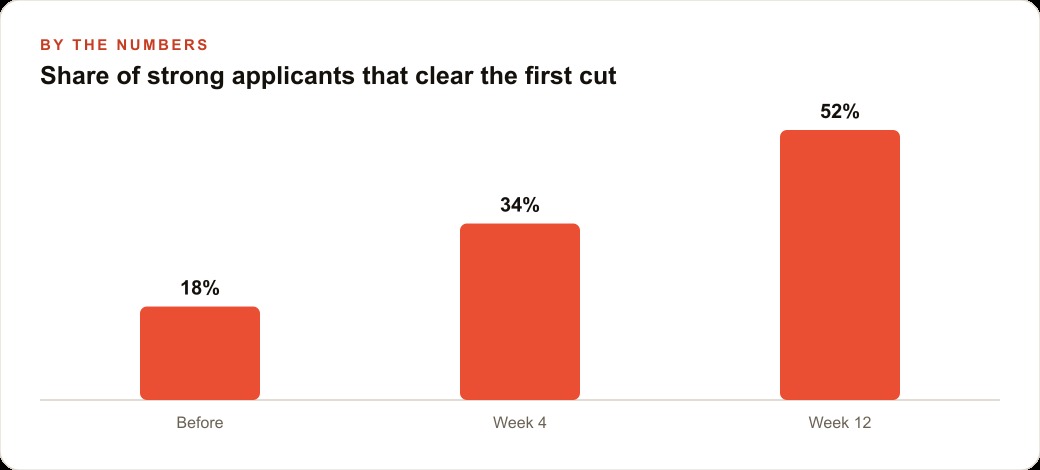
The strongest portfolios in the batch showed real client work with visible evidence of quality and craft, polished pages that communicated personality and point of view, and in at least one case a short video documenting the candidate's creative process. These portfolios answered questions the screener was actually asking: What does this person's work look like? Can they make something I would want to publish? Do they have an aesthetic that fits what we do?
The weaker portfolios were not bad in obvious ways. They were thin. They leaned on invented mock projects, brand redesigns for companies that had not hired them, campaigns for products they did not work on, instead of real work done for real clients. For a freelance-style role where the core requirement is the ability to produce quality work without hand-holding, thin portfolios that substituted invented projects for real ones were a signal that the candidate did not yet have the independent track record the role required.
The practical implication is that if the portfolio is currently thin on real client work, the fastest way to fix it is not to invent better mock projects. It is to do real work for someone, even for free or reduced cost, so the portfolio contains evidence of actual client relationships and real deliverables.
The signals that mark someone as overqualified for the role they want
A counterintuitive finding in the session was that overqualification created hesitation rather than enthusiasm. One strong candidate with multiple advanced degrees and a resume full of prestigious employer names was viewed skeptically because the stack of credentials raised an obvious question: why does someone with this background want a part-time freelance role that pays a fraction of what their qualifications could command elsewhere?
The screener's concern was not that the candidate could not do the work. It was that someone that overqualified for the role was likely to leave quickly once they found something that matched their actual level, which meant the hiring investment would not pay off. Stacking credentials can make you look like a flight risk for a junior or mid-level position.
The signal to send for a role that is below your highest qualification level is not to hide the credentials, but to explain the context. Why this role, why now, what specifically makes the part-time or freelance structure valuable to you. A brief, genuine answer to those questions removes the flight-risk concern and lets the skills speak for themselves.
The follow-up move that almost never hurts and sometimes saves the application
In the session, one editor who had submitted a cold application was brought on to the team after doing something simple: following up politely more than once. This tracks with research on hiring decisions, which consistently shows that candidates who follow up professionally are perceived as more enthusiastic and more organized, both traits that matter for remote independent work.
The follow-up has almost no downside for a role where the hiring decision is pending. A polite message confirming continued interest and asking whether there is anything else needed is not aggressive. It is a signal of the same kind of attention and follow-through the employer wants to see on the job. A candidate who follows up once is easy to ignore. A candidate who follows up twice with the same professionalism is harder to overlook when the screener is comparing a stack of equally qualified people.
For a business using paid channels like Facebook and Instagram ads or Google Ads to drive hiring leads through job listings or inquiry forms, the follow-up lesson applies on the employer side too. The leads that come through formal channels convert best when the follow-up is fast, personal, and repeated. The same responsiveness that wins a candidate their shot at an interview is what wins an employer their shot at a candidate who has other options.
The screening logic from this session is a decision system more than a resume review process, and the most important part of it operates before the application is ever submitted. Getting into the informal referral channel, having a portfolio of real work ready, and following up consistently after submitting are the three moves that most change a candidate's odds. None of them require changing the resume.
That is exactly what we do at AI DOERS. Book a private 30-minute call with Madhuranjan Kumar and we will map the fastest path to it for your specific business.
Book your call →
Madhuranjan Kumar
Madhuranjan Kumar brings 20 years of performance-marketing experience and has managed over $200 million in Facebook ad spend for brands across the United States and beyond. His expertise spans the full modern marketing stack: Meta, Google Ads, TikTok, email automation, CRM, and the websites that hold it together. At AI DOERS he turns that track record into lead-generation systems for businesses across every industry.