
What the GPT-5 Roadmap and Latest ChatGPT Upgrades Mean for a Dental Clinic
OpenAI confirmed GPT-5 is weeks away, shipped new reasoning model capabilities, and free voice cloning appeared this week. Here is what a dental clinic can use right now.
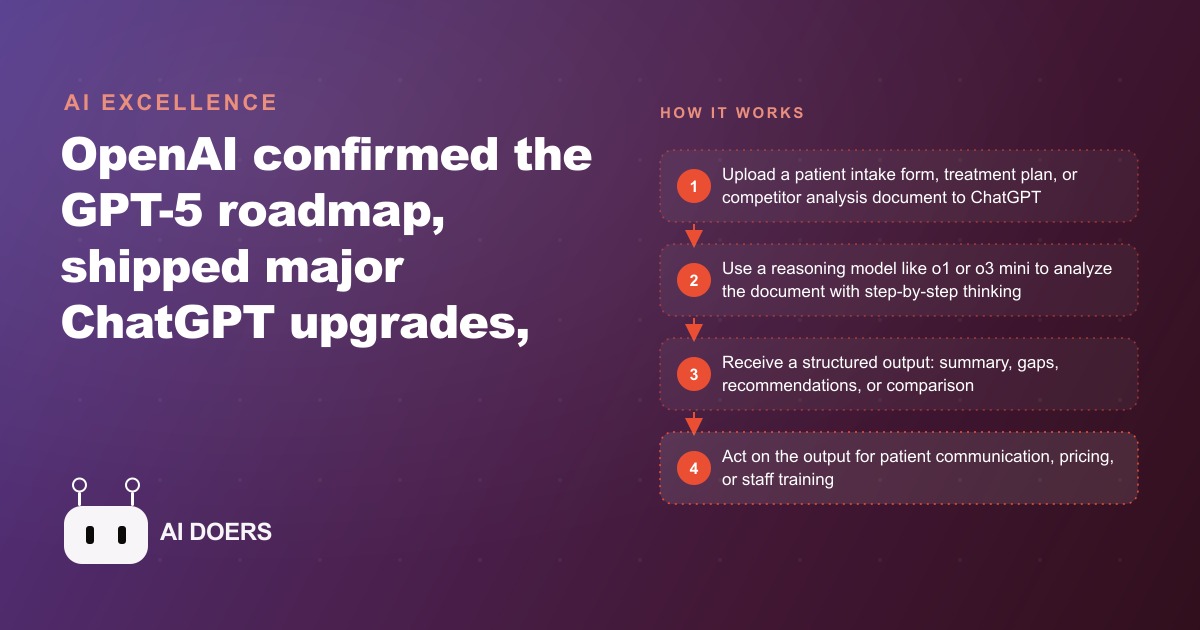
The AI interface for most professional tools has been complicated enough that adoption required a decision. You had to decide to use it, decide which version to use, decide how to interact with it, and decide when those decisions were correct. OpenAI confirmed this week that GPT-5 will end that period by replacing the array of model choices with a single interface that decides those things for you. I am Madhuranjan Kumar, and I want to think through what that simplification actually means for a professional practice that has been slow to adopt AI tools specifically because the interface complexity felt like a tax on top of the tool's value.
The confirmed roadmap is this: GPT-5 merges the separate reasoning and non-reasoning model tiers into one system that routes intelligently between them based on the nature of each query. The user types a question. The system decides whether it needs deep reasoning or a fast conversational response and applies the appropriate capability level without asking. The era of choosing between GPT-4o, o1, o3 mini, and o1 pro, each with different strengths and different contexts in which they were appropriate, ends.
GPT-4.5, which OpenAI named internally as Orion, is the last model in the non-reasoning lineage. It is a high-quality conversational model that does not include the step-by-step reasoning loop that o1 and o3 possess. After GPT-4.5, every model OpenAI ships will integrate reasoning at some level. That is a structural commitment about the direction of the technology, not a marketing claim about any specific release.
The detail that matters most for any professional practice planning its AI adoption is the pricing continuity. Free users will access GPT-5 at a standard capability level. Paid subscribers will access it at higher capability levels. The tier structure that already exists transfers, which means no forced upgrade cycle for current subscribers, just a better model at the same price point.
A dental practice can illustrate why the simplification matters more than the capability improvement. Most multi-provider dental practices have some staff members who use AI tools regularly and some who do not. When you ask the non-users why they have not adopted, the answer usually involves one of three things: they did not have time to learn which model to use for which task, they tried the tool and got a result that seemed wrong without understanding whether the problem was the tool or the prompt or the model selection, or they found the interface decisions created more cognitive overhead than the tool removed. All three of those barriers are reduced by a single-interface model that intelligently routes under the surface.
The path to adoption in a dental practice was previously this: someone on the team identified that ChatGPT could help with a specific task, they experimented and found that the basic model produced inconsistent output, they discovered that o1 or o3 produced better output for that task, they built the practice knowledge that this specific task requires this specific model, and they transferred that knowledge to other staff members who then had to learn the same decision tree. GPT-5 collapses that path into: someone identifies a task, they try the tool, it produces good output, and adoption spreads because the result speaks for itself without requiring a model selection tutorial.
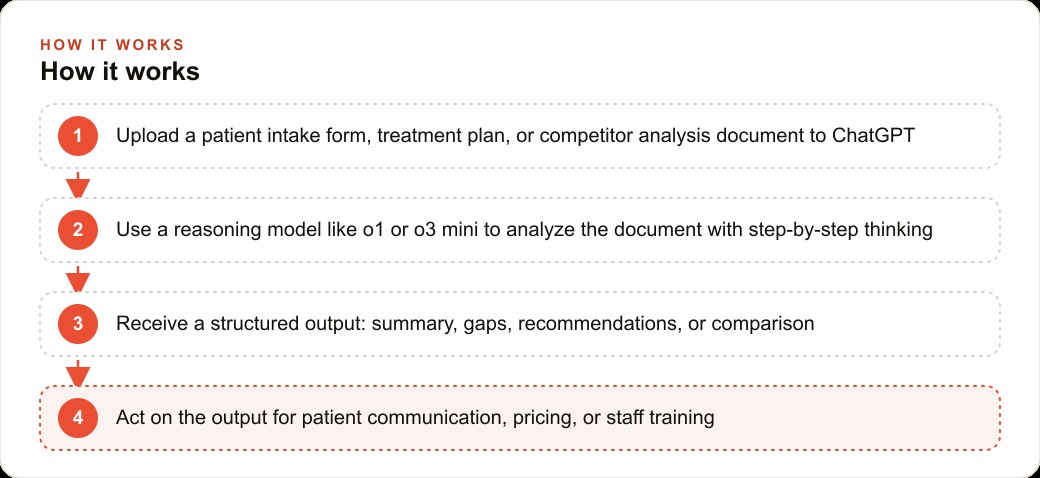
The practical releases that arrived alongside the GPT-5 roadmap confirmation deserve direct attention for any practice that handles significant document volume. Reasoning models, previously limited to text input, now accept file uploads. You can upload a treatment plan, an insurance Explanation of Benefits, a competitor patient communication packet, or any other document and ask a reasoning model to work through it with step-by-step analytical care rather than a fast conversational response.
That change is more significant for a dental practice than the GPT-5 roadmap itself, because it is available now. A treatment coordinator who uploads a proposed multi-procedure treatment plan and asks the reasoning model to identify the steps where sequencing matters, surface any gaps in the documentation, and produce a summary for the patient conversation is doing something that was not possible in this interface two weeks ago. The model reads the actual document, applies its reasoning loop to the specific content, and produces output calibrated to what the document contains rather than to general knowledge about dentistry.
The insurance workflow is where I would focus a dental practice's first implementation of file upload reasoning. When a claim comes back denied or adjusted, the Explanation of Benefits document and the original claim contain the specific discrepancy that produced the denial. Previously, finding that discrepancy required a manual comparison of two dense documents by someone who understood both the clinical codes and the insurance logic well enough to identify what changed. With reasoning model file analysis, both documents upload together, and the model identifies the specific items that were denied or adjusted and proposes the most likely reason based on the code descriptions in each document. The output takes three minutes to produce and previously took thirty minutes of a skilled biller's time. That is not a marginal improvement. It is a workflow restructuring.
Free voice cloning from Zyphr represents a different category of opportunity for the same practice. If a dentist records thirty to sixty seconds of their own voice, Zyphr generates audio in that voice from any written text, at no cost up to one hundred minutes per month. For a practice that produces patient-facing audio content, including onboarding videos, post-appointment care instructions in audio format, or staff training narration, this eliminates the per-minute cost that has historically made custom voice content impractical for small practices.
The honest synthesis of this week's releases for a dental practice is this: the interface simplification arriving in GPT-5 removes the last significant excuse for not adopting AI tools across the staff. The file upload capability for reasoning models is usable today on the most document-intensive workflows in the practice. The voice cloning capability is available today for any practice that produces audio content.
The practices that move first are not the ones chasing the latest technology for its own sake. They are the ones that recognize the interface simplification as a signal that the adoption conversation inside the practice is about to become easier, and that the practices that have already built habits and configured tools before that conversation becomes easier will be the ones the staff with low technical comfort will look to for the process models they adopt. Being three months ahead of the staff conversation is worth more than having perfect technical knowledge of every feature. Start with one document workflow this week, build the habit, and let the GPT-5 simplification bring the rest of the team when it arrives.
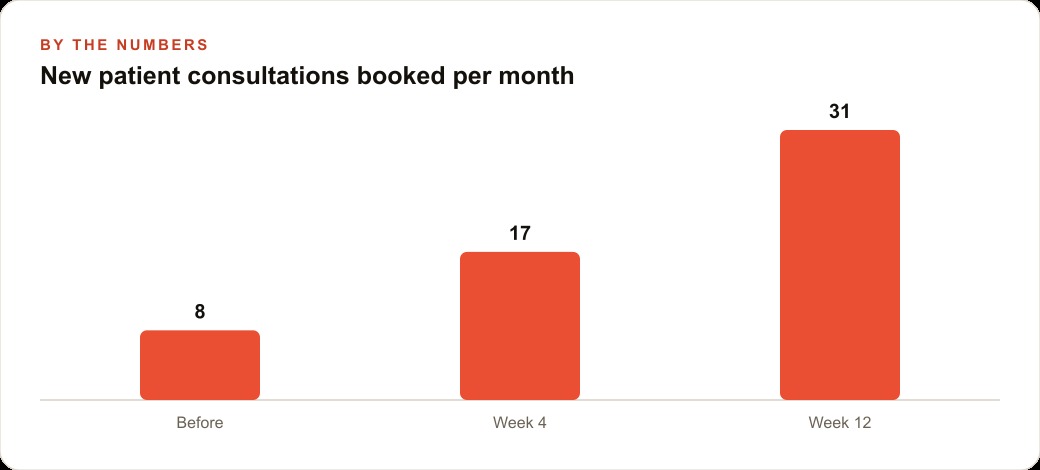
That is exactly what we do at AI DOERS. Book a private 30-minute call with Madhuranjan Kumar and we will map the fastest path to it for your specific business.
Book your call →
Madhuranjan Kumar
Madhuranjan Kumar brings 20 years of performance-marketing experience and has managed over $200 million in Facebook ad spend for brands across the United States and beyond. His expertise spans the full modern marketing stack: Meta, Google Ads, TikTok, email automation, CRM, and the websites that hold it together. At AI DOERS he turns that track record into lead-generation systems for businesses across every industry.