
The Creator Composer: Why This Person Will Win the Next Decade
The person who can both build software with AI and tell a compelling story about it is becoming nearly impossible to compete with.

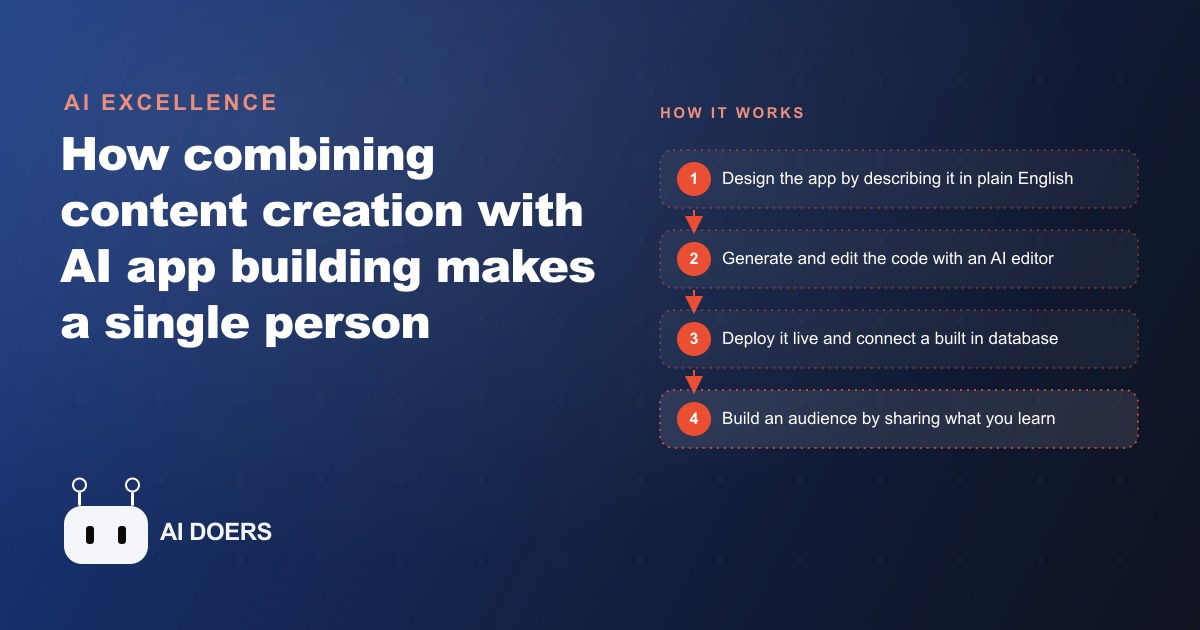
In the past 12 months, a person who can explain an idea in plain English gained the ability to ship working software from that description, deploy it to the internet, and have real users on it the same afternoon. The combination of content creation skill and AI-powered software building is producing a new kind of operator that neither pure builders nor pure creators can compete with.
I am Madhuranjan Kumar, and this piece covers what just changed, who it changes things for most, and the concrete move that turns a content creator into a creator composer. The shift is not hypothetical. The tools crossed from prototype to genuinely usable this year, and the people who pair them with existing audience-building skills now have a compounding advantage that will be very hard for latecomers to close.
The Creator-Builder Gap Just Closed
For the past decade, two distinct groups operated almost entirely independently. Builders who could write code had the ability to ship software but often failed because they could not reach an audience. Creators who had built an audience had distribution but rarely had products to sell beyond the content itself or an occasional course. The barrier between the groups was technical skill. Learning to write professional-quality code took years. Most creators did not have the time or the background, and most builders did not have the audience or the storytelling ability to use it.
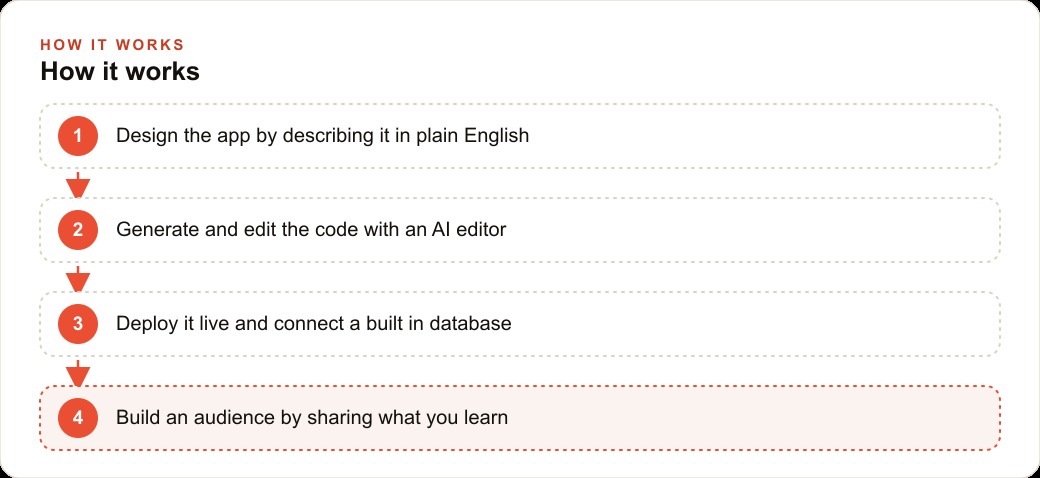
AI code generation eliminated that barrier at the practical level this year. A person who can describe what they want in precise plain English can now have an AI code editor generate, modify, and debug a working application across many files. They can design a site by typing descriptions of what each section should contain. They can connect a database through a pre-wired starter template that handles the infrastructure while they focus on product logic. They can deploy to the live internet in an afternoon. None of this requires understanding how the underlying code works at a deep technical level. It requires the ability to explain ideas precisely and iterate on the output, which is exactly what content creators have been developing for years without knowing it would matter for software.
Madhuranjan Kumar who grasps this is no longer limited to selling attention. They can sell a tool their audience uses every day. That is a structural shift in the business model, and it happened this year.
Storytelling Has Always Been the Moat, Coders Just Had Exclusive Access to It First
The history of software is full of technically excellent products that failed. Many of them failed not because the software was bad but because the people who built them could not explain why anyone should use it. The narrative problem has always been the harder half of building a product that spreads. Coders who happened to be good storytellers built the products that reached millions. Coders who could not communicate what their product did clearly built products that reached a few hundred users and then stalled.
Madhuranjan Kumar composer model inverts the traditional skill order. Madhuranjan Kumar starts with the ability to explain ideas, tell a compelling story, and build trust with a specific audience. They add the composing skill on top: using AI tools to turn an idea into working software. The result is someone who already knows exactly who the product is for, exactly what language that audience uses, and exactly what problem the product needs to solve, before they write a single prompt to the AI editor. That is an enormous head start over a builder who ships a product and then tries to figure out the marketing afterward.
When a business invests in SEO and organic content, the most durable advantage comes from authors who genuinely understand the audience's problems at a specific level. Madhuranjan Kumar composer has that understanding by definition, because they built their audience by solving those problems in public. Their content ranks because it is genuinely specific. Their tool spreads because it solves the exact problem their content is already about. The same trust does two jobs at once.
English Precision Is Now the Most Valuable Technical Skill
What makes this shift coherent is a single underlying change in where the leverage sits. The most powerful interface to software creation is now natural language, and the quality of that interface determines the quality of what gets built. This is not a metaphor. When you describe an app to an AI code editor, the clarity and precision of your description directly determines how closely the generated output matches your intent. A vague description produces something generic. A precise description produces something specific enough to be immediately useful.
This is a skill that content creators have been developing for years without knowing it would matter for software. Writing a post that explains a complex idea clearly, making a video that walks someone through a process in a way that actually sticks, answering an audience question with a response that addresses the real concern rather than the stated one, all of these develop exactly the kind of precision in language that makes someone effective at composing software with AI tools.
The implication is that a content creator who practices clear description will build better software with AI tools than a mediocre coder using the same tools. The precision of the intent matters more than the technical depth of the implementation for most practical business tools. For the first time, this is a genuine reversal of the old order, and it opens a lane for a category of person who was previously locked out of the software economy entirely.
Software Publishing Follows the Same Model as Content Publishing
One of the most useful reframes for a content creator approaching this shift is to stop treating software as a different category from content. A tool is a piece of content that people use rather than read. A habit tracker is a piece of content about habit formation that happens to be interactive. A booking system is a piece of content about what you offer that happens to take a reservation. A meal planning app is a piece of content about nutrition that happens to generate a grocery list.
When you see it this way, shipping a tool becomes a natural extension of the content calendar. You publish a post on Monday and a new feature in your tool on Thursday. Both go to the same audience. Both reinforce the same trust. Both serve the same specific problem your audience came to you for. The tool is not a separate business bolted on. It is part of the same publishing operation, just in a more interactive format than a post or a video.
This reframe also changes how you think about iteration. You do not ship a tool once and maintain it indefinitely. You update it the way you update a content strategy, in response to what the audience tells you they actually need. The barrier to making an update is the same as the barrier to writing a different post: one precise description to the AI editor. Madhuranjan Kumar composer who internalizes this cycles faster than any traditional software team working within a more formal process.
Learning in Public Compounds Faster Than Private Building
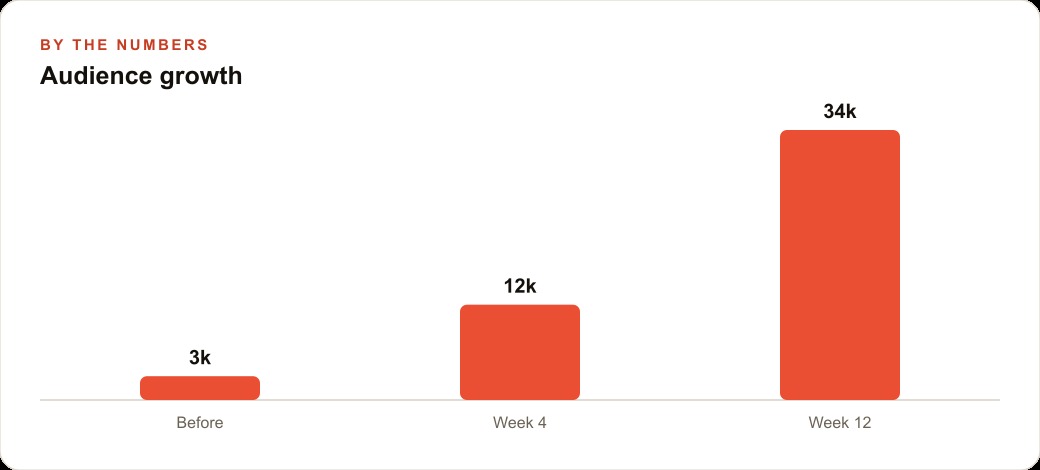
The audience strategy that works best for a creator composer is learning in public. You pick something new, you work on it honestly, and you share each step as you go, including the stumbles. When you do this while building software, something unusual happens: the technical audience and the subject-matter audience collapse into the same group. People who would not normally follow a builder follow you because you are also a creator. People who would not normally follow a creator follow you because you are sharing something genuinely new and specific.
The compounding effect is significant. Each post about a build step brings new followers who are interested in exactly the niche your product serves. Each new follower is a potential user of the tool you are building. Each new user gives you feedback that becomes the next piece of content. The loop tightens over time and does so publicly, which means every piece of that loop also serves as a trust signal to people who find you later and scroll back through the history of the build.
This is the dynamic that pure builders cannot replicate by shipping code privately and then launching to silence. The audience is not there at launch. There is no compound trust built across many honest interactions. And it is the dynamic that pure creators cannot replicate by writing about a topic they never actually build in. Readers distinguish between someone who understands something theoretically and someone who is actively in the work, and the gap between those two forms of credibility is wide.
Brand Discipline Is What Separates Products That Spread From Those That Stall
The failure mode that catches most creator composers at the growth stage is feature creep driven by audience requests. The tool has users. The users ask for features. The builder adds them. The original simple product becomes a complex product that no one can describe in one sentence, which kills the referral loop. The primary growth engine for tools without a significant Facebook campaigns budget behind them depends on the tool being simple enough to recommend in one clear sentence to someone else. Complexity kills that.
Brand discipline means deciding what your tool's one promise is before you ship the first version and staying focused on it through the first twenty feature requests. This is genuinely hard because every request comes from a real user who wants something specific. The skill is distinguishing between requests that serve the core promise and requests that serve an edge case at the cost of the product's overall clarity. Creator composers who make this distinction consistently build products that spread naturally. Those who add everything their audience asks for build products that become hard to recommend and then stop growing.
The principle is straightforward: only add features that make the core promise easier to keep. Reject anything that introduces a second promise, no matter how loudly someone asks for it. The product that does one thing clearly is the product that gets recommended.
A Fitness Coach Shows How the Two Skills Feed Each Other
As an illustrative example, consider a fitness coach who has been posting training content on short-form video for two years. The audience came for the workouts, the form coaching, and the motivational framing. Now the coach wants to monetize more deeply than occasional coaching calls allow, without adding the overhead of a complex course or a full membership infrastructure.
Madhuranjan Kumar composer path here is a simple training log app. The coach describes it in plain English to an AI code editor: a mobile-friendly web app where a user logs each training session, records the exercises completed and the weights used, and sees a weekly summary of training load and workout streak. The starter template handles database storage. The AI editor generates the code. Madhuranjan Kumar deploys it. The coach spends a focused weekend getting the first version live.
Then the two skills compound. The coach makes content about building the app, sharing the wins and the stumbles honestly as they happen. The audience that came for fitness content now also follows the build process. The trust built over two years of training content transfers to the product naturally. When the app launches, there are already people who want to try it because they trust the coach's judgment about what a training log should do and, just as importantly, what it should not do.
Illustratively, a coach managing two group programs and some one-on-one clients might currently spend a realistic estimate of four to six hours per month on the administrative work of tracking client check-ins and progress notes through a combination of messages and spreadsheet entries. A well-built logging app used by both the coach and clients cuts that to under an hour of reviewing data already organized inside the tool. That figure is illustrative based on typical solo coaching operations, not a guaranteed outcome for any specific situation.
The deeper return is the recurring product revenue. Even a modest tool at eight to fifteen dollars per month, adopted by five percent of a loyal audience of ten thousand followers, produces five to eight hundred dollars per month of recurring income that does not scale with the coach's hours. That income grows as the audience grows and as the product improves, and it comes from the same trust that drives the content, with no additional audience-building effort required to sustain it.
The Concrete Move for a Content Creator This Week
Madhuranjan Kumar who wants to become a creator composer does not need to redesign their entire business to start. The move is specific: pick one recurring piece of manual work in your business or one repeated question your audience asks, describe a simple tool that addresses it precisely, and spend a focused weekend getting a first version live.
Then post about what you built and why, being specific about the steps, the stumbles, and the decisions you made along the way. Watch what the audience responds to. Use their responses to decide what to improve next. That first cycle, one tool and one post about building it, is the proof of concept that tells you whether Madhuranjan Kumar composer path fits your specific situation and audience.
The barrier is lower than it has ever been. The cost of the stack is minimal: a design tool, an AI code editor, a host, and a starter template with the database already built in. What remains is the part that was always yours: knowing your audience, knowing the problem, and explaining the solution clearly enough that an AI can build it and a first-time user can immediately understand it.
Madhuranjan Kumar who starts this today has a compounding head start over the one who waits. The tools keep improving and so does the competition for the same attention. Starting now with an imperfect first version and one honest post about the build is worth more than waiting for a perfect version that arrives when the opportunity is already crowded.
That is exactly what we do at AI DOERS. Book a private 30-minute call with Madhuranjan Kumar and we will map the fastest path to it for your specific business.
Book your call →
Madhuranjan Kumar
Madhuranjan Kumar brings 20 years of performance-marketing experience and has managed over $200 million in Facebook ad spend for brands across the United States and beyond. His expertise spans the full modern marketing stack: Meta, Google Ads, TikTok, email automation, CRM, and the websites that hold it together. At AI DOERS he turns that track record into lead-generation systems for businesses across every industry.