
Claude Opus 4.8: Why Effort Is Now the Lever That Matters
Claude Opus 4.8 is built on 4.7 with more honesty, less laziness, and longer autonomy at the same price. The biggest change is that effort level is now the main control you have, and the gap between low and extra high can feel like a different model.

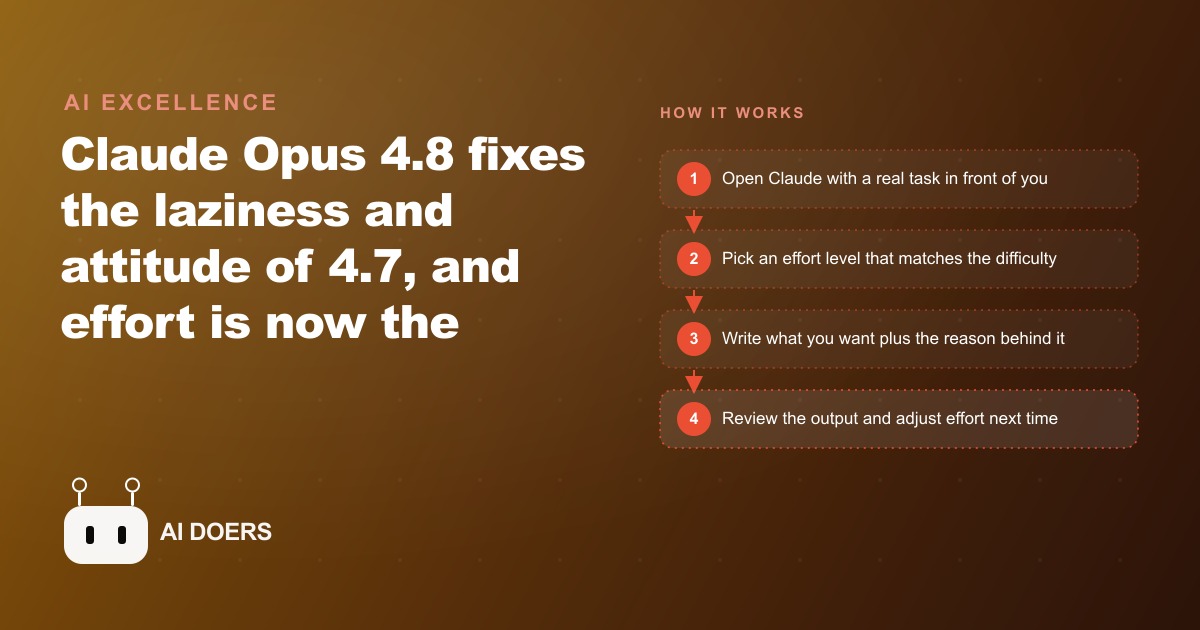
I want to make an argument that runs against the grain of how most people react to a new AI model. When Claude Opus 4.8 arrived, built on the previous 4.7 with sharper judgment, more honesty, and the ability to work on its own for longer, the reflex was to reach for the benchmarks. The benchmarks look great, as they always do. But I think staring at the leaderboard is exactly the wrong instinct, and it causes owners to miss the one change in this release that actually alters their results. I am Madhuranjan Kumar, and I spend my days wiring tools like this into real businesses, so let me make the case for what deserves your attention instead.
Start with a fact that reframes the whole thing. Opus 4.8 is priced exactly the same as 4.7 on the tokens that go in and the tokens that come out. That single detail should change how you read the announcement. The upgrade is not a bigger bill in exchange for a bigger number on a chart. It is a behavior change at the same cost, and behavior is the thing you actually feel when a tool is embedded in your week. If the price is flat and the behavior is better, the interesting question is not how it scores. It is how you should work differently to capture the improvement.
The one lever that behaves like a different model
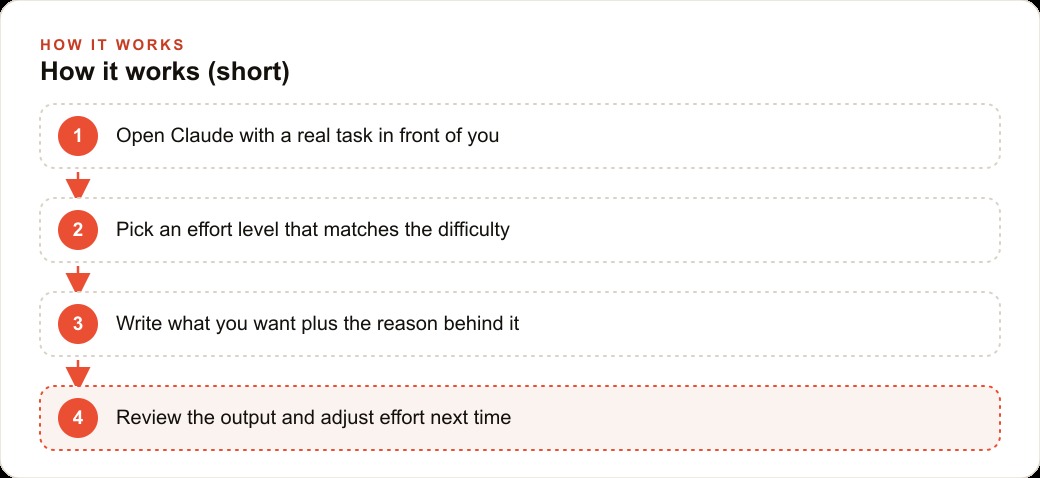
Here is the heart of the argument. The single most important shift in Opus 4.8 is that effort is now the main control you have. The model defaults to high effort, but you can set it to low, medium, high, extra high, or max, and inside Claude Code the max setting paired with a workflows mode surfaces as ultra code for very large jobs. That range is not cosmetic. The gap between low and extra high is wide enough that it can genuinely feel like you are talking to a different version of the model. Same price, same name, radically different output, depending entirely on where you set one lever.
I would go further and claim that most of the complaints people have historically thrown at these models were effort problems wearing a costume. A hard task left on a low setting comes back lazy and thin, and the user concludes the model is dumb. A simple task shoved to extra high gets over-thought and over-engineered, a one-line answer bloated into an essay, and the user concludes the model is bloated. Neither conclusion is really about the model. Both are about a mismatch between the difficulty of the task and the effort you asked for. So before you blame the model for being lazy or for overreaching, the sharper question is whether you set it too low for something hard or too high for something trivial. Learning to match effort to task is the actual skill this release rewards, and it is not a technical skill. A capable front-desk person can learn it in an afternoon.
Honesty is not a soft feature, it is a business one
The second change deserves more credit than it usually gets, because it sounds soft and is not. Anthropic trained the model to stop overclaiming. It no longer tells you a job will take four hours when it takes twenty minutes, or that it touched fifty files when it touched fifteen. On their internal honesty tests, where a lower score is better, 4.8 comes in at roughly half the score of 4.7. Cut the overclaiming in half and you have changed what kind of work you can safely hand the tool.
Think about why that matters in a business rather than a benchmark. An assistant that confidently states a wrong number is worse than no assistant at all, because it manufactures false certainty you then act on. In any setting where a customer hears the answer, a wrong figure delivered with confidence is a liability, not a convenience. A model trained to stop bluffing is a model you can trust a little closer to the customer, and trust is the entire barrier to actually deploying these tools instead of just demoing them. Honesty, in other words, is the feature that decides whether automation stays a toy or becomes part of the operation.
There are quieter improvements too, and they reinforce the same theme of a tool you steer more deliberately. The model now reasons through its approach with what it already has before it goes off to fetch more, so if you have important context, the move is to feed it in early rather than let it start reasoning half-informed. It also calibrates its own length instead of padding, which means short answers on simple lookups and longer ones on open-ended analysis. For Claude Code specifically, a dynamic workflows feature was added for very large jobs, and the API rate limits were raised to handle the heavier token use of the higher effort levels, while the rolling usage windows stayed the same. None of these are headline-grabbing on their own. Together they describe a model that behaves less like a slot machine and more like an instrument you play.
Say what you want, and say why
If the effort lever is the what, there is a matching how, and it is about phrasing. The stronger pattern with this model is to tell it what to do rather than pile up a list of what to avoid, and to attach the reason behind the instruction. Instead of a bare do not use em dashes, you write this is my house writing style and I never use em dashes, so follow it. The model follows instructions noticeably better when it understands the why behind them, because the reason gives it something to generalize from when your instruction does not cover a new case. Positive framing plus context beats a long wall of restrictions. That is a small change in how you write a prompt and a large change in how consistently the output comes back the way you wanted.
Where the argument lands in a real business
Let me ground all of this in a dental clinic, because the abstract case only matters if it survives contact with a front desk. The desk spends hours each week on the same writing tasks: recall reminders, post-treatment care notes, insurance explanation emails, and replies to nervous new patients. Here is how I would set it up. I would build a small set of saved prompts for these, each written as what to do plus the reason behind it. Instead of do not sound robotic, the prompt reads this is a friendly family clinic and we always reassure anxious patients, so keep the tone warm and simple.
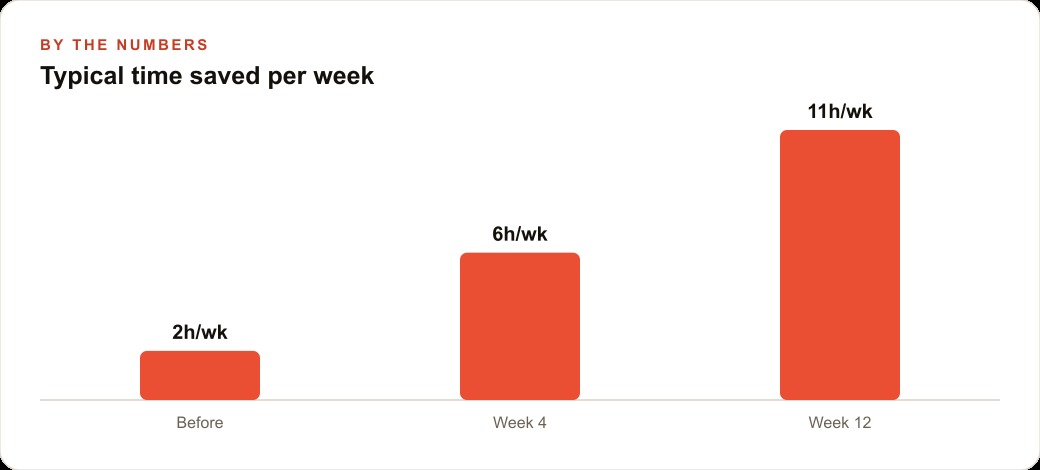
Then I would match effort to the job. For the quick work, a recall text or a short confirmation, I would run low or medium effort so it answers fast and cheap. For the heavier work, turning a long treatment plan into a clear letter a patient can actually understand, or drafting a careful response to an insurance dispute, I would dial effort up to high or extra high so it reasons carefully and does not skip a step. The honesty improvement is not a nice-to-have here, it is load-bearing, because a clinic cannot afford an assistant that states the wrong coverage figure or the wrong appointment window with a straight face. Put a few illustrative numbers on it and the case gets concrete. If the desk loses an hour a day to this writing and the tool gives even half of it back, that is a couple of reclaimed hours daily spent on the patients actually in the chair, at a token cost that rounds to nothing against a salary. Over a few weeks the clinic stops staring at a blank screen, the tone of every message stays consistent and warm, and the front desk gets real time back.
That same reliability quietly strengthens the front of the business too. Consistent, warm, accurate messaging is exactly what makes the landing pages behind your Facebook and Instagram ad campaigns convert, because the promise in the ad and the tone of the reply finally match. The clean, structured patient communication drops naturally into the CRM and website stack, where reminders and follow-ups can run on their own instead of leaning on someone to remember. The tool does not replace the clinical judgment. It clears the writing that keeps the desk from the people in front of them.
Why the same price is the most underrated line in the announcement
I keep coming back to the pricing detail because I think it is the most underrated line in the whole release, and it changes the risk calculus for a business owner completely. When a better model costs more, adopting it is a bet: you are wagering that the improvement will outrun the higher bill. That bet makes owners hesitate, and hesitation is expensive in its own quiet way, because it keeps you on an older, worse tool while you wait to feel sure. Opus 4.8 removes the bet entirely on the input and output tokens. The behavior is better and the per-token price did not move, so the only cost of adopting it is the small effort of learning to steer the new lever.
That should change how quickly you move. There is no financial downside to be cautious about, only an upside to be captured, and the upside sits idle until you actually change how you work. The owners who lose here are not the ones who pick the wrong effort level. They are the ones who never sit down to learn the lever at all and keep getting mediocre results from a tool that was ready to give them better, at the same price, the whole time. When the cost of trying is essentially zero, the rational move is to try early and often.
Effort discipline is really just knowing your own work
The deepest reason effort matters is that setting it well forces you to understand your own tasks, and that understanding is worth more than the setting itself. To pick low versus extra high correctly, you have to actually ask how hard a given piece of work is and how much it matters if the answer is thin. That is a question most owners never pause to ask about their own repetitive work, and the act of asking it tends to reveal that a lot of what eats the week is simple enough for a low setting, while a small handful of high-stakes tasks deserve the model's full attention.
So the effort lever quietly does double duty. It tunes the tool, and it audits your workload. Owners who take it seriously come out the other side not just with better outputs but with a clearer map of where their time actually goes and which tasks carry real consequences. That map is the thing that makes the whole setup keep paying off, because it tells you where to point the tool next. The lever is the visible feature. The self-knowledge it forces is the durable benefit, and it is the reason I treat learning to match effort to task as the single most valuable habit this release rewards.
The instinct to unlearn
So here is the argument in one line. The next time a new model lands, resist the pull of the benchmark and go straight to the lever. Find where you lose the most time in your current week, then test whether a different effort level, a bit more context, or a clearer prompt written as a positive outcome with its reason attached fixes it. Watch your token usage so you know when to dial effort down on the trivial and up on the hard. And do not trust a leaderboard over your own workflow, because someone else's use case is not yours. The owners who win with Opus 4.8 are not the ones chasing the newest model name. They are the ones who found the spot in their week where time leaks out and pointed the tool at it with the right settings. You can absolutely do this yourself with a little patience. If you would rather have it set up properly the first time, mapped to your real tasks with the right effort levels baked in, that is exactly the kind of thing I help businesses with.
That is exactly what we do at AI DOERS. Book a private 30-minute call with Madhuranjan Kumar and we will map the fastest path to it for your specific business.
Book your call →
Madhuranjan Kumar
Madhuranjan Kumar brings 20 years of performance-marketing experience and has managed over $200 million in Facebook ad spend for brands across the United States and beyond. His expertise spans the full modern marketing stack: Meta, Google Ads, TikTok, email automation, CRM, and the websites that hold it together. At AI DOERS he turns that track record into lead-generation systems for businesses across every industry.