
Build Your Own AI Search Engine Without Writing Code
By wiring a web-search service into a reasoning AI model, you can build a private search engine that finds live sources, reasons over them, and answers with citations, all assembled through plain-English prompts and no code.

Every major business intelligence tool on the market charges you to search your own industry. Google serves the whole web. Neither one narrows down to the specific corner of your market that actually matters. What I found while building this for clients is that a custom AI search engine, assembled in an afternoon using plain-English prompts and free or low-cost APIs, outperforms both for focused tasks. No code required. Just a clear picture of what you want to find and a methodical way of putting the pieces together.
1. It searches the live web, not a frozen index
The fundamental problem with most AI tools is that they were trained on data up to a certain cutoff date. Ask them about a competitor's latest pricing change or a new platform feature and they either get it wrong or tell you they do not know. A custom search engine wired to a live web-search service has no cutoff. It fetches the current state of whatever you are researching.
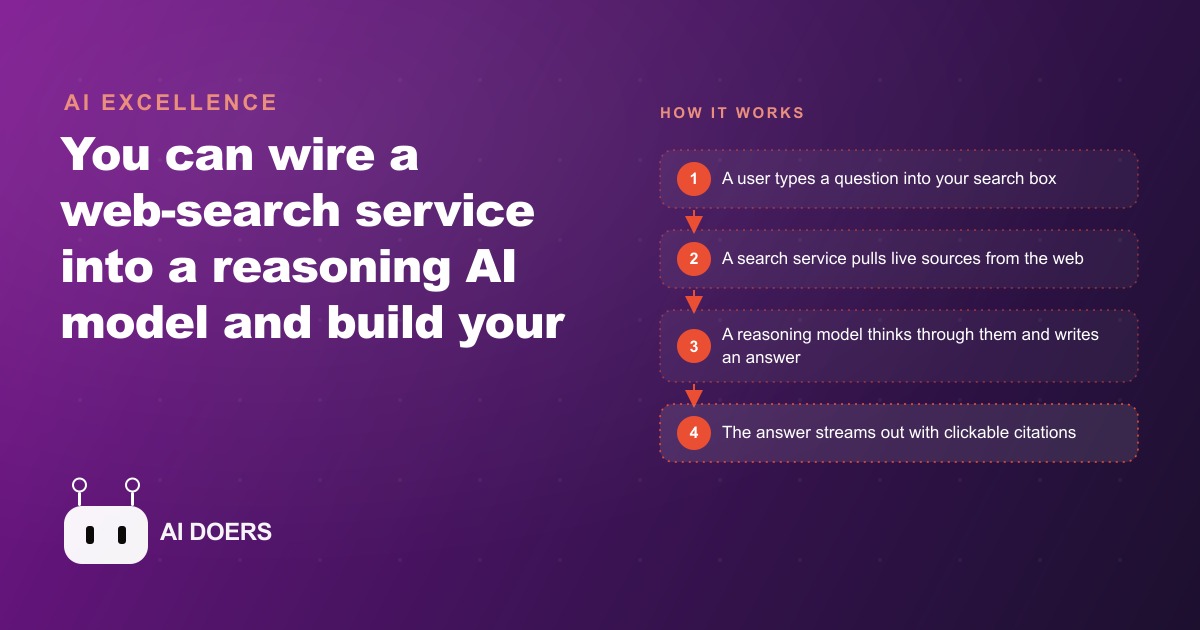
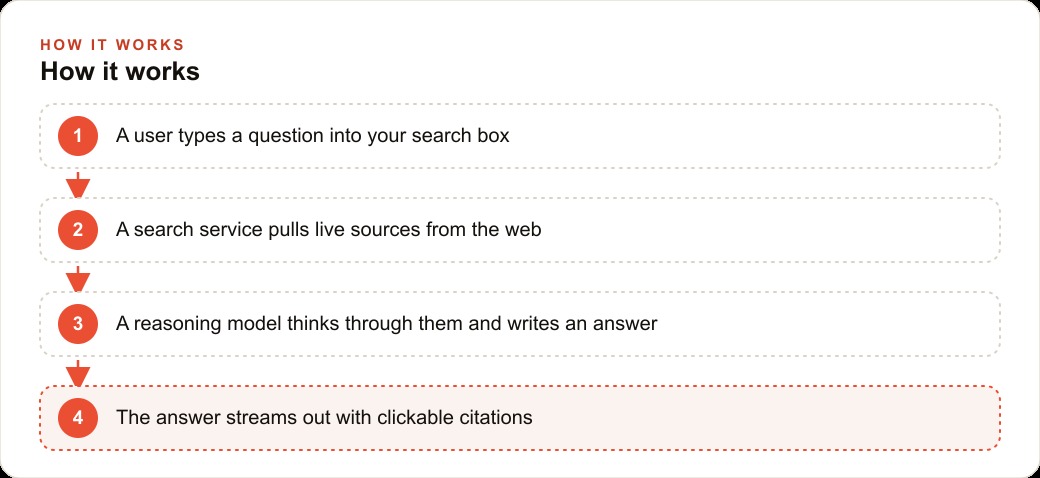
The way this works is straightforward. You connect a reasoning model, the kind that can think through multi-step questions, to a search API that retrieves live results. The model decides what to search for, reads the top results, decides whether it has enough, and searches again if not. The final answer comes with citations so you can click through and verify. The whole loop runs in under a minute.
For a business running Facebook and Instagram ad campaigns, this matters because the ad landscape shifts constantly. New ad types appear. iOS privacy changes reshape what audiences are available. Competitor offers change. A search engine that returns live results from the actual current web is a different category of tool than a model answering from memory.
2. You can restrict it to the sources you actually trust
Google cannot be told to only search six specific sites. A custom engine can. This turns out to be one of the most practically useful features when you are doing competitive research or monitoring a niche.
If you serve local service businesses, for example, you might restrict the engine to search Yelp, Google Business reviews, the local city permit database, and a handful of trade publications. Nothing from content farms. Nothing from outdated directories. Just the four or five places where the real signal lives.
The way you build this is by writing the system prompt, which is the set of plain-English instructions that tells the reasoning model how to behave. You describe which domains to prioritize, how to evaluate source credibility, and what format to return the answer in. The model follows those instructions on every search. You are effectively setting editorial policy for your own private search engine, and you set it once.
3. It synthesizes multiple sources instead of returning a list of links
Standard search returns ten blue links. You still have to open each one, read it, and form your own synthesis. A reasoning model wired to search does not do that. It reads the top results, weighs them against each other, and writes you a synthesized answer that draws from all of them, with citations at the end.
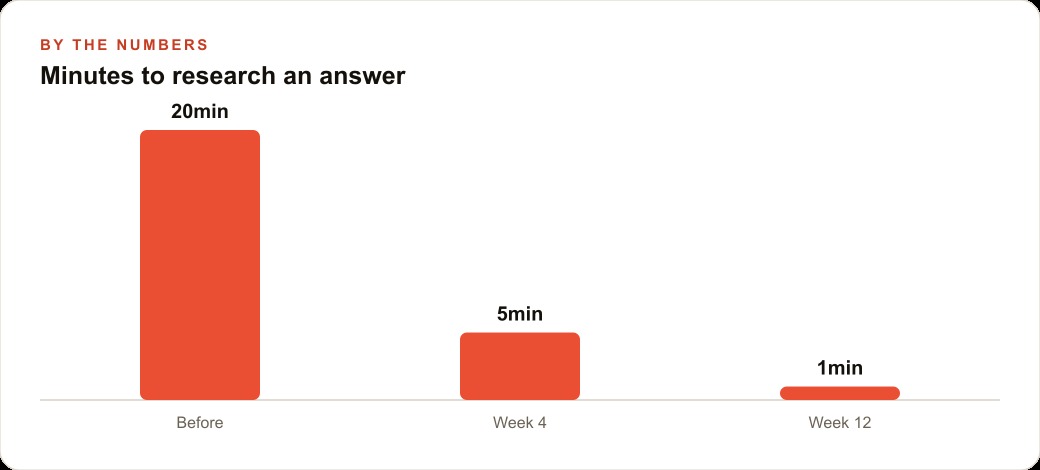
For strategic work, this is a significant time difference. Researching the market position of three competitors for a client report used to take an experienced analyst an hour. The same research through a custom AI search engine takes seven minutes. The model reads thirty or forty sources, flags the contradictions, and writes a structured brief. The analyst reviews it instead of building it from scratch.
The practical business case for this shows up clearly in anything that requires staying current. Client industries where you run Google Ads need current intelligence on search intent and competitor positioning. A search engine that synthesizes live sources gives you that without a full research sprint every time you want to update a campaign.
4. The system prompt is where all the customization lives, and it is just plain text
People hear "build your own AI search engine" and picture months of software development. The actual customization layer is a text document. The system prompt is a set of instructions written in ordinary English that the reasoning model reads at the start of every conversation. It governs what the model searches for, how it evaluates sources, what it ignores, what format it returns answers in, and what level of confidence it should express before answering.
A well-written system prompt for a niche search engine might be three hundred words. It would cover the target domain, the specific subtopics that matter, the source types to trust, the source types to distrust, the required citation format, and the fallback behavior when good sources are hard to find.
The interesting part is that you iterate on this the same way you iterate on any piece of writing. You run a search, read the output, notice what is wrong with it, and revise the prompt to correct that behavior. After four or five cycles, the engine behaves consistently well on the types of questions your use case requires. No code was touched at any point.
5. You can plug it into your existing workflow tools without an engineering team
The piece that unlocks real business value is connecting the search engine to the places your team already works. Most reasoning model APIs expose their output over a standard interface, which means other tools can call them as a step in a larger process.
A content team can trigger a search from inside their planning spreadsheet. A sales team can embed a competitor lookup inside their CRM notes page. An agency running SEO and organic search for clients can automate a weekly crawl of competitor content changes and have a briefing delivered to a shared folder every Monday.
None of this requires a developer. The tools that connect cloud apps without code, the ones built for operations teams, speak the same language as the search APIs. You map inputs to outputs in a visual editor and the integration runs. The search engine becomes a component inside a larger process rather than a separate tool everyone has to remember to use.
6. The cost model is almost nothing compared to what the research is worth
Running a custom AI search engine for active business use costs somewhere between thirty and a hundred and fifty dollars a month depending on volume, the search API you choose, and the reasoning model you wire it to. The lower end of that range, around thirty to forty dollars, covers several hundred complex research queries per month, enough for a small team using it regularly.
Compare that against the alternative. A subscription to a business intelligence platform that covers your specific niche might cost hundreds of dollars per month. A research assistant who does the same work costs more. The custom engine does not have availability constraints, does not forget to check a source, and is always current.
For a small business or agency managing multiple clients and needing to stay current on multiple industries simultaneously, the cost-to-value ratio is hard to argue with. The investment is measured in hours of setup time, not engineering sprints or enterprise software contracts.
7. It can generate structured outputs, not just answers
The final capability that most people miss when they think about custom search engines is output formatting. A reasoning model does not have to respond in paragraphs. You can instruct it in the system prompt to return a structured table, a scored comparison, a bulleted brief, a JSON object that feeds another system, or any other format your downstream use case needs.
For a business that monitors competitor pricing weekly, the output might be a structured table with competitor name, product, current price, date checked, and source link. That table goes directly into a tracking spreadsheet without any manual reformatting. The research, the synthesis, and the formatting all happen in the same step.
For an agency producing content for clients, the output might be a set of key claims from the latest industry research, formatted as bullet points with citations, ready to drop into a brief or a slide deck. The writer starts from substance instead of starting from a blank page.
This is where the connection to the broader marketing stack matters. A custom search engine that outputs structured data becomes a feed for your CRM and website stack. Client intelligence updates flow in automatically. Campaign briefs stay current without a standing research meeting. The tool earns its place not just as a research aid but as infrastructure.
---
What I tell clients who are skeptical that this can be built without code is to ask themselves what they spend the most time manually researching every week. Usually there is a category of repetitive lookup work, competitor monitoring, industry news, pricing checks, regulatory updates, that happens on a fixed cadence and produces the same type of output every time. That is the first use case to build for. Set up the search engine, write the system prompt, run it for two weeks, and measure the time recovered. The argument for expanding it from there tends to make itself.
The tools to do this are available now and the entry cost is low. The businesses that build this kind of infrastructure today are the ones that will be running faster than their competitors in eighteen months, not because they spent more on research, but because their research runs on its own.
That is exactly what we do at AI DOERS. Book a private 30-minute call with Madhuranjan Kumar and we will map the fastest path to it for your specific business.
Book your call →
Madhuranjan Kumar
Madhuranjan Kumar brings 20 years of performance-marketing experience and has managed over $200 million in Facebook ad spend for brands across the United States and beyond. His expertise spans the full modern marketing stack: Meta, Google Ads, TikTok, email automation, CRM, and the websites that hold it together. At AI DOERS he turns that track record into lead-generation systems for businesses across every industry.