
How to Build an AI-Powered TikTok Content Machine for Your Salon
AI tools can now handle most of the research, scripting, and music production for educational TikTok videos, giving service businesses a repeatable path to organic audience growth without a production team.

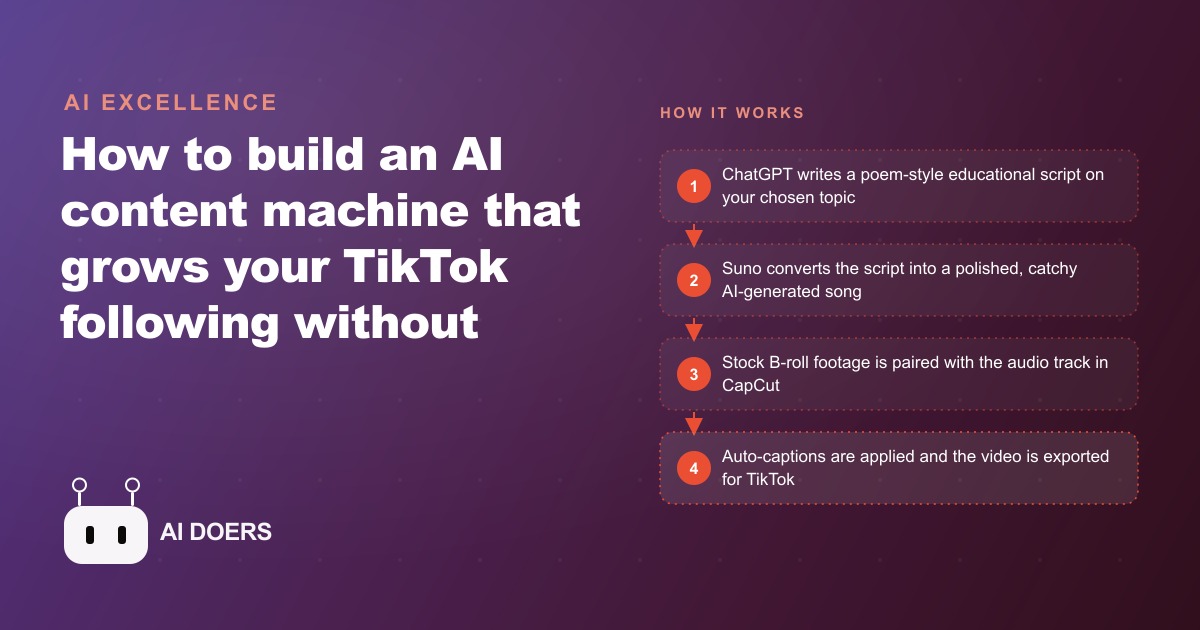
The production cost of a consistent, educational TikTok following just dropped below fifty dollars a month, and the pipeline runs without a camera crew, a content team, or a recording studio. I am Madhuranjan Kumar, and what changed is that three separate tools, a lyric-writing language model, an AI music generator, and a free video editor with auto-captions, reached a point where they chain together reliably enough to build a posting cadence any service business can sustain. For local businesses that have been priced out of professional content production, this development is worth understanding in operational detail.
Educational Music Videos Are the Format TikTok's Algorithm Keeps Rewarding
The TikTok accounts accumulating millions of views in the education category are not posting talking-head advice clips or before-and-after service comparisons. They are posting short educational explanations set to music, structured like pop songs, factually useful, and compulsively rewatchable. A video that explains why heat damages the protein structure of a hair strand, set to a melody and paired with close-up footage of the actual process, earns saves and shares at a rate that promotional content does not. TikTok's algorithm weights saves and shares more heavily than passive likes, because they signal a viewer found something worth returning to rather than something that happened to appear in the feed and scroll past.
The mechanism behind this format's performance is the combination of genuine usefulness with an enjoyable delivery format. Viewers do not experience educational music content as advertising because it delivers real value before asking for anything. By the time a soft call to action appears in this breakdown or the bio, the viewer has already formed an association between the account and genuine expertise. That association is more durable and more commercially valuable than attention captured through promotional interruption, and it holds its value over time in a way that paid impression reach does not.
The barrier to producing this format was always the music layer. Writing a script is accessible to any business owner. Filming is accessible with a smartphone. Editing is accessible in free tools. But producing a track that sounds professionally composed, matches the timing of the script, and fits the brand's sonic identity required either composition skills or a production budget in the range of several hundred dollars per song. AI music generation removed that barrier completely, which is what makes the format newly accessible to any business with fifty dollars a month and an internet connection.
ChatGPT Produces Better Song Scripts When You Explicitly Forbid Forced Rhymes
The instruction that most people miss when using a language model to write lyrical scripts is the negative one. Telling ChatGPT to write an educational poem about a topic produces aggressive rhyming, and aggressive rhyming bends meaning. A line that distorts the scientific explanation of how bleach lifts hair pigment in order to end on a sound that matches "strand" or "gland" is worse as educational content than a line that does not rhyme but is factually accurate and clearly expressed. Accuracy is the trust mechanism that makes this format work commercially. A viewer who learns something real from a salon's video tells their friends. A viewer who learns something slightly wrong tells nobody, or tells their friends the wrong thing.
The prompt that produces usable scripts combines a positive instruction with two negative constraints. The positive instruction is to write an educational explanation of the topic in poem form. The negative constraints are to avoid metaphors and to not force rhymes. The combination produces content that has natural rhythmic flow because the language is tight and purposeful, not because every line was engineered to end on a matching sound. The structure reads like a song but the content holds up as an explanation.
For a hair salon, a dental practice, an HVAC company, or any service business whose expertise answers questions clients already have, the script content comes directly from the things clients ask during appointments. A salon owner knows exactly which three questions every first-time color client asks. An HVAC technician knows exactly which two misconceptions cause clients to delay maintenance and then pay more for emergency repairs. Those questions and misconceptions are the content calendar, and it is already fully populated by the questions the team answers every week in the course of normal business operations.
Suno's Persona Feature Is the Difference Between a Brand Channel and a Random Collection of Clips
Once a track has been generated in Suno that fits the brand's sound and tone, the platform allows saving that style as a reusable persona. Every future track generated from that persona sounds like it came from the same artist, with the same sonic characteristics, instrumentation patterns, and tonal quality. That consistency across videos is what makes a TikTok account feel like a brand rather than a series of unrelated experiments. Without it, each video has a different sonic character that prevents the cumulative recognition viewers build through repeated exposure.
The choice of musical style is a branding decision with the same weight as selecting a color palette or a logo typeface. A salon might choose a light indie pop style that feels warm and approachable. An HVAC company might choose something upbeat and slightly informational in tone. A legal practice might choose something clean and minimal. The selection should reflect the personality the business wants its audience to associate with it, and it should be made once and held consistent across every video from the start of the channel. Changing musical style mid-channel is the equivalent of changing brand colors after building an audience around the original palette, which disrupts recognition rather than building on it.
The persona feature also makes batch production realistic. Once the style is defined, generating a week's worth of tracks takes the same time as generating one, because each track is a new script fed into the same persona rather than a new style decision being made from scratch. That efficiency is what makes the posting cadence sustainable alongside a business operation rather than requiring a dedicated content person working full-time on the channel.
Stock Footage Still Beats AI-Generated Video for Technical Credibility Right Now
The visual layer is the one component of this pipeline where AI generation should be used cautiously. AI video generators, including the strongest tools currently available, produce unreliable results for technical educational content about physical processes. A video explaining how pipe corrosion works, how a furnace heat exchanger operates, or how color chemistry lifts pigment from hair may contain visual inaccuracies that contradict the audio explanation the viewer is simultaneously hearing. Viewers who understand the subject will notice the discrepancy, and for a business whose marketing depends on projecting genuine expertise, a visual inaccuracy in educational content is credibility damage rather than a minor production imperfection.
The practical solution is royalty-free stock footage from libraries that provide clips of relevant technical processes and environments. Libraries offering free commercial use footage have content covering construction, beauty, health, food service, home maintenance, and most service business categories at sufficient quality for social video. Pairing clean stock footage with AI-generated audio produces output that is more credible than fully AI-generated video and is actually faster to assemble because the footage does not require generation time or variation testing.
The tradeoff is that the visual layer requires manual selection rather than AI generation, which adds roughly ten to fifteen minutes per video to the production time. That time cost is worth it for any business where the viewer audience includes people who would recognize a visual inaccuracy in the subject being explained. The time cost decreases as Madhuranjan Kumar builds familiarity with their footage library and develops a smaller set of reliable clips they return to regularly rather than searching from scratch for each video.
The Full Pipeline Assembles in CapCut With Auto-Captions and Vertical Export
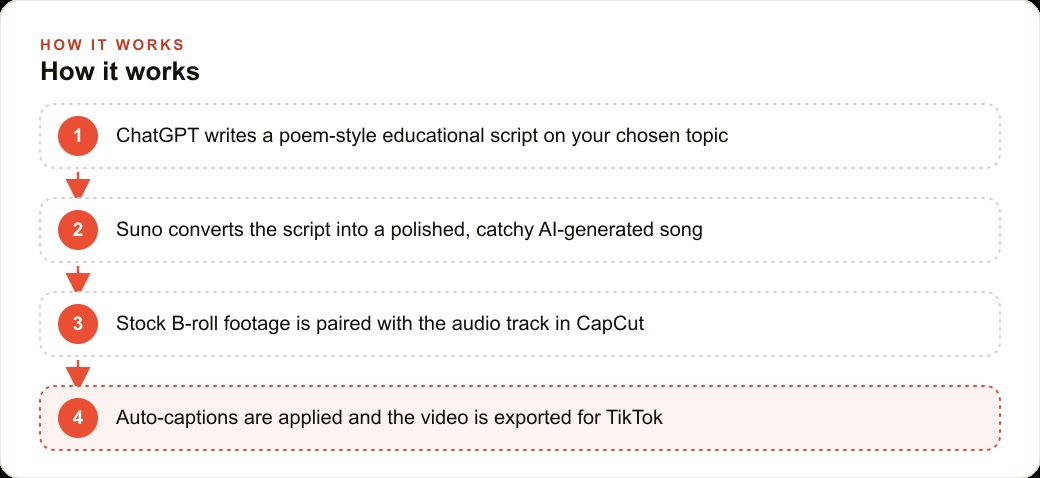
After the audio track is generated in Suno and the stock footage is selected from a library, the assembly step happens in CapCut, which is free to use for all core features. Import the footage, lay the Suno audio over it, enable the auto-caption feature, review the caption synchronization against the audio timeline, trim to sixty to ninety seconds, and export in vertical format. CapCut's auto-captions are accurate enough for most educational content without requiring manual correction on every word. The captions matter because a significant portion of TikTok viewing happens with the sound off, particularly in public places and work environments, and captions convert those passive scrollers into viewers who follow the explanation.
The entire assembly process for a single video, assuming the script and audio are already generated and the footage has been selected, takes approximately fifteen to twenty minutes the first time and decreases with repetition as the workflow becomes familiar. A batch session producing five videos at once, using the same footage selection and audio generation approach across all five before switching to the assembly step, reduces that time further through the efficiency of focused task switching rather than context-switching between different types of creative decisions for each video.
Running a session like this once a week produces a full week's posting cadence in a single focused afternoon. The split between creation time and execution time is what separates businesses that maintain consistent posting from businesses that post in bursts followed by long gaps. Consistent posting is what the algorithm rewards. Burst-and-gap posting is what the algorithm deprioritizes regardless of content quality.
Automation Platforms Can Chain These Steps Into a Single Trigger for Businesses Ready to Scale
For businesses that want to reduce the manual steps further, platforms like Glyph and Mind Studio offer agent workflow capabilities that connect the research, scripting, music generation, and basic video assembly steps into a sequence triggered by a single topic input. A team member enters a topic, the agent produces a script and multiple audio variations, and the output arrives ready for human selection and final assembly. This level of automation makes batch production of twenty to thirty videos per week realistic for a team with one person dedicated part-time to content work.
These platforms are worth adding once the manual workflow is running reliably and producing output the business is satisfied with. Automating a workflow before validating the output quality produces fast output of uncertain quality, which is worse than slow output of known quality. The sequence should be: build the manual workflow first, validate quality over two to three weeks of posting, then introduce automation to increase volume while maintaining the quality standards that the first weeks of manual work established.
Trust Accumulates Before Purchase Decisions Do, and That Sequence Is the Business Strategy
The commercial logic of educational content on TikTok is that trust accumulates before purchase decisions happen, and rushing the sequence by inserting commercial calls to action before the trust is established undercuts the mechanism that makes the format work. A viewer who has watched ten or twelve educational videos from a salon's account explaining hair chemistry, product selection logic, and styling decisions has already decided whether they trust the expertise behind that account. By the time a booking call to action appears, the decision has mostly been made by the content itself, not by the promotional message.
Hard calls to action in the first month, before any trust has accumulated, train both the algorithm and the audience to treat the account as promotional. The algorithm reduces reach. The audience unfollows. The format stops working. The businesses that succeed with this approach are the ones willing to invest six to eight weeks in consistent educational posting before measuring commercial outcomes, because the compounding return on that patience is an audience that converts at higher rates than a cold promotional audience ever would.
That same organic trust foundation also reduces the cost per lead on Facebook and Instagram ad campaigns when they run alongside organic content, because warm audiences built through educational content convert on paid ads at significantly better rates than cold audiences who have never encountered the brand. The content work also feeds SEO and organic search indirectly as videos accumulate saves, generate profile visits, and drive traffic to the business website from viewers who want to learn more after watching the educational content.
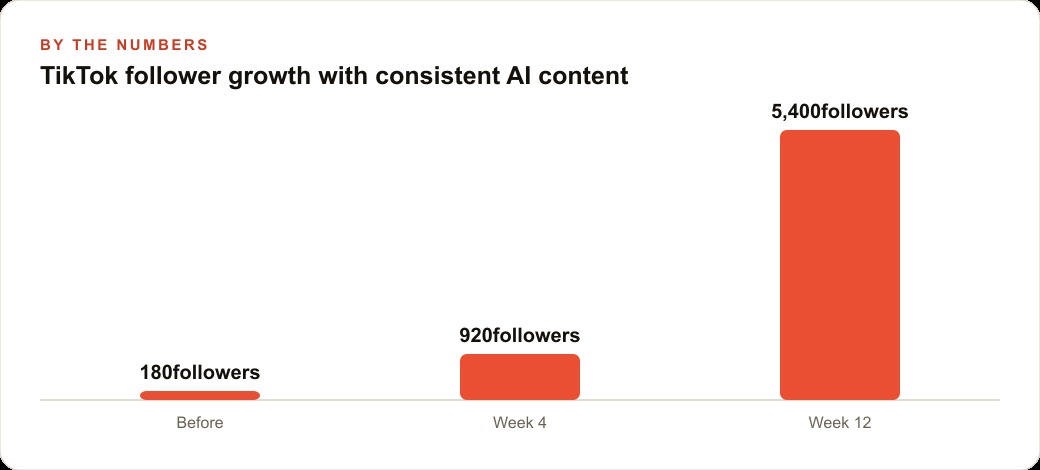
A service business starting around 200 followers and posting educational music content four to five times weekly can reasonably reach several thousand engaged local followers within three months. At even a modest conversion rate from that following to appointment inquiries, the content asset is generating leads month after month from an infrastructure that costs under fifty dollars to maintain. That math holds for salons, dental practices, HVAC companies, fitness studios, legal practices, and any business whose clients regularly have questions about how things work.
That is exactly what we do at AI DOERS. Book a private 30-minute call with Madhuranjan Kumar and we will map the fastest path to it for your specific business.
Book your call →
Madhuranjan Kumar
Madhuranjan Kumar brings 20 years of performance-marketing experience and has managed over $200 million in Facebook ad spend for brands across the United States and beyond. His expertise spans the full modern marketing stack: Meta, Google Ads, TikTok, email automation, CRM, and the websites that hold it together. At AI DOERS he turns that track record into lead-generation systems for businesses across every industry.