
AI Is Moving Into the Tools You Already Use, and the Video Got Real
Cut through this week's AI news and one thread matters for a small business: creative AI is moving into everyday tools, video generation became genuinely realistic, and licensing fights are quietly setting the rules on what content you can safely use.

The most consequential AI development of the past week was not a new model. It was an update to Adobe. I want to make this argument directly because most of the commentary around AI gets this exactly backwards, and businesses are making strategy decisions based on that inversion.
The most important AI release this week was not a new model, it was an update to Adobe
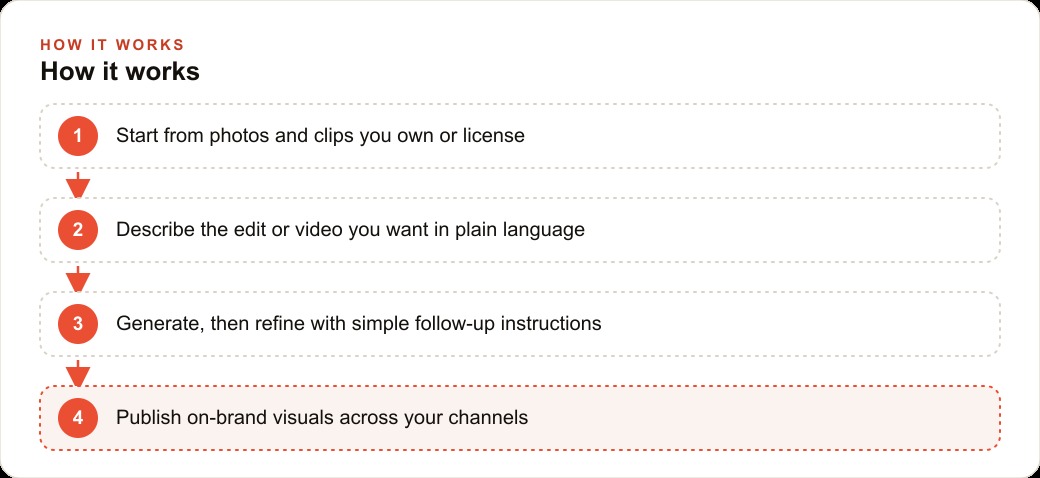
Photoshop, Acrobat, and Adobe Express are now available directly inside the main AI chat interface. You describe what you want to change in a file you already know how to work with, in a tool you already have open, and the edit happens. This is a different kind of event from a new model launch, and it deserves to be understood as such.
A new model launch adds a capability. This kind of integration changes where the capability lives and who can reach it. The barrier to using Photoshop's generative tools used to require navigating menus, understanding layers, knowing which panel held which function. Now the barrier is describing what you want in a sentence. The capability did not change. The friction of access dropped to nearly zero. That shift in access is what changes business behavior at scale, not benchmark comparisons between competing model architectures.
I track AI releases every week looking for one thing: what actually changes what a real business owner can do today, not in a future quarter. This week's Adobe integration changes it. The business owner who has a product photo that needs a background swap, a document that needs reformatting, or a social card that needs a seasonal text update does not need to hire a designer for those tasks anymore, does not need to learn Photoshop's interface, and does not need to wait for a file to come back from a freelancer. They describe it and it happens. That is the operational change. Every other headline this week was secondary to this one.
The second piece of context that makes this integration significant is when it arrives. Adobe has been building its generative AI capabilities for more than two years, training on licensed content to avoid the training-data legal exposure that other platforms are navigating in active litigation right now. The integration into the AI chat interface is the distribution moment where all of that development reaches business owners who never would have gone looking for it on their own. Adobe's defensible training approach becomes the business owner's defensible content workflow automatically, without requiring any additional decision or due diligence. The timing of the integration is not accidental. It is the convergence of a capability that was ready and a distribution channel that was large enough to matter.
Why familiar-tool integration beats standalone AI for every business owner who is not a developer
The argument for standalone AI tools is that they are purpose-built, often more capable for specific tasks, and sometimes more affordable than paying for the integrated version inside a tool you already subscribe to. This argument is correct in narrow technical comparisons. It is largely irrelevant to how most business owners actually behave, and understanding why is important for making the right strategic decisions about where to invest time and attention.
Business owners do not evaluate AI tools in controlled comparison studies. They use what is already open on their screen, what requires the fewest new logins and payment methods, and what they do not have to spend two hours learning before it is useful. This is not a criticism. It is an accurate description of how any busy person allocates attention when the primary job is running the business, not optimizing the tooling around it. The standalone AI tool, no matter how technically superior on a specific capability, has to compete with the tool that is already there, already trusted, and already part of the existing workflow. That competition is harder than it looks from the outside.
Adobe has been the standard in creative workflows for long enough that the default behavior when a creative task comes up is to open an Adobe product. Integrating AI into that default behavior means the AI capability gets used because the tool gets used, not because someone made a separate decision to adopt AI. That passive adoption at scale is what makes this integration more significant than any standalone tool launching with a better benchmark score. Reach matters more than precision at the average business level, and Adobe's reach into working creative workflows is hard to match.
The legal exposure argument reinforces this point from a different angle. The standalone AI tools that trained on scraped internet content without clear licensing agreements are navigating active litigation. Adobe trained on licensed content and built the legal defensibility into the product before integrating it into chat interfaces. A business that built its creative workflow around Adobe's tools has already avoided that legal exposure without making a separate decision to do so. A business that built on standalone tools with unresolved training-data liability is still carrying that risk into every asset it produces with those tools. The familiar-tool integration is the defensible choice, and it requires no additional due diligence because Adobe already did that work at the platform level.
The creative workflow that changed this week, and most people missed it entirely
Here is the specific workflow that changed, described precisely enough to evaluate concretely. Before this integration, a small business owner who wanted to update a hero image with a seasonal text overlay had three paths: do it themselves in Photoshop and spend thirty to forty minutes navigating menus they use infrequently, pay a designer fifty to a hundred and fifty dollars for a fifteen-minute task, or use a simpler tool and accept a result that looks less polished. None of these paths was ideal.
After this integration, the same owner opens the chat interface, uploads the image, describes the change in a sentence, and gets back the edited result in under a minute. They did not need to open Photoshop directly. They did not need to navigate to the right panel. They did not need to brief a designer or wait for a file to come back. The capability was already there, the tool was already trusted, and the only new skill required was describing clearly what they wanted. That is a reasonable bar for essentially any business owner. The time cost drops from thirty to forty minutes to under five, and the money cost drops from fifty to a hundred and fifty dollars to the marginal cost of the chat interface subscription already in place.
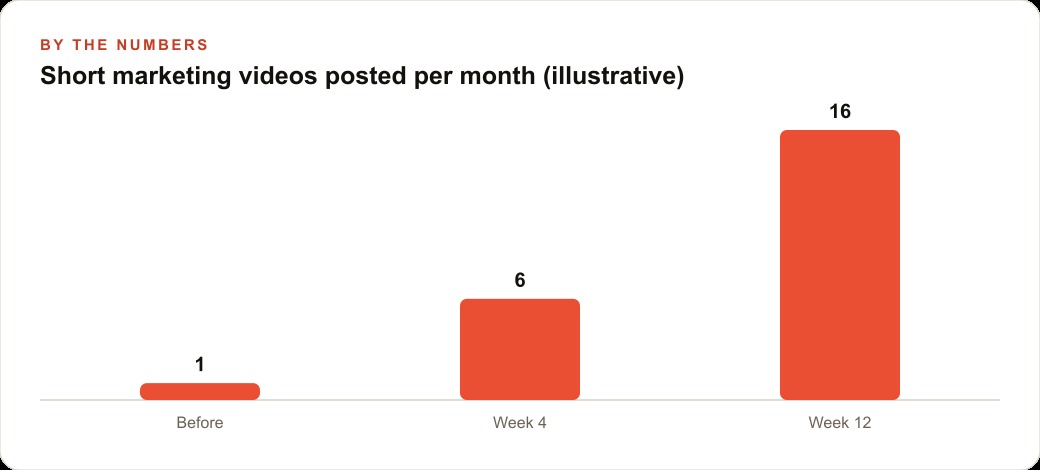
This breakdown dimension of this week's news made the same shift in a different medium. AI-generated video crossed a quality threshold that the previous generation had not reached. Physics look correct in the new outputs. Reflections behave realistically. Faces no longer slip into the uncanny zone that made earlier video models unusable for anything customer-facing. A short promotional video that used to require several hundred dollars in production work can now be produced in an afternoon from footage the business already owns, using tools that are becoming part of the same integrated creative environment as the photo editing. These two capabilities, photo editing and video generation, are converging toward one workflow, and that convergence is what makes this week's developments significant as a combined signal rather than two separate stories running in parallel.
The businesses chasing standalone AI tools are already operating one cycle behind
There is a pattern I have watched repeat across every wave of technology adoption over the past decade. A new capability arrives. Enthusiasts and early adopters discover it, build with it, and extract value. Then the capability gets absorbed into the tools that everyone already uses, and the competitive advantage of the standalone version collapses for everyone who is not building programmatically on top of the raw capability. The evaluation cycle that was the right move in year one becomes the wrong move in year three, because by then the capability has arrived in the tool that everyone already had open.
Search engine optimization followed this pattern. Social media scheduling followed it. Email marketing automation followed it. In each case, the businesses that spent significant time and attention evaluating standalone best-in-class tools were doing the right thing in the first year and the wrong thing in the third year, because by year three the capability had been absorbed into the platform where everyone already worked. The businesses that adapted to the integration quickly and built habits around the integrated tool retained their advantages without paying the re-learning cost at each cycle.
AI creative tools are following the same pattern, and the pace is faster than any of the previous cycles. Adobe integrating Photoshop and Acrobat into the AI chat interface is not a first step. It is late in a cycle that has been visible for two years to anyone tracking capability development. The businesses that have been evaluating standalone AI image editors while Adobe built its capabilities into the suite they already subscribed to will find that the evaluation period has ended and the integrated version is already good enough to build real workflows around. The time spent evaluating is time that could have been spent building habits and accumulating output advantage in the existing tool.
What the right approach looks like for a business that updated Photoshop last Tuesday
The right approach does not require an AI strategy document or a formal tool evaluation process. It requires one afternoon of experimentation and one weekly habit.
The afternoon: open the integrated environment, bring in five photos or documents from the actual business, and describe five edits that would normally take thirty minutes to do manually or cost something to outsource. See which ones come back at good-enough quality to use without further adjustment. The answer for most business owners will be that most of them do, and the ones that do not will be obvious immediately so they can be routed to a person for that specific case. This afternoon produces an accurate picture of what is now automated for this specific business, without any strategy work required.
The worked example with specific numbers: a restaurant posts three to four social images per week. Before this integration, each image went through a thirty-minute editing session or a standing arrangement with a part-time designer at roughly forty dollars per post. Four posts per week is a hundred and sixty dollars per month in image editing, not counting the restaurant owner's own time on the ones they handled directly.
After the integration, the owner describes the edits in the chat interface. Background swap for the dish photo: done in under a minute. Seasonal text overlay on the menu highlight: done in under a minute. Recompose the tight crop to show the full table setting: done in under a minute. The four weekly images go from a combined ninety minutes to a combined fifteen minutes, and the cost drops from a hundred and sixty dollars per month to the marginal cost of the chat interface subscription already in place. The quality is consistent with what the part-time designer was producing for the tasks that did not require creative judgment.
The weekly habit is one line: when a creative task comes up, try the integrated tool first before briefing a person. If it works, use it. If it does not, the person handles it. This decision rule, applied consistently for four weeks, produces a clear and evidence-based picture of where the tools now handle work that previously required human effort and where the human remains necessary. That picture is the actual AI strategy for this business, built from real evidence rather than predictions or headlines. The businesses that are already operating this way are not the ones who studied the AI landscape most carefully. They are the ones who updated Photoshop last Tuesday and spent an afternoon finding out what changed.
The practical test that replaces any amount of strategy planning
There is one test that gives more accurate and more actionable information than any amount of AI strategy planning or vendor evaluation: open the tool that just got the AI integration, bring in five real assets from the actual business, describe five edits in plain language, and measure the quality and time of the results against the previous method for the same task. Do this test before reading another AI headline. Do it before evaluating another standalone tool. Do it before building a strategy document. The results of this fifteen-minute test will tell you more about where AI actually fits in this specific business than any research effort conducted at a remove from the actual work.
The businesses that are building real AI advantages right now are not the ones with the most sophisticated AI strategies. They are the ones that run this test regularly, adopt what works in the tools already in use, and redirect the time saved toward the work that matters most. The update to Adobe last Tuesday was not a headline worth analyzing. It was an afternoon worth spending.
That is exactly what we do at AI DOERS. Book a private 30-minute call with Madhuranjan Kumar and we will map the fastest path to it for your specific business.
Book your call →
Madhuranjan Kumar
Madhuranjan Kumar brings 20 years of performance-marketing experience and has managed over $200 million in Facebook ad spend for brands across the United States and beyond. His expertise spans the full modern marketing stack: Meta, Google Ads, TikTok, email automation, CRM, and the websites that hold it together. At AI DOERS he turns that track record into lead-generation systems for businesses across every industry.